













Caution around inviting their films to international festivals is harming the country’s industry, said Israeli filmmakers at the Berlinale.
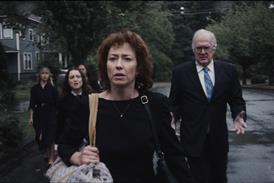
“Since fewer Israeli films are being selected for festivals, co-producers have less reason to co-produce Israeli films,” said Tomer Mecklberg, producer of Assaf Machnes’ Perspectives title Where To? “Distribution is the hardest part. On our latest films, distribution was not as it was before. It is difficult doing films like this, because [distribution] is where we get back the money.”
“Every year that passes, buyers are becoming more cautious in general,” pointed out Ben Giladi, producer through his UK company Liminal Content of Moshe Rosenthal’s Sundance 2026 title Tell Me Everything.
His credits also include Manodrome with Jesse Eisenberg
and Pig with Nicolas Cage. “Highly volatile issues like Israel add more cautiousness.”
“About 30% of the Israeli film budget traditionally has come from overseas [co-producers],” said Haim Mecklberg, also a producer on Where To? through family firm 2-Team Productions. “Right now, we’re getting fewer and fewer people interested in co-operating with Israelis in films.
“The main attraction for co-producers was that Israeli films were so unique and interesting – they made a great festival circuit. Since you see fewer Israeli films being selected, then fewer co-producers have a reason to enter into co-production with Israeli films.”
“One distributor told me that cinemas are afraid of people disturbing or trashing the cinema because they carry Israeli films,” he added.
Some fear the world is becoming closed off to Israeli culture. “We’ve seen a sharp drop in film submissions from abroad,” said Daniel Gat, co-director with Oshrit Bitton of Tel Aviv International Student Film Festival. ”Now more than ever, we believe our role as mediators is critical.”
“The challenge is twofold – internal and external,” Gat continued. “On one hand, Israeli filmmakers face growing domestic pressure, including budget cuts and attempts to limit the freedom of expression for works that are critical or humanistic. There is a tendency within parts of the government to label critical cinema as “anti-Israel,” even though the role of art has always been to challenge conventions and provoke vital discussion.
“On the other hand, the international community often penalises us as creators for the actions of the government, despite the fact the vast majority of us strongly oppose its policies and the ongoing reality in Gaza and the West Bank. Cultural boycotts create a paradox where the most critical voices are the ones being silenced.”
Frustration
“If my film is judged by the country it was made in and not by the content, it’s a danger,” added documentary filmmaker Dr. Iris Zaki, whose credits include 2018’s Unsettling, depicting encounters with Israeli settlers on the West Bank. “I’m very frustrated as an artist.”
“I’m always interested in hearing other sides, people who think differently than me,” said Zaki. ”Governments and political processes will never [accurately] represent people and societies.”
“No one wants to touch an Israeli film now,” said the filmmaker, who has just returned from Encounter, a programme that brings Jewish leaders to engage with a spectrum of Palestinian civil society leaders, to facilitate dialogue between the groups.
“I’m more optimistic,” said Noa Regev, CEO of the Israel Film Fund. “In the past two years, some festivals seemed hesitant to present Israeli films. But I believe if they see a film that they must show, they will.”
The executive said the country has several films nearing completion with festival potential. “Israeli cinema remains innovative, pluralistic, and self-critical, and I believe that when festivals encounter exceptional work from Israel, they will choose to programme it.”
She praised the Berlinale as “the impossible bridge bringing together voices that otherwise might struggle to share the same platform”.
“For many years, the Berlinale has embodied a rare and courageous space where films from complex, politically charged regions can meet audiences and each other,” said Regev.
Giladi agreed the right film can still break through. “We’ve already had engagement [on Tell Me Everything],” said Giladi. “We know where the fans are, and we know where people are slightly more afraid of the volatility of the political discourse.
“If you have a profound film and you fight the fight, you’ll ultimately find your home.”






No comments yet