







Yuval Abraham and Rachel Szor’s documentary NAZA was selected late for Competition at Venice film festival to allow the team time to finish anonymising its Israeli sources, according to producer Jim Wilson.
NAZA was added to the Competition on August 24, one month after the festival’s programme announcement and just nine days before the festival began.
“It was announced late at our request because we had to finish the film,” said UK producer Wilson at the film’s press conference in Venice. “We had to finish the process of anonymisation; we thought it was better for the film not to be publicly known about until that point.”
NAZA features interviews with 24 Israeli intelligence officers and soldiers, who bear witness to the genocidal killing of Palestinians, including many civilians, in their homes and apartments in Gaza.
Wilson said the team had “no issue” with the film’s late-festival slot. “We’re very proud and happy to be at Venice film festival,” said the producer.
The film features a card at its start saying that appearances and voices of those contributors have been digitally altered. “The reason for doing that is these interviews were understandably on the condition of anonymity,” said Paul Lewis, head of investigations at The Guardian, which produced the film. “We, as journalists, can’t talk about the methods and processes we go through to anonymise people as it would put them at risk.
“What we can say is these are real people. They are all Israeli soldiers and officers who served in the remote surveillance and killing of Palestinians in Gaza. The strength of their testimony speaks for itself.”
Lewis, Wilson, Abraham and Szor were joined by Lindsay Poulton, The Guardian’s editorial director, film & TV and head of documentaries; while filmmakers Jonathan Glazer – an executive producer on the film and Laura Poitras – thanked in the credits - were present at the conference in the audience. “NAZA is at the intersection of journalism and cinema. With films like that, that are editorially very rigorous, but also creative and artful, I believe in the power of those to bring people together, create conversations and move us.”
“This is a marriage between cinema and journalism,” added Lewis. “It’s first and foremost a film, but it is built on the foundations of years of painstaking, time-consuming journalism. It takes years to develop and build relationships and reputations of trust.”
Strategy
Wilson won the Grand Jury Prize at Venice last year with Kaouther Ben Hania’s The Voice Of Hind Rajab, which was boarded by high-profile executive producers including Brad Pitt and Joaquin Phoenix shortly before its launch.
“We haven’t had those conversations on this film,” Wilson told Screen about attaching famous EPs. “I don’t think that’s going to happen, the films are different.”
Wilson also addressed the accusations of antisemitism that have been levelled at high-profile industry figures who have spoken out about Gaza, including Mark Ruffalo, Susan Sarandon, and Wilson and Glazer themselves after their 2024 Oscar win for The Zone Of Interest.
“I’m Jewish. Yuval and Rachel are Jewish Israelis. Jon Glazer is Jewish. I’m not saying that means we’re right or wrong. I’m personally not worried about being accused of being anti-Semitic because I am not, and I don’t think my colleagues are,” said Wilson.
“I understand the nature of the attack. It’s a clear strategy, and part of the repression and cognitive dissonance that allows people who think that, to fellow travel with the systematic violence.
“They might believe it, but it’s a way of continuing to repress the truth. I don’t myself think there is any connection between Judaism or Jewishness, and the policies of successive Israeli governments towards the Indigenous population of Palestine.”
“There are a lot of differences between the Nazi Holocaust and what is happening in Gaza, and there are differences between different iterations of mass killings, of genocides,” said Abraham. “But one thing that seems to be consistent with such crimes is our commitment to accountability and justice are crucial in order to be able to move on.
View this post on Instagram
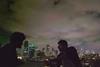
“Our film is filmed in the dark [on the rooftops of Tel Aviv where the Israeli contributors are interviewed]; it’s a reflection of the darkness that we are all living in. If we want to see light, there has to be recognition about what happened, and accountability for the crimes that were committed.”
mk2 Films backed the film and handles world sales. It is Abraham and Szor’s first feature since they won the best documentary Oscar for No Other Land, directed with Basel Adra and Hamdan Ballal, which debuted at Berlin.
Venice film festival runs until Saturday, September 12.


No comments yet