













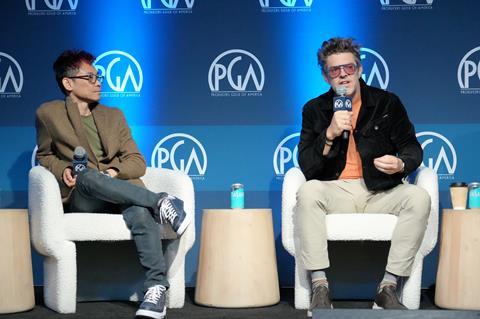
Renowned horror filmmakers Jason Blum and James Wan of Blumhouse-Atomic Monster and Warner Bros film group co-head Mike De Luca talked up the power of YouTube creators and expressed optimism for the future of theatrical filmgoing at the weekend’s Produced By Conference in Hollywood.
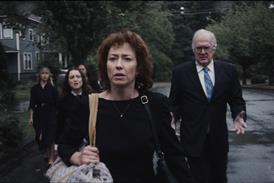
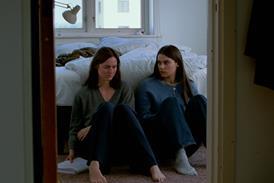
Blum and Wan, whose combined company’s credits of more than 250 features and series includes Backrooms and Obsession, the top two films in North America, told an audience at Universal Studios lot that popular creators with in-built fanbases have reinvigorated Hollywood.
“For eight years since Covid there’s been this lethargic feeling around theatrical […] and what is so incredible about Obsession and Backrooms is they’re a new kind of moves,” Blum said on Saturday (May 30). “They’re made by non-traditional directors who honed their skills as YouTube creators. We’re doing another one [with a creator], Blair Witch from Dylan Clark.”
Wan added, “They want to make movies for the big screen. They train on the internet […] but at the end of the day they want to make movies for the big screen. Gen Z wants to get out to theatres.”
Blum heard about Obsession shortly before the 2025 edition of Toronto International Film Festival when co-head Adam Hendricks of Divide/Conquer, with whom Blumhouse-Atomic Monster has a first-look deal, asked him to read the Obsession screenplay and watch the film.
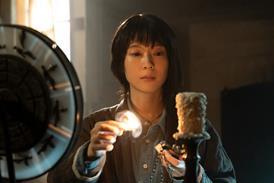
Blum had made internal changes at Blumhouse after several box office disappointments like M3gan 2.0 and was eager to “get back to the company’s roots and look at low-budget films by a younger generation of filmmakers”. He was intrigued by Obsession and Blumhouse-Atomic Monster came on board as a producer and committed to finance Anything But Ghosts, Barker’s follow-up that is in post and will open through Focus sometime in 2027. Focus Featrures paid $14m for most of the world on Obsession, which has soared past $100m in North America after three weekends.
“Backrooms and Obsession are edgy and weird and fucking nuts,” Blum said. “There’s almost this feeling of the 70s; this new generation of young people who are making edgy movies that are connecting in theatres. For so many young people who didn’t grow up in a time when you couldn’t go to the movies [during the pandemic era cinema closures] and haven’t had something for them to get out and get off their iPads, suddenly they have two movies […] There’s fucking hope in the movie business. The stars of the internet want to make movies.”
De Luca talks creators
For De Luca, who serves as co-chair and CEO of Warner Bros motion picture group alongside Pam Abdy, online creators like Barker and Backrooms director Kane Parsons, whose film smashed A24’s opening weekend record on an estimated $84.1m, have something that filmmakers who work with legacy studios lack.
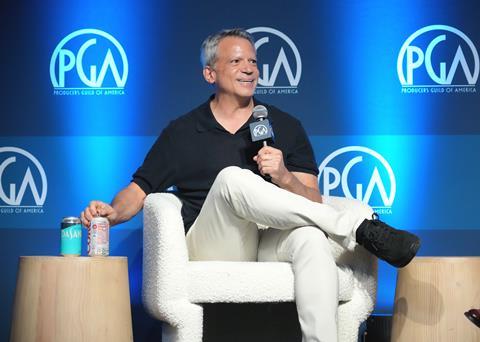
“They’re in a dialogue with their audience from the word go,” De Luca said. “Their subscribers have direct input on each iteration of these things. By the time you get to the movie they’ve had a billion test screenings. We work with a lot of directors and the last thing they want to do is sit in a test screening in Oxnard or Dallas or Phoenix and wait for that focus group to start tearing their movie to shreds.
“It’s the polar opposite with these directors; not that they don’t have strong opinions or artistic vision, but they are making their movies for their audience that have been subscribing to their channels for years. That’s been a proving ground, so by the time their movies come out they’re really calibrated to please their audience.”
De Luca, who enjoyed a stellar 2025 with seven successive number one releases that opened on more than $40m and Oscar wins for One Battle After Another, Sinners, and Weapons, continued: “YouTube and Instagram are where talent is coming off creepypasta on Reddit. They’re honing their craft and not having to go to film school or make a short that has to get into Sundance […] It’s become way less restrictive and the gate-keeping has loosened up, so there’s a lot of opportunity for producers to align themselves with emerging talent.”
The studio’s parent Warner Bros Discovery is in the process of being acquired by Paramount in a $110bn transaction and while the veteran producer and studio executive did not comment on that deal, he spoke about the causes and consequences of the abundance of sequels, prequels and remakes coming out of legacy Hollywood.
“Studios got really cheap about development spending,” De Luca said. “They would look to that line item when they needed to cut costs […] If you cut it too deep your pipeline dries up, you don’t have enough movies, and […] that’s what opens up the lane for third-party financiers.
“So every time studios get afraid to invest in the development of new material or take chances on new filmmakers or new material, you get Lionsgate, Summit, A24, Neon, MRC… the list goes on. God bless them all, but none of it had to happen if the studios did their job, and the job used to be identification, acquisition, development, production, marketing and distribution of original movies.”
Producers Guild Of America produced the conference.






No comments yet