











The feature debut of writer/director Graham Parkes won SXSW’s narrative feature prize
Dir/scr: Graham Parkes. US. 2026. 105mins
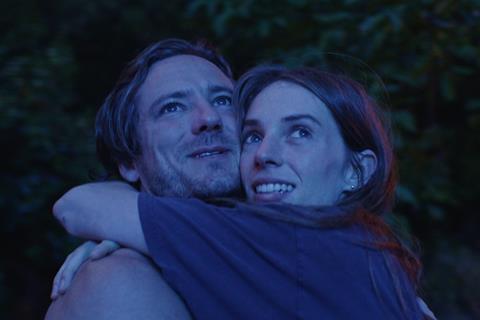
With an inquisitiveness recalling Richard Linklater and a feeling of tragic wonder, writer/director Graham Parkes’s feature directorial debut is an assured, complex story about two people with a love so strong it could literally move mountains. Wishful Thinking is a chaotic concoction composed of elements drawn from the director’s video game experience (he founded GoodbyeWorld Games) and his short film collaborations with Lewis Pullman. Here, Pullman joins forces with Maya Hawke, the pair adding rich definition to the film’s imperative questions about the personal limits of love and the dangerous impossibility of reaching for romantic perfection.
Pullman and Hawke have a volcanic dynamic
Winner of SXSW’s narrative feature prize, Wishful Thinking potently follows the contours of a relationship with bracing sensitivity, making for a relatable subject matter that should allow it to travel. Pullman and Hawke will also be a draw, both actors having cultivated their own fanbases via projects like, respectively, Thunderbolts* and Stranger Things. The film’s cavalier blending of science fiction and romantic comedy in a reality bending form means, however, that it does not fit in a neat genre box, which may prove a challenge for some audiences.
Charlie (Pullman) and Julia (Hawke) are the kind of couple who are always breaking up and getting back together again. In the film’s opening scene, Charlie is working around the house while Julia sketches characters for a video game she’s designing. Everything appears to be equally balanced between the pair. But then Charlie brings up the possibility of them booking a flight to Italy, causing Julia to balk because of her work schedule. The impulsive Charlie is – for tender reasons we discover later – immediately despondent. The two scream at one another, pushing the disagreement to the brink of ending things.
On the advice of a friend, Charlie and Julia decide to visit a seminar run by mystic psychic twins (Kate Berlant in a dual role). In front of a crowd, the couple not only give us their backstory—they met when Julia went to a concert featuring Charlie’s band—but also how far they have drifted apart since then. After their first date, Julia magically got a job near Charlie at a Portland-based VR firm run by Bobby (Randall Park), while Charlie began working at a recording studio. When the couple are at peace, the world appears to flourish. When they’re at odds, the wider environment crumbles.
That means that Charlie and Julia’s arguments have tangible real-world consequences, and Parkes’s script is inventive in detailing these outcomes. When Charlie and Julia are in romantic bliss, for instance, Bobby offers Julia a chance to develop her dream video game. When they’re fighting, however, Charlie’s plant named Bellinda wilts to near death and his mother discovers a cyst that could be a relapse of her cancer. If that sounds mindboggling, the film takes even weirder turns when Julia figures out their cosmic powers.
The couple soon find their happiness can inspire Charlie’s song ‘Pineapple Code,’ recorded with his grifting co-writer Milo (Eric Rahill), to become a hit. It can also attack their perceived enemies – like Jon Hamm, who appears in cameo and whose declining health becomes a running gag. Their despair, however, can also cause crypto markets to crash, world hunger to spread and natural disasters to increase. If that sounds like the myopia of naval-gazing white characters, it absolutely is. But the film is aware of this insufferableness, and plays with it to varying degrees of success.
None of that manifestation can paper over the couple’s one fundamental disagreement: Charlie wants to get married and have a family, the kind of idyllic life his mother had with his father. Julia does not. How these characters work through those desires is the Linklater element of this film. These are two people locked in raw, human pain about how to contort themselves to fit one another without breaking who they are. Their hard conversations aren’t guided by plot demands. The unwinding of harsh truths and difficult lies seamlessly pushes the drama forward.
Hawke has rarely been so vulnerable while Pullman has seldom been so playful, inspiring a volcanic dynamic. The filmmaking matches their intensity through diptychs depicting the sky at two different times of the day, and a flowering score that often stretches outward to metaphysical realms. While Linklater’s Before trilogy was made for romantically fitful Gen-Xers and Millennials sorting through their boomer hang-ups, Wishingful Thinking is perceptively engineered for Gen-Z viewers who are bracing themselves for what comes next.
Production companies: Buckwild Pictures, Highway 10, Pinky Promise
International sales: UTA, filmsales@unitedtalent.com
Producers: Matt Smith, Dan Gedman, Kara Durrett, Lewis Pullman
Cinematography: Christopher Ripley
Production design: Natalie Groce
Editing: Lilly Wild
Music: Oliver Lewin
Main cast: Lewis Pullman, Maya Hawke, Randall Park, Jake Shane, Kate Berlant, Amita Rao, Eric Rahill