












With its vast range of historic buildings, dedicated Film Office and film-friendly vibe, the Eastern German city of Görlitz has long attracted international productions looking for a centrally located European base.
Seven decades of filmmaking experience have created a thriving sector of committed local partners and residents ready to welcome the more than 120 national and international productions that have shot in the city over the years.
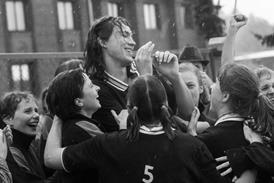
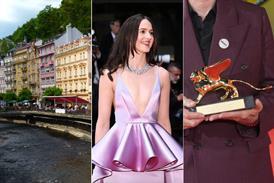
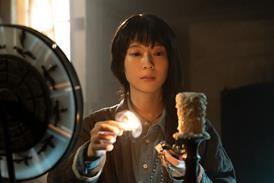
Wes Anderson’s Grand Budapest Hotel, Quentin Tarantino’s Inglourious Basterds, Stephen Daldry’s The Reader, Michael Anderson’s Around the World In 80 Days, Brian Percival’s The Book Thief and in 2025, Pawel Pawlikowski’s Fatherland, have all filmed in and around Görlitz.
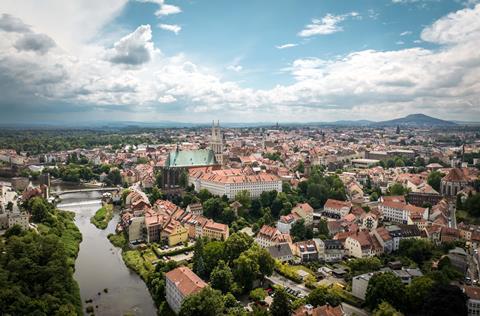
Situated close to the borders of Poland and the Czech Republic, Görlitz boasts around 4,000 protected historic buildings spanning more than 500 years, from the late Gothic, Renaissance, and Baroque periods to 19th-century architecture and Art Nouveau.
Streets and neighbourhoods in the city can portray central, Eastern or Western Europe, while selected locations can double for turn-of-the-century North America with relatively little adaptation.
The Görlitz Film Office is front and centre of production support, working from the initial inquiry to on-the-ground preparation and filming.
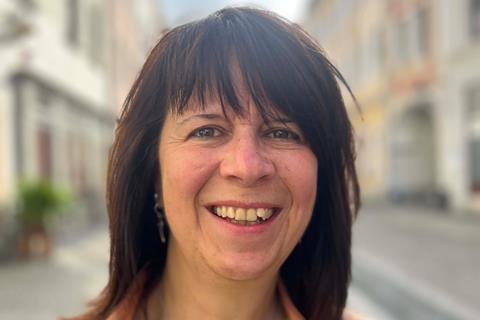
“I help identify potential locations, provide information about local conditions such as construction work and scheduled events, connect production teams with local authorities, service providers, and property owners, and assist in navigating the required permits,” says Görlitz Film Office project manager Kerstin Gosewisch.
“My goal is to make it easier for productions to work in Görlitz by providing local knowledge and connecting them with the right people.”
Film office services also include helping with traffic measures when cameras are rolling and connections to local crews, service providers and technical partners. International teams can receive support in both English and German.
The surrounding region has forests, lakes and can even provide beach settings.
The Görlitz Film Office’s local service database also provides access to locations, film professionals, service providers and technical partners within an 80 km radius and is continuously updated, giving productions direct access to people who know the region and can help make a shoot happen on the ground.
The office is in direct contact with the German regional fund Mitteldeutsche Medienförderung (MDM) responsible for Saxony, Saxony-Anhalt, and Thuringia and can introduce productions to local partners such as the Saxon Film Academy.
“I can help productions navigate the local funding landscape and facilitate contact with MDM,” says Gosewisch. “Eligibility and available funding depend on the individual project and the applicable funding requirements.”
The city’s proximity to Poland and the Czech Republic creates additional opportunities for productions looking for authentic Central European settings and bolsters the volume of experienced crews that can be brought in as well as increasing co-production partner potential.
The number of international productions Görlitz can accommodate at any one time depends primarily on the locations and the scale of each production landing in town.
Görlitz offers several distinct areas that can, in some cases, be used independently: One production could shoot in the historic Old Town while another works in the city’s 19th-century district.
“Depending on location choices, production size, and logistical requirements, two to three productions could theoretically shoot in the city at the same time. Careful co-ordination of locations and schedules is key,” according to Gosewisch.
And shooting in summer is not necessarily a must.
Anderson shot The Grand Budapest Hotel in Görlitz during a snowy winter, from January through March. Gosewisch says Görlitz is a compelling filming destination year-round, depending on the look and atmosphere a production needs.
Crucially, the city is more than buildings, urban backdrops and landscapes: The people of Görlitz and the surrounding region play a vital role in the city’s draw to producers.
“Their warmth, openness, and willingness to welcome and support film crews contribute to the city’s genuinely film-friendly atmosphere,” says Gosewisch. “That personal touch is an essential part of what makes Görlitz special.”
And because Görlitz lies in a region where German, Polish, and Silesian culinary traditions meet, the catering is good: While Bill Murray may remember the bratwurst from Görlitz’s mustard shop when filming Budapest Hotel, other film crews particularly appreciate the cuisine of restaurants such as Lucie Schulte or St. Jonathan. Some local restaurants also serve the regional speciality Schlesisches Himmelreich, a savoury-sweet Silesian dish made with smoked pork, dried fruit and potato dumplings.
Görlitz serves it all.
Contact: filmbuero@europastadt-goerlitz.de
Find out more: filmbuero-goerlitz.de/en






No comments yet