



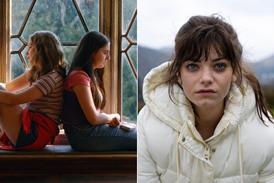
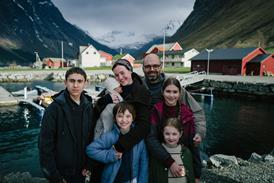


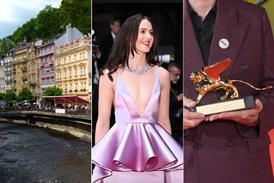
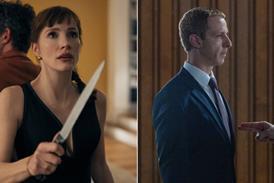



When Argentinian multihyphenate Dolores Fonzi won the lead actress Platino Award for Paulina in 2016, she held up a banner on stage that read “Freedom for Belén.” That simple act of protest shone a light on a wrongful imprisonment case that would galvanise the women’s reproductive rights movement in the South American country. Nearly a decade later, the story is examined in Fonzi’s second feature as director and star, the Oscar-shortlisted Belén.
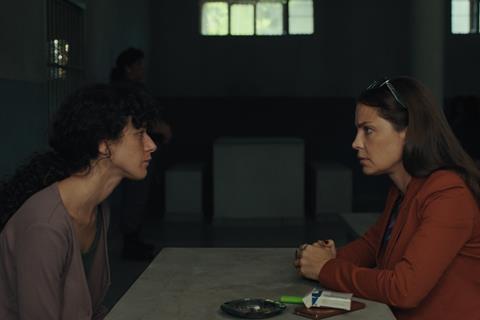
The legal drama opens in 2016, when abortion was still outlawed in Argentina and a young woman, Julieta (Belén was an alias to protect her privacy), has been in prison for two years after she was arrested and eventually convicted of aggravated homicide. In fact, when Belén rushed to hospital in 2014 complaining of abdominal pain, she had been unaware she was pregnant and suffered a miscarriage. Hospital staff claimed they found a foetus in a bathroom and called the police, who arrested her on site.
Fonzi plays Soledad Deza, the crusading Argentinian lawyer who takes on Belén’s case. Her tireless work dovetailed with protests by the Marea Verde (Green Wave) pro-abortion lobby and the broader feminist movement in Argentina and brought about fundamental changes. Belén was exonerated in 2016 and abortion was eventually legalised in 2020.
Belén was produced by K&S Films based on Ana Correa’s 2019 non-fiction book Somos Belén (We Are Belén) and financed by Amazon MGM Studios. The film premiered in San Sebastian and the Argentinian theatrical release in late 2025 through Digicine drew more than 135,000 admissions before Belén debuted worldwide on Prime Video on November 14.
On the eve of a Los Angeles press tour before the Oscar nominations voting window begins, Fonzi spoke to Screen. The cast includes Camila Plaate, who won the Silver Shell for her supporting role as Belén in San Sebastian.
You were aware of Belén’s plight, but how did you get involved in the production?
I knew about the case before the book. Two years after the book [was published] I went to a presentation for it and met Soledad and Belén. [Film producer] Leticia Cristi was there and had bought the rights. The pandemic [happened] and they had a script that wasn’t working too much. Then I made my first movie as a director [2023 comedy drama Blondi] and when Leticia saw Blondi, she offered me the chance to adapt the book and act and direct.
What happened next?
I rewrote it the first three months of 2024 [with Fonzi’s Blondi co-writer Laura Paredes, and Agustina San Martin]. We got the green light, then I did a TV show [The House Of The Spirits, a mini-series adaptation of the novel by Chilean author Isabel Allende produced by FilmNation in association with Fabula, which will debut on Prime Video in 2026]. We did the [prep] then we shot in 2025. During the editing and the mixing, I acted in a TV show for Pablo Larrain [the supernatural horror My Sad Dead that will debut on Netflix]. So it was crazy, but we were able to do it in very short time. Editing was every day from 9am until 7pm, very focused.
Where and when did you shoot Belén?
We started shooting on the 14th of February in 2025 and we shot for seven weeks until the end of March. We filmed most of it in Buenos Aires because we needed the interiors and of course all the outdoors. We shot for a week in Tucumán [the Argentinian province where Belén lived].
Did you shoot inside actual courthouses?
We did in Buenos Aires. The first hearing when she was sentenced was in Buenos Aires in a real court, the Comodoro Py. In Tucumán we filmed at the big palace of justice. When the character of Soledad is going in inside the building to give her final speech, that is the real palace.
Did you always see yourself playing Soledad?
Before I directed Blondi, Leticia Cristi and Javiera [Balmaceda, Amazon MGM Studios head of international originals Latin America, Canada, Australia] were telling me that they would like me to play Soledad Deza and I said I would love to, because I knew the case. I didn’t know I was going to direct and act again. I wondered if it was right to do the two things at the same time and thought maybe I should only direct, but after a day I decided of course not, it’s a gift I will take.
Tell us a bit about Camila Plaate, who plays Belén
She’s from Tucumán where there is this big resistance movement of artists. She’s the daughter of a musician, who is a tenured professor in the music conservatory there. We had a big casting session in Tucumán. Her actual sister Ruth Plaate plays Belén’s sister Mecha in the movie. They’re actors and both musicians with bands… At first I didn’t know which one would be Belén, but then we went through the casting process and they came to Buenos Aires.
Where is Belén now?
Belén left Tucumán and is living in Buenos Aires. She’s doing great. She’s very happy with the movie, very happy with the book by Ana Correa. We are in touch all the time. Our team went to a pop concert for her birthday the other day. She feels the movie is a kind of closure.
Did you consult with Belén and Soledad Deza when you wrote the screenplay?
Yeah, I had a dinner [with Belén] and she told me a lot of things. But in terms of working with a consultant, it was more Soledad Deza. I was in touch with Soledad every day and we hung a lot. One of the things that happens with a character in acting is you start talking like her. Soledad watched the movie and told me, “Oh, my God, it looked like me at some moments.” She liked the movie.
Belén’s case became a cause célèbre for women’s rights. What was the timeline for the legalisation of abortion in Argentina?
After Belén was released in 2016, we got half the law approved and had to wait until 2020 to get the law entirely, because in 2018 the senators denied it. Of course the movie looks at the real case of Belén, but we talk about all the things that happened from 2016 until 2020.
Does being a director make you think differently about your acting process?
In a way, yes. If I am afraid, everything can go wrong. So as I am the one directing, when I’m acting I just feel free. I am the character. If you write your material, it’s like you have it inside. Acting has become much easier for me since I started writing my roles. Directing actors is amazing because we are building something inside a moment. It’s a very collective work that I enjoy. I’m thinking about everything at the same time but I’m used to multi-tasking: I’m a mother, I have two kids. Women have this characteristic. And the movie also laughs about it – a mother, wife and lawyer who wants to save the world.
How do you feel about the film’s trajectory?
I’m enjoying it and I know that I have to do the homework. I have to enjoy it first of all, because I can’t believe I am in this position now. And then work hard, go where I have to go [to promote the film]. I’ve travelled a lot since San Sebastian. I am going in January to Los Angeles with the movie. It’s a pleasure to be talking about a movie that I am really proud of.



No comments yet