















AFM returns for a second year at Fairmont Century Plaza, as attendees mull the effects of the Paramount-Warner Bros Discovery merger, a proposed US federal tax incentive and TIFF: The Market on the independent buying and selling landscape.
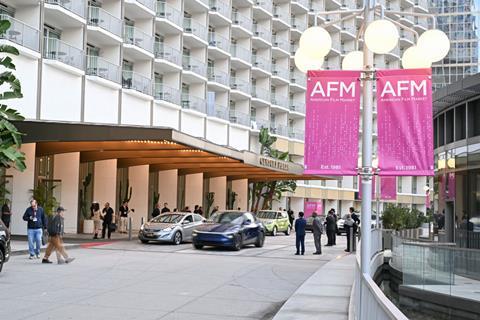
This is a pivotal time for independent production and, on the eve of the American Film Market (AFM, November 10-15), US attendees in Los Angeles will be eager to examine fundamental developments that could shape the future of the industry.
The corridors of the Fairmont Century Plaza and surrounding venues will be humming with discussion around David Ellison’s $111bn merger of Paramount and Warner Bros Discovery, which has already irked the community due to a perceived lack of protections for the independent space. In September, independent producers lambasted provisions in the five-year consent decree thrashed out between Ellison’s negotiators and California attorney general Rob Bonta that averted an antitrust trial and paved the way for the merger.
The decree stipulated that the new combined company Skydance will release four ‘independent’ films a year within an annual slate of at least 30 in the first two years and 32 in the following three. It also specified that within 30 days of the merger closing on October 6, Skydance would set up an independent acquisition fund allocating $5m per year over five years.
Skydance has not said who would lead the fund at press time, although Lia Buman, who headed Paramount’s global acquisitions team and Republic Pictures prior to the merger, was seen as a likely candidate. However, there has been much grumbling over the allocation, which independents regard as a paltry sum given market realities. After all, Focus Features spent around $15m buying Obsession in Toronto last year.
Yet even though the consent decree is largely viewed by the independent community as a toothless cave-in by Bonta, whom they suspect bowed to political pressure to get the deal over the line, the loose definitions of ‘independent’ and the requirement on Skydance to produce or co-produce only 50% of its annual output means it will be looking to buy films to make up the numbers. That is an opportunity independent producers and sales agents want to explore.
Meanwhile, the freshly minted American Entertainment Alliance (AEA), an umbrella group comprising producers, US agencies and independent outfits such as Blumhouse and MRC, is pushing for a revival of the old Hollywood Financial Interest and Syndication Rules, or ‘fin-syn’, which restricted leading networks of the day from owning everything they broadcast, until the rules were eliminated in 1995. AEA members want to push for legislation to enact an updated version that would essentially require streamers with a minimum of 10 million US subscribers to allocate half of their original content spend on independent film and television. That would give a significant leg-up to the independents at a time when pay-1 output deals are thin on the ground. The streamers are pushing back.
Another major development that will inform AFM conversations around packaging is the proposed US federal production incentive, a 20% transferable tax credit that can be combined with state incentives. The measure has drawn rare bipartisan support under the Trump administration and could pass into law by early next year, if not sooner. It is universally supported within Hollywood.
Fairmont fare
AFM attendees will be digesting and debating all this as they participate in the last major market of the year, coming less than two months after the inaugural TIFF: The Market, which by and large did not change how industry professionals did business in Toronto.
FilmNation attends AFM with a roster of sales titles that had not been unveiled at press time, and will continue talks on Bill Hader’s upcoming psychological horror They Know. The team showed first footage in Toronto, where FilmNation stayed away from the official TIFF: The Market footprint and engaged in sales activity as it always does north of the border — on an opportunistic, more modest basis than at AFM or Cannes. It also introduced MRC’s queer romantic comedy Honeymoon/Funeral starring Rebecca Ferguson and Greta Lee, selling North American rights to Black Bear.
In a strong year for the company, The Invite, a film it sold and served on as a producer, has embedded itself in awards conversations and continues to open around the world, debuting in Spain last month. Olivia Wilde’s adult comedy has grossed more than $60m at the global box office on a budget of less than $15m and is an example of the kind of elevated fare that strikes a chord.

“Buyers, at least at the pre-sales stage, are looking for distinctive, filmmaker-driven projects that have a clear creative identity and know exactly what type of audiences they’re targeting,” says FilmNation senior vice president of sales Alice Laffillé. “Buyers are more cautious and the price tag matters. We’re trying to find the balance between what our filmmakers are looking for and the right platforms for them to make their movies, and a way for independent buyers to afford those films.”
Finding that balance is not easy. “Right now, most independent films of any scale are comparatively expensive to make, difficult to market and have too unpredictable a revenue model,” says AGC Studios founder and CEO Stuart Ford. The executive hopes technological developments and a stackable US federal incentive will help to lower costs. “Within the next few years we might be looking at net production exposures that are at least 20%-25% lower than they are currently.”
AGC will commence sales talks on completed sci-fi epic Gods Don’t Give Gifts, an AI-rendered animation from YouTuber Zack London (aka Gossip Goblin). The film will screen to buyers and ‘superfans’ on the first day of the market. AGC will also show footage from post-production titles such as Fleur starring Halle Berry, family animation Critterz and Spooky Pictures’ psychological thriller Sundowning.
Ford and his team took offices at the InterContinental in Toronto, one of two hotels affiliated to the market, and reported a productive trip. They sold Lauren Miller Rogen’s comedy and TIFF world premiere Babies starring Anna Kendrick and Seth Rogen, and showed first footage from The Last Druid. “There’s room for both a Toronto market and AFM to be useful and necessary touchstones for a community that’s increasingly in dialogue and sharing materials all year round,” insists Ford.
“The domestic market is not doing as great as it used to and that does affect the international market,” says Palisades Park Pictures CEO Tamara Birkemoe, who is fielding offers on Bill Condon’s musical drama The Road Home starring Cynthia Erivo, and hopes to have footage ready to show by the Berlinale following a summer shoot.
“Buyers must feel like they have to have the project in order to get engaged and involved and make decent offers. People are still active and still want theatrical movies, they’re just being more picky.”
Change in demand
Marc Goldberg, co-founder of distributor Aura Entertainment, says buying has become “more and more a science rather than a gut feeling, like it used to be”. The company — launched in 2025 by Goldberg’s UK distributor Signature Entertainment, Christian Mercuri’s Capstone Studios and Jared Goetz’s Ascending Media — targets 12-15 commercial titles a year and tailors releases from wide theatrical to straight-to-streaming.
“The narrowness of revenue earning just means that you have to be working that much more closely with the demands of the audience and the streamers,” says Goldberg, who released Renny Harlin’s action thriller The Beast starring Samuel L Jackson in theatres last month. “You’ve seen the success of Obsession and we’re forever looking for that next gem. We know first-hand what can be achieved.” (Curry Barker’s horror smash was produced by Capstone and initially intended to open through Aura before the partners opted to sell in Toronto.)

For all but those rarest of titles that can spark bidding wars, the post-Covid rhythm of deal-making and buyer caution means that sellers need to be patient. “You need a couple of strong markets to get enough pre-sales to push it over the line in terms of financing,” notes Todd Olsson, president of international sales at Highland Film Group.
He will screen Justin Chadwick’s spy thriller The Mark with Jessica Alba, Tom Hopper and Elsa Pataky, and debut director Jonathan Bensimon’s 1980s-set parasite horror Lice starring Emile Hirsch and Justin Long. In Toronto, Highland introduced buyers to true-life comedy The Fun Lady, which will see Andy Tennant direct Alba, and Nimrod Antal’s sci-fi action thriller Bluefly starring Russell Crowe and Priyanka Chopra Jonas, scheduled to start production in Australia later this year.
TIFF was fruitful for Highland, although Olsson knows not all the buyers from Europe who attended can justify a trip to AFM, or vice versa. “It’s difficult for some of them to come to North America twice within a six-week period, especially the way air travel is now and the cost of hotels and food. They have to choose.”






No comments yet