













Political themes are prominent in the crop of films from the Americas this year. Can the region continue its momentum after a nomination last year and a win the year before?
This year’s hopefuls from the Americas tackle queer representation, Indigenous narratives and the ever-present spectre of a complicated history of autocracy.
It is a typically layered roster from the region, where the need for public support remains urgent at a time when the Americas have swung to the right. One notable exception has been Brazil, where Luiz Inacio ‘Lula’ da Silva’s 11th-hour victory in October averted arts funding cuts many feared would happen had his challenger Flavio Bolsonaro (son of the imprisoned former president Jair Bolsonaro) prevailed.
Earlier this year, Chile’s ultra-conservative president Jose Antonio Kast took office. Gabriel Diaz, who heads the country’s film academy, recently called for the government’s ongoing support for the arts “without censorship or prejudice”. Diaz speaks for the region’s creative community at a time when freedom of expression seems particularly fragile.
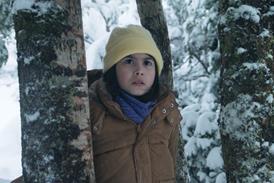
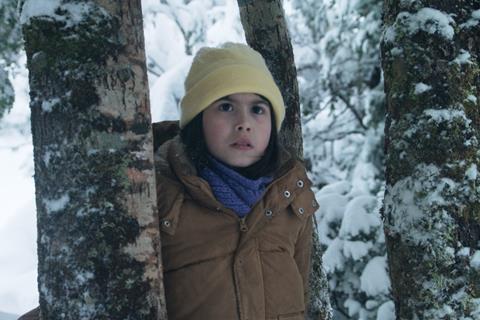
Among the films submitted to compete in Oscar’s international feature category, Manuela Martelli’s Cannes Un Certain Regard premiere The Meltdown flies the flag for Chile and is the filmmaker’s second feature after 2022 political thriller Chile ’76. The story, set in 1992, two years after the end of Augusto Pinochet’s dictatorship, follows a child who befriends a skier who goes missing. Kino Lorber is the US distributor. Sebastian Lelio’s A Fantastic Woman won the Oscar for Chile in 2018 and Pablo Larrain’s No was nominated in 2013.
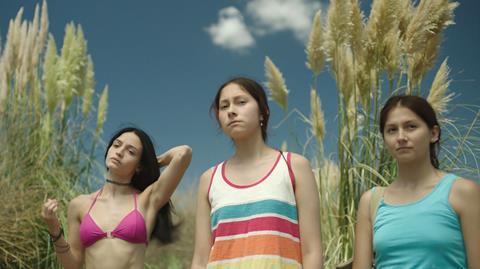
Argentina is historically the most successful country in the region with eight nominations and two Oscars, for Luis Puenzo’s The Official Story in 1986 and Juan José Campanella’s The Secret In Their Eyes in 2010. Dolores Fonzi’s Belén made the shortlist of 15 last season, and current hopes reside with Laura Casabé’s supernatural horror The Virgin Of The Quarry Lake. It premiered at Sundance in 2025 and screened at Sitges, where Casabé won the directing award in 2020 with The Returned.
Brazilian films have represented the region with distinction over the past two editions. Kleber Mendonca Filho’s The Secret Agent earned four Oscar nominations at the start of 2026, while Walter Salles’ I’m Still Here became the country’s first entry to win the international feature award in 2025. This year’s selection is Allan Deberton’s third feature Gugu’s World starring Yuri Gomes as a football-loving queer pre-teen raised with unconditional love by his ailing grandmother. It premiered in Berlin, where it won the Generation Kplus Crystal Bear and grand jury prize, and recently scooped the audience award for Brazilian film at Sao Paulo International Film Festival.
Canada has been a heavyweight down the years, garnering seven nominations and a win for Denys Arcand’s The Barbarian Invasions in 2004. Matthew Rankin’s Universal Language reached the Oscar shortlist of 15 in 2025. The local industry’s hopes this season have coalesced around Genevieve Dulude-De Celles’ Nina Roza, the Berlin Silver Bear best screenplay winner about a Bulgarian art dealer investigating a reputed child prodigy’s work. Dulude-De Celles’ debut A Colony won the 2019 Berlinale’s Generation Kplus Crystal Bear for best film and the Canadian Screen Awards’ best motion picture and best first feature.
Road movie
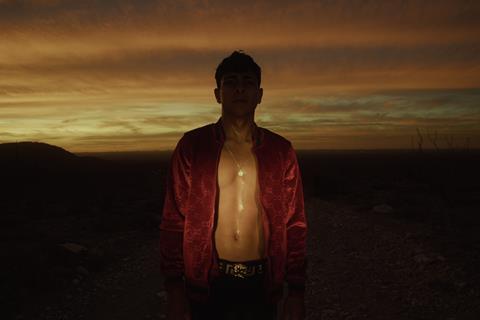
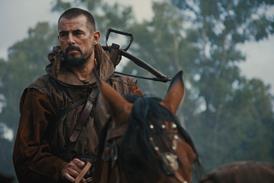
Flying the flag for Mexico is On The Road, David Pablos’ feature about a young drifter with a troubled past who bonds with a solitary long-haul trucker. The title won best film at Venice Horizons in 2025, also scooping Venice’s Queer Lion award, and then winning best picture and best direction at Mexico’s Ariel Awards in October. The territory won the Oscar with Alfonso Cuaron’s Roma in 2019 and its films have been nominated nine times. Despite an absence from the shortlist in the past two years, Mexican films secured slots in the four previous years.
Ciro Guerra’s Embrace Of The Serpent was nominated on behalf of Colombia in 2016, and three years later Cristina Gallego and Guerra’s Birds Of Passage made the shortlist of nine (as it was at the time). This year’s contender is Rains Over Babel from feature debutante Gala del Sol, a fantasy comedy inspired by Dante’s Inferno set in a dive bar. The film premiered at Sundance in 2025 and screened at Rotterdam.
Peru, whose The Milk Of Sorrow directed by Claudia Llosa was nominated in 2010, is represented by Night Has Come. The documentary from Paolo Tizon follows recruits who undertake a tough training regime in order to patrol a notorious cocaine-producing region. It premiered at Karlovy Vary in 2024 where it won the Proxima special jury prize.
Spanish filmmaker Carlos Larrazabal flies the flag for Cuba with Malecón, about a man who returns to Havana after a lengthy stint in prison and is drawn back into crime. The film premiered at Miami Film Festival in 2025, and the selection committee will hope it can follow in the footsteps of Strawberry & Chocolate, the comedy drama from Tomas Gutierrez Alea and Juan Carlos Tabio that scored the Caribbean nation’s sole nomination in 1995.
A handful of countries from the region have never achieved a nomination. Jayro Bustamante’s fourth submission for Guatemala is Mountains Of Fire, in which two scientists uncover corruption when they try to protect Indigenous communities threatened by a newly formed volcano. The film premiered at 2025 Mar del Plata in Argentina. Bustamante’s La Llorona became the first film from his country to make it onto the Oscar shortlist in 2021.
Costa Rican films have graced major festival in recent years, and the current submission, Kim Torres’ If We Don’t Burn, How Do We Light Up The Night, acknowledges the prevalence of gender-based violence in Latin America. Based on her 2022 Cannes short Night Light, the feature premiered at San Sebastian last year and combines horror and thriller tropes as a rural girl uncovers a dark secret that threatens women.
El Salvador’s first ever submission is Vértices, Arturo Lopez Rodas’ black-and-white feature about old friends who reunite at a funeral. It shot in late 2024 across four Salvadoran locations. Panama’s Chichero co-directed by Aaron Bromley and Arturo Montenegro takes place in the 1980s as an Indigenous man flees Peru’s armed conflict for Panama, where he pursues his dream of becoming a boxer. Panama made the shortlist in 2022 with Abner Benaim’s Plaza Catedral.
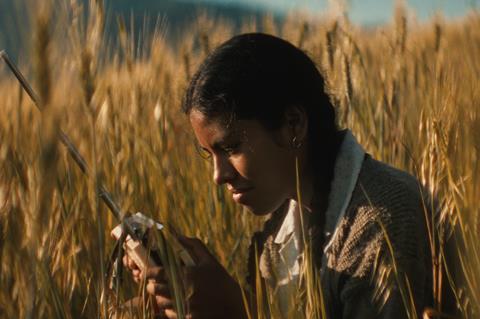
Bolivia’s entry is 2025 Toronto premiere The Condor Daughter, the second feature from Alvaro Olmos Torrico and the story of a young midwife who leaves her Andean community to pursue a musical career and is followed by her adoptive mother who wants to bring her home. From the Dominican Republic comes Melodrama, a romance from Andres Farias about a widow who falls for a Haitian construction worker. The cast includes Heroes star Jimmy Jean-Louis. Melodrama premiered at Miami Film Festival earlier this year.
Ecuador’s submission is Ana Cristina Barragan’s The Ivy, about a woman who studies teenagers in a group home and bonds with one of them. This third feature from Barragan premiered in 2025 Venice Horizons and won best screenplay. The filmmaker previously represented her country with Alba in 2018.
Paraguay offers Marcelo Martinessi’s Narciso, winner of this year’s Berlin Panorama Fipresci prize for best film. The 1950s-set drama follows a rock star who was found dead during the military dictatorship. Martinessi’s debut feature The Heiresses won the 2018 Berlinale Silver Bear Alfred Bauer Prize and was Paraguay’s Oscar entry in 2019.
Daniel Hendler’s A Loose End, Uruguay’s submission about an Argentinian policeman on the run who crosses into Uruguay, premiered at Venice in 2025. Uruguay was nominated in the category in 1993 for its first ever submission A Place In The World, before being disqualified for not having enough local input.
Jorge Thielen Armand’s Venezuelan psychological thriller Death Has No Master stars Asia Argento as a woman who travels to Venezuela to sell her late father’s cacao plantation but finds the staff refusing to leave the mansion. It premiered in Directors’ Fortnight at Cannes. Venezuela made the then nine-strong international feature Oscar shortlist in 2015 with The Liberator.





No comments yet