

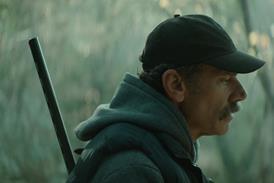




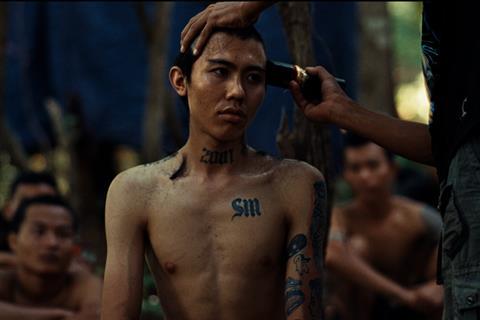
For their feature directorial debut and International Documentary Film Festival Amsterdam (IFDA) opening night film White Tiger Column, Canadian filmmakers Bryan Dickie, Robert Mentov and Dwight Jantzi channelled their own funds into six weeks of filming a Myanmar resistance group’s training camp for young recruits.
Filming took place in the Myanmar jungle in January 2024, three years after the country’s democratically elected government was overthrown by a military coup.
Displacement and resistance are themes that run through the three filmmakers’ prior work. They previously collaborated on a hybrid short, Paradise Heights, featuring members of Toronto’s Burmese diaspora.
Dickie is a photographer and filmmaker who has spent over 15 years in Myanmar as a photojournalist, while Jantzi and Mentov are founding members of Toronto-based Nocte Collective, with experience in producing documentaries for non-governmental organisations.
IDFA runs from November 12-26.
How did the project come together?
Bryan Dickie: I’ve built up many contacts and I’m very connected and close with the Myanmar diaspora in Toronto. Fifteen years going back and forth to Myanmar I have built deep ties and a lot of trust with some people, and I’ve embedded with I believe around five different ethnic armed organisations.
Just talking to the diaspora here in Canada after the coup happened, we were sitting and having coffee, and I was lamenting that I felt like I couldn’t do anything. And they all looked at me quizzically, saying, ‘Wait, you want to actually go in?’ And I said, ‘Of course, that’s the number one thing I want to do.’
How did you settle on focusing on this White Tiger Column camp?
BD: We didn’t necessarily want to tell a traditional war film or get into the deep history of Myanmar because it’s so complicated.
We wanted to approach this through more of a human film. We thought the idea of following the civilians on their transition from being a civilian through training to becoming a soldier revolutionary was something that every human being could understand a little more, if we focused on universal human themes.
How did you ingratiate yourselves to these camps, and camp leaders?
BD: We made a very conscious decision of not pulling the cameras out for the first week that we were in the camp. Treat everybody as humans rather than your subject that you’re trying to pull information out of. We broke bread with them, we smoked cigarettes with them, we asked them questions about their lives, we just spent time with them.
I’ve developed a bit of a strategy – you’re never going to shed your persona as a filmmaker/photographer, but the whole idea is to try and become part of the scene, blend in. You’re never going to be the fly on the wall, but once you’ve become boring to everyone in the camp, you see the special magic happen in front of you.
You shot for six weeks – how much ended up on the cutting room floor?
Robert Mentov: We were pretty selective in our process. We had a lot of problems with power issues, backing up footage, our cameras never had full charge. We were backing up off of Amazon power banks. It was a real tough situation out there. We didn’t have the luxury of over-filming.
How big was the crew?
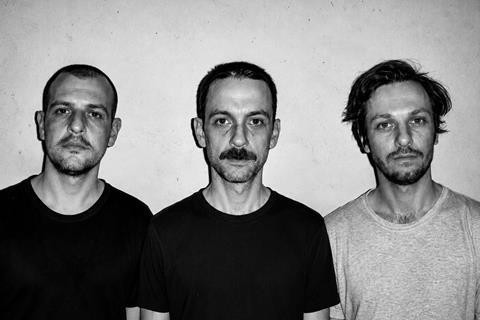
Dwight Jantzi: Just the three of us. We had our local connections and fixers who helped us in different logistical aspects, but from a filmmaking perspective, it was the three of us.
We were living in a hut that was very similar to their barracks, just smaller. Same bamboo floor, same bamboo ceiling. I think that was part of that rapport that we were able to build. We’d wash in the same river. We’d you know eat the same eat the same rice every morning for breakfast.
The White Tiger Column is a designated as a ‘terrorist organisation’ by the Myanmar military. How did you navigate the risk, with possible severe consequences for the families of those identified in the film?
RM: That was probably the largest concern. Doing this type of work in the region for so many years, that was the first thing on my mind. Because we didn’t pull the cameras out for the first week, we got a lay of the land and who was okay with showing their face and who wasn’t.
But just asking people, ‘Hey, are you okay to be photographed or filmed?’ – that wasn’t the end of the discussion. There would be very deep discussions, we tried to explain it completely to everybody at three separate times and give them three different times to opt out. I’m still in contact with all of these people through different means, and it’s a continuing a continuous process of consent.
Will any of the recruits in the doc get a chance to see the film?
DJ: We’re working on doing a screening – for security reasons we can’t get too much into it, but we are working on details for screening in the region in the next year.
You’ve previously said that Jonathan Glazer’s The Zone Of Interest was a reference for this film.
RM: This is something we talked about each night: the front line is so close to us, but we were deliberate in not showing the front line because it wasn’t the experience of the recruits. You’ll see in those conversations at night; they’re speculating what’s over there, over the mountains. You would hear bombs going off, you’d hear gunfire, it was just this distant reality. We started referring to the front line as a spectre. So, like The Zone Of Interest, there’s this thing that’s happening in the background that you’re thinking about constantly, but you never see.
While production was self-funded, you received support from the Canadian Council for Arts and the Ontario Council for Arts for post. What was the editing process like?
BD: It’s been a lot of work in the past 2.5 years to hone this narrative structure – we’re very grateful for our co-producer Tom Edgerton, supervising editor Alyse Ardell Spiegel and editor Karl Kai.
RM: We went through a pretty gruelling post-production process. It took a long time to get it to where it was. It was a very fragile edit, but I think it’s coming out at the exact time that needs to come out. There’s a lot of universality to the themes and what’s going on in our world. It is a film about Myanmar and its people, but it’s what happens when democracy fails. We’re in such contentious times.




No comments yet