












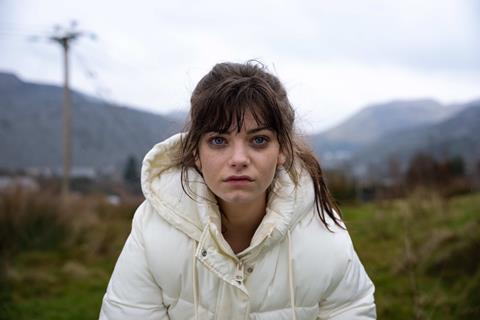
Marc Evans’ Effi o Blaenau, an adaptation of Gary Owen’s 2015 one-woman play Iphigenia In Splott, has broken box office records this summer for Welsh-language film, taking £215,000 for UK-Ireland distributor MetFilm as of August 3 and beating Hollywood tentpoles at some Welsh venues.
The drama has comfortably beaten previous record holder, Lee Haven Jones’s horror The Feast, which grossed £70,228 for Picturehouse in 2022.
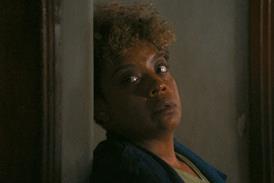
The feature, which premiered at Glasgow Film Festival in March, features Leisa Gwenllian as the eponymous Effi in the depressed slate mining town of Blaenau Ffestiniog in North Wales. She lives life in a loop of unemployment, clubbing and hangovers, until a chance encounter with a solider changes her trajectory. The £2.2m budget film was produced by Branwen Cennard of Tarian Films, with backing from Creative Wales and Welsh-language broadcaster S4C.
Effi o Blaenau was released in 30 cinemas on June 19 – in the throes of a heatwave – and has since played at around 125 venues across the UK and Ireland. “We’re booking new cinemas. It’s going to have an extremely long run,” says Zak Brilliant, head of sales and distribution at MetFilm.
The top five best performing sites have been Chapter Cardiff, Galeri Caernarfon, Pontio Bangor, London’s Curzon Bloomsbury and Cineworld Llandudno. Further non-Welsh cinemas to perform strongly include Bristol’s Watershed in eighth place and London’s The Garden Cinema in ninth place.
At Pontio Bangor, it has outperformed Toy Story 5, and at Galeri Caernarfon, it has beaten Deadpool v Wolverine figures.
Overall, around two thirds of UK-Ireland box office has come from Wales. Cinemas report the film has proven popular with both Welsh and non-Welsh language speakers (about 20% of the Welsh population speak Welsh fluently). S4C chief executive Geraint Evans notes the film’s setting in a “post-industrial slate quarrying community, which faces lots of challenges in terms of social deprivation” is part of what has been so impactful.
“It’s a universal theme that people see all over the place,” he explains. “The fact that it’s based in Wales and in the Welsh language isn’t a barrier. In fact, people can see their own lives and communities being reflected in Blaenau Ffestiniog.”
Dion Hughes, programmer for Pontio Bangor, agrees. “We’ve had a massive lack of Welsh-language films coming out in the last 10-15 years. Every time a film comes out, it feels like a novelty. I’d seen the film early on and thought to myself, ’This is a lot more to do with the situation in Wales and wider parts of Britain that are going through a crisis at the minute’.
”We’ve had period pieces like Mr Burton and Madfabulous, which are Welsh stories and have done really well in cinemas, but there’s been a lack in programming of things like this. What Marc has done is like a combination of a Ken Loach and Mike Leigh film, mashed into one.”
He notes that his cinema – a single, 180-seat screen venue that shows a mix of tentpoles and independent titles – sold out five consecutive nights, a rare feat in the venue’s 10-year history. “We’ve never sold out five nights in a row on an indie title before.”
Punching through
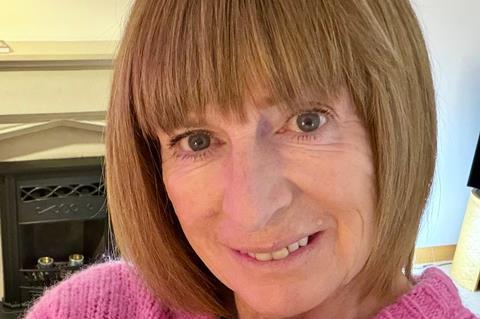
“It was a difficult road – tedious on occasion,” reflects producer Branwen Cennard on her journey to getting the film made.
Cennard, whose credits include S4C series Byw Celwydd, initially saw the play in 2015 and spent two years trying to convince playwright Owen to let her both adapt the project for film and transfer it from English into Welsh. Blaenau Ffestiniog is a strongly Welsh-speaking town and Cennard wanted to lean into a sense of authenticity by adapting it into the local language.
“Traditionally in Wales, we haven’t really had the courage to put things only out in Welsh,” she says. ”We’ve had this tradition of back-to-back productions [two versions shot at the same time in Welsh and English], particularly TV productions,” says Cennard. “I was pretty determined with this. Welsh is the oldest continuously spoken language in the UK and is never seen or heard.”
Cannard took the project to S4C in 2017 but the then-commissioner did not bite. “She was interested, but there was no chance it was going to be one of the things we immediately took into production,” she recalls.
A subsequent change in guard at S4C, coupled with the success of Oscar-nominated Irish-language drama The Quiet Girl, helped turn the ‘no’ into a ‘yes’ a few years later.

Word of mouth
MetFilm was brought the film by its executive producer Catrin Cooper. The distributor put the compelling performance from Gwenllian – known for S4C sci-fi drama Itopia – front and centre of the marketing.
This also presented some risk. While they felt confident that Gwenllian would be popular with younger audiences, there was concern the older demographic might feel alienated. “The trailer is a very kind of different pace, and it’s a very different kind of Welsh language than they probably have been accustomed to over the years. But they came in their droves,” says Pontio Bangor programmer Hughes.
“Our Welsh equivalent of the Women’s Institute is Merched y Wawr, and they’re generally, as the WI can be, pretty traditional, and they have just supported it,” says producer Cennard. “They’ve gone to see it over and over and over again.”
Hughes feels word-of-mouth played a particularly strong role in the film’s success in Wales, noting Pontio Bangor’s box office unusually increased on week two.
Outside of Wales, MetFilm did some outreach work with Welsh community groups, with Curzon Bloomsbury’s success a testament to its proximity to the London Welsh Centre.
Funders’ strategy shift
“Off the back of Effi o Blaenau’s success, it has changed the goalposts for us in terms of what happens next with Welsh-language film,” says Creative Wales’ sector development manager for film, Dai Baker.
“Our investment in film is something we have probably neglected in recent years. S4C film Hedd Wyn had an Oscar nomination a few decades ago, it’s very much part of our history. But we’ve let it go and focused too much on TV dramas,” says Evans. “Now we’ve seen with the success of things like A Quiet Girl with TG4 and Cine4 in Irish, that’s reignited appetite within us.”
![Lluest[80]](https://d1nslcd7m2225b.cloudfront.net/Pictures/480xAny/5/3/7/1484537_lluest80_48263_crop.jpeg)
Both S4C and Creative Wales have committed to investing £1m per year in Welsh-language cinema. A joint Sinema Cymru scheme launched in 2023, alongside Welsh film development agency Ffilm Cymru, to support Welsh-language features with international big screen potential. The scheme includes a development award, with funding of between £10,000 and £30,000, through which 10 projects have been backed.
The scheme also plans to back the production of one Welsh-language film a year from its development slate. Gareth Bryn’s revenge western Lluest, the first to be greenlit under the scheme, was shot in spring of this year, with MetFilm also repping sales.
Creative Wales has also ringfenced money to support distribution and prints and advertising (P&A) costs, to bolster a film’s chance of reaching audiences. This is a new means of support from Creative Wales, which was piloted with Icon Distribution and the release of Mr Burton last year, with Lluest also set to benefit from this support.
And Effi o Blaenau’s journey is not over yet. There is talk of international distribution and Oscar hopes, with the film eligible for selection as the UK’s official entry in the Academy Awards’ international category.
“It’s emboldened us in Wales,” says producer Cennard. “It’s opened the door and shown us what is possible, where maybe in the past we’d have thought it would have been impossible.”





No comments yet