


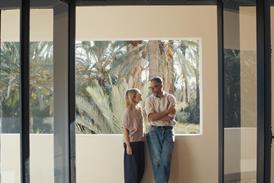
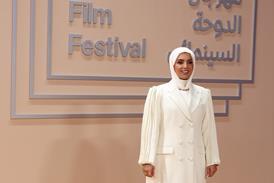
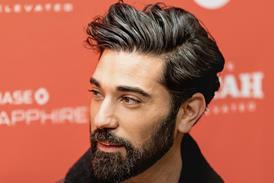
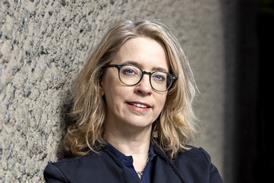

“I would much rather not have done this film and have her here drinking a beer with me and just dancing like she always did,” says Brazilian filmmaker Fellipe Barbosa, as his latest feature, Leila Et La Nuit, makes its world premiere at the Marrakech International Film Festival this week.
Nearly nine years in the making, the film is a tribute to his late friend, Franco-Moroccan photographer Leila Alaoui, and an exploration of grief, faith and a family’s response to violence.
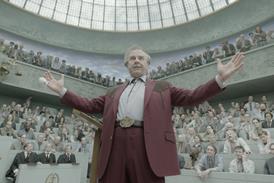
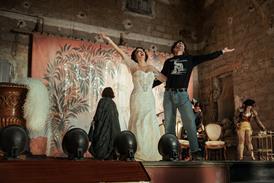
Based on her father Abdelaziz B. Alaoui’s book Off To Ouaga, the film stars Roschdy Zem and Marina Foïs as parents determined to bring their daughter home after she is fatally wounded in a terrorist attack while on assignment in Burkina Faso in 2016. Zem’s real-life daughter Nina plays Leila, alongside Sayyid El Alami, Oulaya Amamra and Françoise Lebrun.
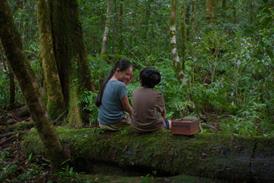
The film shot in Marrakech and further south in Morocco, doubling for Burkina Faso and casting members of the local Burkinabé community, with two days of shooting in Paris.
Produced by France’s Damned Films, Brazil’s Migdal Filmes and Morocco’s Lions Production, in co-production with Brazil’s CinemaScópio, the film is sold internationally by Paris-based Lucky Number. Condor will release in France.
Friendship
Barbosa met Alaoui during orientation at Hofstra University in New York, where he was studying filmmaking on a Fulbright scholarship in 2001.
Their connection was “so natural and so quick”, he recalls, remembering her “amazing smile”. Alaoui told him he reminded her of a childhood friend called Othman Zine, predicting they would become friends.
A year later, Barbosa joined Alaoui on a three-month trip around Morocco. He stayed at her family home in Marrakech, where he would eventually shoot the film, and forged a lasting friendship with Zine, his future co-writer and co-director.
“It was important for me, being a Brazilian Catholic, to have a Moroccan Muslim alongside me,” he says of Zine, in reference to the sensitivity of the film’s religious and cultural themes.
Barbosa returned to Morocco immediately after Alaoui’s death in 2016. “It was probably the saddest loss I experienced in my life,” he says.
Inspired by her father’s manuscript, Barbosa wrote the first draft with Zine in the Paris apartment where Alaoui had stayed with the latter, later enlisting Luna Grimberg and Alaoui’s mother, Christine Alaoui.
They made a creative decision not to depict the attack itself. “It’s very easy to seduce an audience through violence, and I thought it was not ethical,” says Barbosa.
He drew inspiration from Alaoui’s love of dancing, choreographing his shots to evoke her spirit while maintaining a respectful distance from the family’s pain.
Financing
Despite Barbosa’s festival pedigree and Zem’s early attachment, securing financing proved challenging.
“Most partners that usually say yes to us said no this time,” says Barbosa, citing the challenge of competing with established French filmmakers rather than accessing funds earmarked for first and second features.
He credits Foïs with galvanising the producers. “She brought some fury to this.”
Canal+ was the first financing partner on board, with the film ultimately made for around €1.3m, down from a projected €3m-€4m.
Damned Films’ Yohann Cornu, a longstanding collaborator, spearheaded the French financing. Barbosa reunited with Casa Grande producer Iafa Britz, who brought Brazilian public funding, while Moroccan producer Hicham El Ghorfi, another childhood friend of Alaoui, provided local infrastructure and expertise.
Brazilian filmmaker Kléber Mendonça Filho and producer Émilie Lesclaux filled the final financing gap through CinemaScópio. Alaoui had once hosted Lesclaux in New York. “Bringing them on board has this very spiritual meaning for me,” says Barbosa.
Full circle
Marrakech artistic director Rémi Bonhomme has followed Barbosa’s career since his debut fiction feature Casa Grande, which premiered at Rotterdam in 2014, and was on the Cannes Critics’ Week selection committee when Gabriel And The Mountain won two prizes there in 2017.
The two bonded over their shared connection to Alaoui, whom Bonhomme had known in Beirut.
Barbosa subsequently mentored filmmakers at Marrakech’s early Atlas Workshops, while Bonhomme followed the film’s development, repeatedly asking to see it. “He was the first one to really want the film, and he’s the one who’s got it,” says Barbosa.
As with Gabriel And The Mountain, Barbosa blurred the boundaries between fiction and reality, with Alaoui’s family and friends, including the filmmaker himself, appearing alongside the actors portraying them in one scene.
Barbosa invokes a Brazilian proverb – “God writes straight with crooked lines” – to explain why he feels the film was destined to premiere in Marrakech. “This is the right place to be. I think that would be Leila’s wish,” he says. “I guess it’s part of the process of grief. It’s the end of it, hopefully, for all of us.”
Beyond introducing international audiences to Alaoui’s photographic work, Barbosa hopes the film will resonate in an increasingly polarised world.
“The way this family deals with grief is an ode to non-violence,” he says. “They could have turned super angry and wanted revenge.”
Instead, the film “tries to show that the only solution is love”.

No comments yet