







Gaël Kamilindi’s drama The Last Zebra recounts Rwanda’s traumatic history, from colonial rule to the 1994 genocide against the Tutsi.
It is one of the 14 projects in development being showcased at Marrakech’s Atlas Workshops this week.
The Zebra’s Shadow is the first fiction feature project for the writer-director, following documentaries and short films, including Taxi Moto, which won the Teddy Award for best short film at the Berlinale earlier this year.
Based in Paris, the Swiss-Rwandan filmmaker wants to explore the idea of how those who are absent —whether dead, forgotten, or displaced — continue to shape the present
The story is set in 1994 in Belgium, and it follows Pacifique, a man who has a sudden and traumatic recovery of memory. When his adoptive mother dies, he finds a photo of himself in a centre run by white nuns in Rwanda under Beligium’s colonial rule. His understanding of the truth behind his childhood begins to complicate the relationship with his daughter and he decides to travel to Rwanda.
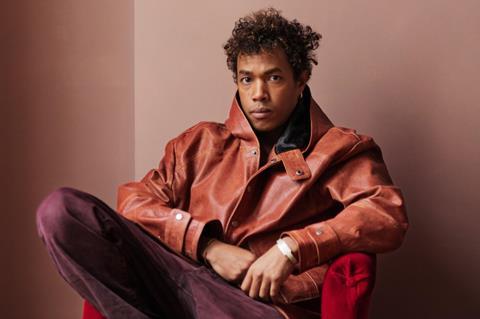
Based in Paris, Kamilindi, who is also an actor and a member of the Comédie-Française, plans to play Pacifique’s role himself. The Zebra’s Shadow is a deeply personal story for him.
“The character’s daughter is the same age I was when I arrived in Europe from Rwanda as a very young child,” he says. “The circumstances of my arrival are different, but my mother also died when I was very little, and I have very few memories of her. Pacifique’s story is about a son looking for his mother.”
“Like Pacifique, I am light-skinned, so the story of The Zebra’s Shadow is also inspired by this,” he continues. ”When I am in Europe I get asked ‘where are you from?’ and when I am in Rwanda, they ask the same thing. But as the African proverb goes: the shadow of a zebra has no stripes, in the sense that what makes us is not always visible.
The paradox is that, in the context of the Rwandan genocide of 1994, the lead character discovers “his Belgian passport and lighter skin are protective factors, the same skin colour that triggered him being stolen from his mother when he was a child, osing his mother and his homeland too as a result,” Kamilindi explains. “But in 1994, it’s this same colour that spares his life.”
Kamilindi previously explored his Rwandan roots in his first feature-length documentary Didy, co-directed with François Xavier Destors, about the search for Kamilindi’s mother’s life in the country.
Swiss producer Aline Schmid of Beauvoir Films saw the film at IDFA and approached the filmmaker about making a fiction feature.
With a first version of the screenplay completed, Kamilindi is now looking for a second screenwriter “to have a fresh look at the story and carry on working à deux. We have got a development fund from Switzerland. Being at the Atlas Workshops will be very interesting to find potential co-production partners, ideally in Belgium, Rwanda, maybe also in another East African country and France.
The plan is to go into production in 2028.
“I discovered I really enjoy writing, with many ideas flowing during sleepless nights,” says Kamilindi. ”As an actor, I am the object through which a vision is conveyed, but I also enjoy being the subject who drives the story, and this is what writing and directing allows me to do.”




No comments yet