







Mouhssine El Badaoui’s Marrakech premiere explores the highs and lows of the Moroccan equestrian tradition
Dir/scr: Mouhssine El Badaoui. Morocco/Belgium. 2026. 79mins
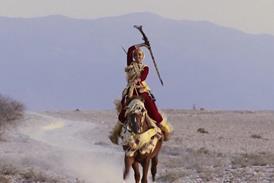
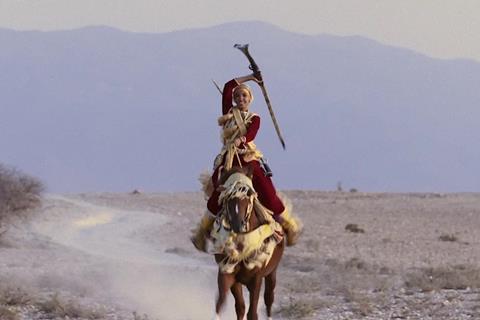
As hobbies go, charging across a dirt field on a horse while twirling a rifle and then firing it in unison with a small team of other riders demands respect. Tbourida (also known as Fantasia) is a Moroccan equestrian tradition going back to the sixteenth century, and Banou spends roughly a decade following Hanane Talid, the only female head rider in the Marrakech area. This endearing documentary is less about the intricacies of this theatrical sport and more about Hanane’s determination to continue in the face of multiple obstacles – which include a lack of funds and gendered ideas about what else she should be doing with her life.
Less about the intricacies of this theatrical sport and more about Hanane’s determination to continue
Named after the Tbourida battle cry meaning ’Show yourselves!’, Banou is the first feature documentary from Moroccan multi-hyphenate Mouhssine El Badaoui, whose past work includes directing for Belgian TV, acting and directing for theatre in his hometown of Casablanca and working as a first assistant director on a notable list of US films shot in southern Morocco, including Alejandro González Iñárritu’s Babel and Ang Lee’s Billy Lynn’s Long Halftime Walk. The Arabic and French-language film has its world premiere in Marrakech’s Moroccan Panorama sidebar, and programmers elsewhere could be charmed by the resilience of Hanane, who makes a strong and sympathetic subject, and by the film’s gentle exploration of traditions rubbing up against modernity.
Banou charts several attempts by Hanane and her all-female team to compete successfully at a series of mawsims – gatherings where teams of horse riders perform one after the other in front of large, excited crowds. El Badaoui is not especially bothered about explaining the intricacies of Tbourida or the mechanics of the mawsims, although we learn enough about both in passing not to be lost.
Across several Tbourida competitions, we gain a sense of what makes a good or bad performance, and watch Hanane and her teammates preparing for these big days and berating or congratulating one another afterwards. The mawsim scenes have an energy and thrill which contrasts with the film’s quieter, more quotidian, observational side, where we visit Hanane at home or working as a groom for a wealthy stable owner.
The film’s most illuminating scenes emerge from Hanane’s domestic life with her parents, siblings and ageing grandfather. “I’ll only get married when I’ve had enough of mawsims,” Hanane says as her older sister Ikram prepares to wed. There’s a winning scene of Hanane, her sisters and other family and friends rehearsing the wedding, fake beards drawn on several of their faces. We then eavesdrop on an amusing discussion of what married women can expect – or not – from men.
Intimate moments such as these give Banou its charm, and El Badaoui resists any overarching structure other than the passing of time. There’s a wistfulness that comes naturally with seeing Hanane grow older, face loss in the family and make compromises about her future. A score evoking traditional Moroccan music is used lightly, and the cinematography feels natural and unfussy.
El Badaoui also describes how the modern world is encroaching on Hanane and her passion. Money is increasingly tight and it’s expensive to maintain her attachment to Tbourida, with the rising costs of looking after and transporting horses and organising training sessions. (There are several heated discussions about money between Hanane and her father). Meanwhile, urban expansion from nearby Marrakech threatens to engulf Hanane’s village, leaving her with nowhere to house and train her horses. Ample shots of construction hoardings and JCB diggers underline this encroachment, and suggest the inevitability of change and the loss of traditions along the way.