













Among the scripted efforts at Waves Film Bazaar’s project market in Goa, the dark drama Mongoose stands out as a contender for most likely to be co-produced.
It will be the sixth feature for Indian writer-director Nikhil Mahajan, who recently directed Betaal for Netflix, Blumhouse Television and Shah Rukh Khan’s Red Chillies.
Describing Mongoose as a “pulpy, genre film” that is also socially relevant, Mahajan pitches it as the story of a taxi driver who plies his trade between cities and one dark night is confronted by a tough carjacker.
“These two men from different strands of society are meeting each other for the first time, but they soon come to realise that this is not the first time their paths have crossed,” says Mahajan. “Indeed, they have influenced each other’s lives and altered each other’s destinies many times over.”
The story is set in Maharashtra town Malegaon, which is one India’s most sensitive in that its population is evenly split between Muslims and Hindus. “I want the film to feel like Magnolia meets Gangs Of Wasseypur.”
The project has 60% of its $1.1m budget in place and is already structured as an Australia-India venture. Its producers at India’s Coqueliquot Pictures and Australia’s Photoplay Films aim to make use of the official coproduction treaty that exists between the two countries, which has been little used.
They are also looking for European finance that could complete the budget before a Q4 2027 shoot. A sales agent is also required in order to unlock Australian federal finance.
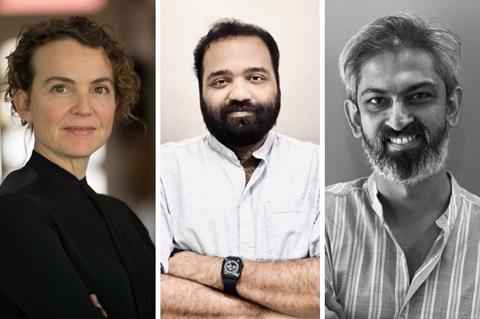
Producer Suhrud Godbole and Mahajan have worked together since 2010 and established their latest venture Coquelicot just last year. The company’s first title is Tighee, which plays at the ongoing International Film Festival of India (IFFI) and has also achieved commercial success.
“We have always had this ambition that the kind of films we make – which sit between arthouse and commercial – can be accessible and be appreciated outside the country. And, finally, with Mongoose I think we are ready,” says Godbole. “Co production is something that India is very alien to, and while we are not quite beginners, Karen is doing some handholding.”
“We know that co-production brings additional costs, but other advantages too, including post-production in Australia,” says Photoplay principal Karen Radzyner. “It is getting so hard for films to stand out on the festival circuit and distribution these days. So, we see partnerships with [producers in third] countries as helping open the doors for this film.”
In parallel to the final financing, Cocquelicot aims to attach some of the biggest-name Marathi stars. The producers are also contemplating production of a concept trailer.
“We’ve always shot a teaser beforehand that goes in theatres even before we start shooting the feature,” adds Godbole. “It’s one way we market our films and creates a curiosity within the trade.”






No comments yet