








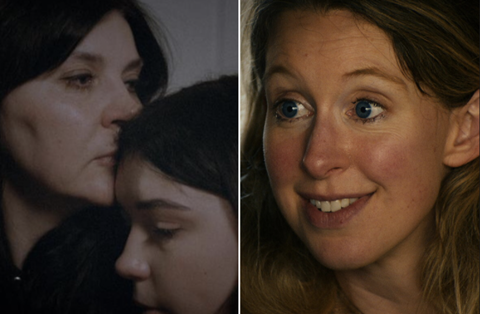
The impact of the international box office success of Nathan Fielder and Lance Oppenheim’s You Can See Everything on the future of theatrical documentary after a bleak few years was the major talking point at this year’s International Documentary Film Festival Amsterdam (IDFA), which closed on November 22.
“There’s a renewed, albeit cautious, optimism,” said New York-based Ryan Krivoshey, co-founder of production company Correspondent and distribution label Grasshopper Film.
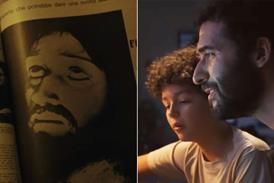
“My interest would be how we embrace a massive success like this and make other successes that everybody in the industry is so desperate longing for,” added executive producer Kim Christiansen at Denmark’s DR Sales, who is interested to see if DR Sales’s blended-genre documentary Father’s House, released at the same time as You Can See Everything in Danish cinemas, receives any positive tailwinds at the box office from the Elizabeth Holmes doc.
“What’s important is the recognition that this [younger] audience exists,” added Krivoshey. “And while many of the projects pitched here at IDFA don’t necessarily need to reach audiences on that scale, the hope is that as this overall audience grows, smaller, more focused audiences will emerge within it, with an appetite for more adventurous work in terms of both form and subject matter.
“At the same time, there’s a growing understanding that traditional distribution models are not a one-size-fits-all solution, not that they ever really were, and that new approaches are needed. Figuring out what these new models might look like, and how to successfully implement them, is the question on everyone’s mind.”
Growing audiences
Evolving distribution models were on the mind of Stefan Kloos, managing director of Berlin-based sales and distribution company Rise And Shine. His company launched a new dedicated documentary streamer called Rise And Shine Channel at the festival.
“How festivals can strengthen their role in distribution of documentaries, not only to make films seen, but also how they can contribute to the distribution success of films,” he observed as a key talking point at IDFA.
“The rise of smaller, independent platforms adds options, but not necessarily more audience or money,” said Ana Saiz, founder and head of sales at Impronta Films. “The search is increasingly for spaces where films can reach people in public, through educational and non-theatrical screenings or venues beyond traditional cinemas, and for how impact work can run alongside traditional sales, rather than apart from it.”
Tara Hein-Phillips, co-founder and CEO of New York-based Jolt, made her first trip to IDFA this year. Jolt is a platform that uses data and AI to connect independent and documentary films with targeted audiences while letting filmmakers keep ownership and rights. She had a jam-packed 28 meetings across two days with producers, distributors and sales agents, and was impressed by how many industry talks focused on “new ways of approaching distribution”.
Standout projects
“The festival remains valuable to both industry and local audiences,” said Jenny Bohnhoff, international sales and operations manager at the UK’s MetFilm. “Balancing big international titles with interesting films that are yet to find wide distribution seemed to generate strong interest from all sides.”
Projects in the lineup that were popular with buyers and programmers included Polish filmmaker Elwira Niewiera’s Women And War and Louis HotHotHot’s The Year Of The Ghost, which won the audience and best international film awards respectively.
Juan G. Castro, managing director of Netherlands-based Latin Quarter, a sales and distribution outfit focusing on Latin American and Spanish cinema, heralded a strong year for Latin American projects.
“It was a particularly resonant edition for Latin American storytelling,” he said. “Having [Salvadorian/Mexican] Tatiana Huezo as guest of honour set a powerful tone, affirming how deeply hybrid, atmospheric cinema from our region connects with international audiences.
”In the main competitions, world premieres like Alejandro Alonso Estrella’s Bahia Honda (Cuba) in Envision and Isabel Joffily and Rita Toledo’s Morro Grande (Brazil/Netherlands), alongside Juan Manuel Sepúlveda’s Here Where The Fire Burns (Mexico), showed real formal daring.
“At the Forum, seeing Daniela Muñoz Barroso’s Cuba-Spain project Silence Diaries win the best roundtable project award was a highlight. We believe it’s an extraordinarily intimate, conceptually sharp work. I was also very impressed by the slate of Latin American projects pitching this year, particularly Francina Carbonell’s La Linda (Argentina/Chile) and Josefina Buschmann Mardones’ Artificial Clouds (Chile/France).”
Further standout projects according to industry attendees presented at IDFA Forum, the festival’s co-production bazaar, included German filmmaker Joakim Demme’s Fur, about the fur industry’s fight against its European Union ban; Palestinian Mohammed Alshareef’s Gaza-set Super Sila; Roxy Rezvany’s documentary-art hybrid Being North Korean; Iranian filmmaker Parsa Ansari’s Shooting Stars – winner of the Forum’s best pitch project; Paraguayan filmmaker Juanjo Pereira’s archival doc Examination; and Kyrgyzstan filmmaker Alina Baitokova’s ARTE European talent development award winner, Stitch By Stitch.
“This year’s selection of projects was particularly strong, both in the pitch and roundtable presentations,” said Krivoshey. “I was especially pleased to see new work from Wang Bing [Jiabiangou] and Zhao Liang [Ship Of Fools], two singular documentarians whose films I’ve long admired. Other projects that resonated with me were Vitaly Mansky’s Odesa.Mama, Roman Bondarchuk’s Recovery, and Christina D. Bartson’s Contract Of The Century.”
One European sales agent was less enthused by the Forum selection, noting the “gap between projects selected and the industry’s need” continues to widen, with not enough thought given to what could appeal to the more mainstream tastes of the broadcasters and streamers. Of the US streamers, Netflix and Apple both had representatives present, although not in big numbers.
The change to the format of IDFA Forum’s project presentations into either broad pitch sessions or in-depth, intimate roundtable sessions, based on project need, was well-received. “The revised IDFA Forum structure, moving more mid-to-late-stage projects into roundtables, allowed for much deeper, more tailored conversations with financiers and distributors,” suggested Castro.
“While pitching onstage in front of a packed audience certainly brings more energy and can sometimes make a greater impact, I found that some filmmaking teams preferred the intimacy of the smaller room,” added Krivoshey. ”Rather than presenting to everyone, they appreciated the ability to present to a more focused group of industry executives who had specifically chosen to be there,”
But some challenges for industry attendees persist, such as navigating the sheer size of the programme. Castro noted, “With over 250 titles in the official selection and a packed five-day industry schedule, buyer and programmer bandwidth remains stretched, making curated discovery and early market positioning even more critical for independent titles without major sales agents attached yet.”
Last year’s decision to separate the locations of the different market strands, previously all under one roof at Felix Meritis, continues to garner a mixed response. MetFilm’s Bohnhoff felt the new locations were “spacious” and “worked well”.
“I find IDFA a high point in the industry calendar for finding high calibre films and making personal connections,” noted Elizabeth Sheldon, founder and CEO of New York-based sales and distribution outfit Juno Films. “I did find it easier to set meetings when everyone was in the same building.”





No comments yet