









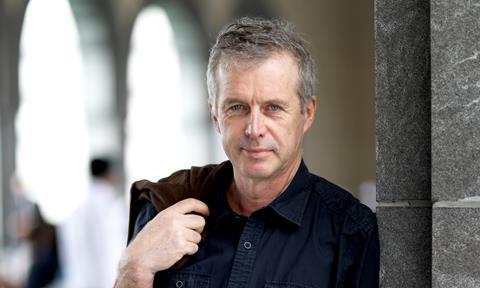
EXCLUSIVE: Cannes award-winning French director Bruno Dumont has revealed his next feature The End is being made entirely using generative AI, without actors or a traditional film crew and on a shoestring budget.
The prolific auteur began work on the English-language sci-fi thriller in August and has since wrapped production, generating its images, performances and sound himself, with a festival rollout and theatrical release planned for 2027.
The End follows an ambitious Los Angeles police officer investigating a crime as the city is engulfed by earthquakes and falling asteroids. Set between contemporary Los Angeles and the Joshua Tree desert, the apocalyptic thriller charts the rise and fall of a man whose investigation takes on mystical dimensions.
Dumont said he wrote the screenplay more than 25 years ago, following 1999’s Humanity, but its elaborate disaster sequences made it prohibitively expensive to produce. The project was shelved, leading him instead to make his 2003 California-set drama Twentynine Palms. Generative AI technology has now made the project possible.
“The costs are on an entirely different scale compared to those of the traditional economy of the industry of cinema, said Dumont, who described the results as “astonishing”.
Dumont has dispensed with physical production altogether, generating the film’s images and sound from his Paris home while retaining control over the performances, mise-en-scène and editing. Rather than feeding the entire screenplay into an AI programme, he works scene by scene, using his own shot breakdowns to generate footage.
“I’m like a director working with a crew, except that my crew is a machine,” he said. “I give it instructions constantly.”
He said he can demand “greater emotional intensity or anger” from virtual actors and refine everything from sets and vehicles to costumes and hairstyles. He has also used faces from Flemish paintings as references, transforming them into contemporary characters.
Dumont, whose Humanity and Flanders won the Cannes Grand Prix in 1999 and 2006 respectively, is known for his unconventional filmmaking, often working with non-professional actors and blending realism with comedy and the surreal. His credits include Camille Claudel 1915, starring Juliette Binoche, Cannes competition titles Slack Bay and France, and sci-fi satire The Empire, which won the Silver Bear jury prize at the 2024 Berlinale.
His latest feature, French Riviera-set coming-of-age tale Red Rocks, premiered in Cannes Directors’ Fortnight earlier this year before screening at San Sebastian and New York.
After struggling to secure French backing for Red Rocks, Dumont turned to other European territories. He is now producing The End independently, with no sales agent attached yet, and plans to seek festival premieres before pursuing distribution and international sales.
“With generative AI, auteur cinema can reclaim radical creative autonomy, bringing previously unachievable visual and poetic worlds to life, free from financial and industry constraints,” he suggested.
Dumont insisted the process is not fundamentally different from conventional filmmaking, with the machine generating material that he shapes through his own artistic decisions and sees AI as a route to artistic independence amid mounting difficulties financing auteur films in France.
“It is becoming harder and harder to finance films in France,” he said. “Today I have complete freedom. I can do what I want.”
Dumont is also developing a separate, conventionally financed French feature with human actors and film crews shot in live action with Nicolas Anthomé’s Bathysphere Films, the company behind Arthur Harari’s Cannes competition titleThe Unknown.




No comments yet