













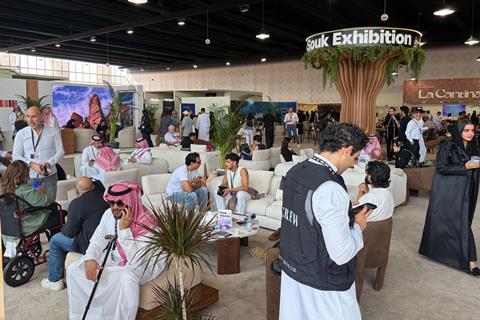
Investment in content versus investment in infrastructure is a key question for the future of the Saudi film industry, according to Shahjahan Mirza, head of asset management division at Saudi bank BSF Capital.
“It comes down to risk and tolerance,” said Mirza, speaking on a panel at Red Sea International Film Festival’s Souk industry space. “You can’t have one growing if the other one doesn’t happen.”
“Content is the high-risk, high-reward strategy – an investor needs to be aware of those risks. Infrastructure is traditionally more income-generating, stable, and lower-risk. You will always find an audience for both as far as investors are concerned.”
Seven years since opening up to the film industry, a next step for Saudi Arabia will be the development of an ecosystem on which filmmakers and financial partners alike can rely.
“Filmmakers are then not thinking project-by-project, they’re thinking multi-year, because the capital partners are there,” said Mirza. “They have trust and confidence within the institutional frameworks.”
Basil Al Alola, chief business officer at the country’s Cultural Development Fund, believes Saudi Arabia is “past the point of creating a market by subsidising, by grants”, and is ready for an influx of private investment. “The minute you see the private sector coming in, you know it’s viable because they’re driven by a commercial requirement,” said Al Alola.
The panel was moderated by Rasha AlEmam, founder and CEO of Saudi production company Yellow Camel; who herself is a panellist on a Souk talk today, titled ’Fueling the Film Industry: Igniting Success Through Strategic Partnerships’.




No comments yet