
















Disney CEO Bob Iger offered no clues over his likely successor and trumpeted the company’s IP stable after a solid Q1 earnings report on Monday, telling analysts that he was not considering new company acquisitions in light of the ongoing Warner Bros Discovery (WBD) sale process.
“If anything, the battle for control of Warner Bros Discovery should emphasise or cause investors to appreciate the tremendous value of our assets, particularly our IP,” Iger said when asked by an analyst for his thoughts on acquiring more properties.
He continued, “We have a great hand. I don’t really feel that we have a need to buy more IP; we’re just going to continue to create our own, and we have an unbelievable bedrock of stories already told to grow from.”
The executive hailed Disney’s $71.3bn acquisition of the entertainment assets of 21st Century Fox in 2019, adding it was “ahead of its time” and “extremely well-priced considering what’s being offered for the Warner Bros Discovery assets”. Disney’s IP acquisitions under Iger include Marvel, Pixar and Lucasfilm.
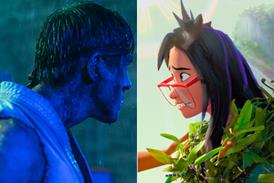
Six Disney global releases have generated more than $1bn each in the past two years, and 37 overall, most recently Zootopia 2 and Avatar: Fire And Ash, both of which opened in the quarter.
The two films were the theatrical highlights of a Q1 earnings report that saw overall revenue for the period ended December 27 2025 increase by 5% year-on-year to $25.9bn, and adjusted earnings per share reach $1.63 on operating income of $4.6bn. All three metrics beat Wall Street forecasts.
CEO succession
Iger, who as previously reported is hanging up his CEO cap this year, sounded nostalgic as he commented on his Disney accomplishments. The current thinking in Hollywood is he will step down in the coming months and make way for Disney parks, experiences and products head Josh D’Amaro as his successor.
D’Amaro’s division is the star of the Disney portfolio and posted quarterly revenue in excess of $10bn for the first time. Some reports have said the Disney board could meet as early as this week to decide who will succeed him. Dana Walden, who oversees entertainment and news, is also in the running.
“The good news is the company is in much better shape today than it was three years ago [Iger returned as CEO in November 2022] because we’ve done a lot of fixing,” Iger said, adding: “[My successor] will be handed a good hand in terms of the strength of the company.”
Disney shares dropped 7.4% by the end of trading due to uncertainty over Iger’s successor, and rising costs.
The entertainment division reported a 7% year-on-year revenues gain to reach $11.6bn, although operating income fell 35% to $1.1bn due to higher costs in releasing Zootopia 2, Avatar: Fire And Ash, Predator: Badlands, and Tron: Ares – double the number of films released in the year-before period – as well as the Fubo integration into Hulu+ Live, and higher technology costs.
Streaming growth
Streaming revenues grew 11% to $5.3bn for the quarter, comprising $4.4bn in subscription fees and $922m in advertising and other revenue. Profit of $450m climbed 72% year-on-year and is projected to reach $500m in the second quarter.
Disney has stopped reporting subscriber numbers, although the company noted membership continued to climb and Iger said he saw “encouraging results from investment in local content”, without giving specifics.
The CEO added that he expected Hulu to be fully integrated into Disney+ by the end of 2026, adding that customers would still be able to subscribe to Disney+ and Hulu separately. Companies like bundles because they produce less customer churn.
In one negative, the company’s sports division lost $110m due to a 15-day carriage dispute with YouTube that created a blackout of ABC, ESPN and other Disney-owned channels.
Sora deal
Asked to elaborate on Disney’s three-year licencing deal with Open AI announced late last year, Iger said users will be able to prompt the text-to-video app Sora app to create 30-second videos of approximately 250 Disney characters “that do not include human voices or faces”.
Disney will curate the videos on Disney+ and Iger said the deal gives the company the ability to jump-start short-form video on the platform.
“We view AI as having a number of advantages,” he said, adding that the first batch of videos would likely appear in fiscal year 2026 and there were no immediate plans to increase the running time. “One is as a tool to help the creative process. Another is productivity, which is being more efficient. The third is creating a more intimate relationship with the consumer.”






No comments yet