













The European film industry has won the crucial backing of MEPs for greater EU cultural funding, including for a ringfenced Media programme focused on the film and TV sectors.
The move is expected to lead to a significant increase in dedicated financing to at least €2bn for the Media programme, which provides vital support for the sales and distribution of European films as well as to festivals, cinemas and training organisations.
It comes after several key European Parliamentary committees of MEPs - for Culture and Education and Civil Liberties, Justice and Home Affairs - today (November 19) finalised their proposal for the 2028-2034 AgoraEU programme.
AgoraEU is due to replace the EU’s flagship €2.44bn Creative Europe cultural programme which houses the audiovisual-focused €1.42bn Media programme.
Recent proposals for AgoraEU have alarmed the film industry. In particular, the EU’s executive branch, the European Commission, wanted to widen the funding scope of the Media programme to include struggling news media. There has also been talk of cuts to cultural funding to focus on defence and industrial competitiveness.
However, MEPs in the European Parliament committees have now hammered out an agreed position on AgoraEU, calling for the programme to be strengthened and better defined.
The MEPs have proposed a €10.72bn budget for AgoraEU, up from the Commission’s €8.58bn.
They propose dividing this budget among five specific strands, including a ringfenced Media programme.
MEPs have proposed a 25% funding allocation for the Media programme within the AgoraEU budget, which would equate to €2.68bn for the 2028-34 period – a significant increase from its current €1.42bn budget for the 2021-27 period.
A ringfenced Media programme would cover audiovisual production, cross-border distribution, and film education, with the ambition to “ensure a level playing field, foster independent production and ensure better visibility of European works.” MEPs also said they want to back European video games and multilingual, cross-platform accessibility.
As well as the proposed budget increase and ringfencing, independent producers have welcomed MEPs’ desire to focus Media programme spend on independent production.
Under the proposals, the four other defined AgoraEU funding strands would be Creative Europe–Culture, for cross-border initiatives in the cultural and creative sectors, which would take a 21% share of the overall budget; News and Journalism to support independent journalism (13.5% share); human rights programme Democracy, Citizens, Equality, Rights and Values CERV+ (29.5% share); and the Daphne programme (11% share) for gender-based and domestic violence and violence against children.
Although Media would receive more money, the Culture strand has emerged as the big winner in terms of overall funding. Culture’s budget currently stands at €805m, and would rise to €2.25bn. Media’s share of overall funding would also fall under the proposals; down from the current 58% of Creative Europe funding to 25% of AgoraEU funding.
Next steps
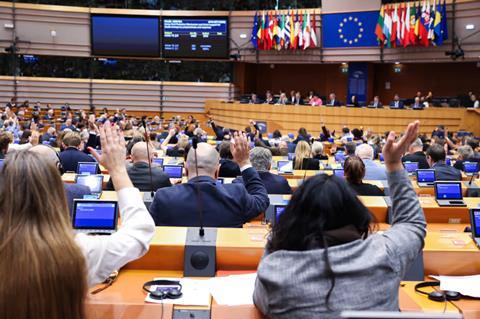
The European Parliament will vote on the MEP committee proposals in mid-December, but approval is considered a formality.
Then, in January, negotiations will open between the EU’s two other power sharing centres – the European Commission, its executive arm, and the European Council, comprising EU leaders.
Some compromise is expected, likely around the overall budget level for the AgoraEU programme, which observers think may drop to around €8.6bn to satisfy calls for spending cuts to AgoraEU by the Irish Presidency of the European Council in October.
The €8.6bn figure sits neatly between the €10.72bn proposed by MEPs today, and the €6bn proposed in October by the Irish presidency of the European Council.
But this €8.6bn figure for AgoraEU would still mean a funding increase for the Media programme, at around €2.15bn.
The final text for the AgoraEU funding package is expected to be approved in the first months of 2027, ahead of the programme beginning in January 2028.
MEP Emma Rafowicz, the S&D rapporteur for AgoraEU on the Culture committee, said: “AgoraEU is vital for Europe’s creative and cultural sectors and European journalists. With this vote, we are sending a strong message of support to sectors essential to our democracy and our sovereignty by making artistic and editorial independence a cornerstone of our funding instruments. I look forward to the upcoming interinstitutional negotiations.”
Julie-Jeanne Regnault, managing director of the Ruopeam Producers Club, said: “Today’s vote on AgoraEU in the European Parliament’s committees is an important step in the right direction. It sends a clear signal about the need to preserve the identity and integrity of MEDIA, a 35-year success story, while ensuring a dedicated and protected budget. It also explicitly recognises the essential role of European independent production companies. With other stakeholders, we will continue our mobilisation to ensure that these important improvements are maintained and reflected in the final version of the text.”





No comments yet