




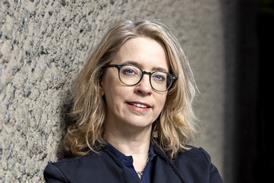





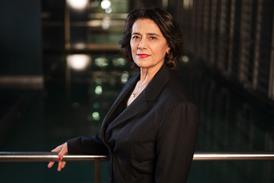

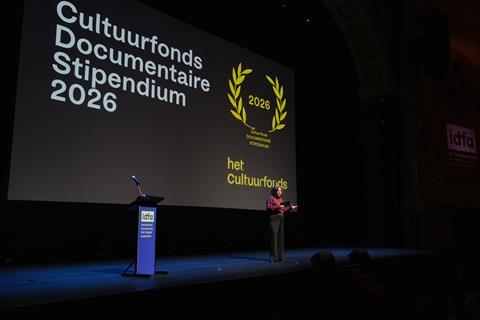
At the lively opening night gala of the 39th International Documentary Festival Amsterdam (IDFA) on November 12, artistic director Isabel Arrate Fernandez called for a “gentler” festival and for a pause in the “mindless immersion in the stream of images, messages and opinions”.
Giving her opening speech at the 1,700-seat Royal Theatre Carre in Amsterdam, Arrate Fernandez acknowledged the past three editions of the festival were riven with controversy, with “positions taken and demands on the festival made, more so, I think, in the previous 30 editions,” she said, referring obliquely to the protests and arguments over Gaza and Ukraine that have divided the event in recent years.
Art, she said, can “help us to step back, see connections and ask the questions that are easily lost in this continuous flow”.
Arrate Fernandez warned “ugliness attracts ugliness, anger provokes anger and harshness invites harshness” but said the converse was also true: “Beauty can attract beauty. An image, a gesture or story created with awareness and care can invite us to look more closely and thoughtfully. What we share and pay attention to can take root.”
Reality isn’t simple, she continued. “Documentary art recognises that. Simple solutions and clear statements often feel comfortable. They offer a sense of certainty, whereas an argument that leaves room for doubt and contradiction is harder to engage with.”
IDFA had a dual role as a festival that “takes a hard look at reality and reveals harsh truths”, she suggested, but that also offers films “that dream of a gentler world”.
“In this way, we see IDFA not only as a place of resistance but also as an antidote. Films can help us see things differently and move toward one another with greater attention and empathy.”
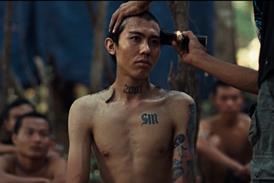
Arrate Fernandez was speaking before the premiere of IDFA opening film, White Tiger Column, directed by Canadian trio Robert Mentov, Dwight Jantzi and Bryan Dickie, which follows recruits to the Myanmar revolutionary army on their crash course to become soldiers.
At the start of the evening, IDFA awarded its most mysterious and lucrative prize, the €50,000 Cultuurfonds Documentaire Stipendium, given every year by an anonymous donor to an outstanding Dutch documentary maker. This year, the winner was Sabine Groenewegen, whose latest film, The Clearing, offers a feminist history of Dutch colonialist rubber plantations where local women were subject to violence and sexual enslavement.
A few minutes later, the opening night took on a surrealistic feel as hundreds of audience members used their cell phones to join together in a mass video game orchestrated by head of new media Caspar Sonnen to mark the 20th anniversary edition of IDFA’s experimental, immersive programme, DocLab.




No comments yet