











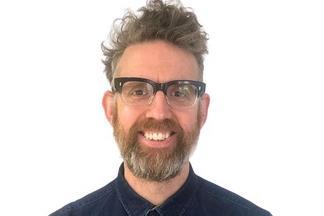
EXCLUSIVE: UK producer Samm Haillay, whose credits include Better Things and Island Of The Hungry Ghosts, has authored a hard-hitting report tracking the number of disabled and neurodivergent above-the-line (ABL) filmmakers whose feature films were selected at five A-list festivals during 2025: Sundance, Berlin, Cannes, Venice and Toronto.
The report, called the Crip Count, has discovered 53 (1.2%) of a total of 4,550 above-the-line credits (writer, director or produder) were held by people who have publicly identified as disabled.
For comparison, in the UK, 16.8 million people had a disability in the 2023/24 financial year, representing 25% of the total population, according to disability statistics published in November 2025.
It is being launched at the International Film Festival Rotterdam (IFFR), which Hailley is attending as a Pro Hub Mentor.
Removing duplicate names - for instance. writer/director on the same title or producers of multiple selected films - the number of unique individuals falls further: only 35 of a total 2,937 (1.2%), who publicly self-identified as disabled.
According to the data Haillay has collected, the proportion of directors was 2.4%; disabled writers made up 1.1% of the total, and disabled producers were at 0.8%.
Filmmakers were counted only when they publicly self-identified as disabled or neurodivergent.
“The report is a clear challenge to prevailing narratives of progress,” said Hailley, who identifies as neurodivergent and disabled. “They demonstrate that disability inclusion within prestige film culture remains minimal, and that existing diversity frameworks have not yet produced proportional representation in key creative and leadership roles.
“It must be acknowledged that many disabled filmmakers do not publicly self- identify, often due to fear of backlash, or the professional risk of being ghettoised within the screen industry,” Hailley noted. “As such, this count cannot capture the full population of disabled filmmakers.”
Berlin and Venice ranked lowest of the five festivals, with 0.5% of disabled filmmakers in official selection. Cannes was at 1%.TIFF was at 1.2% and Sundance at 2%.
Haillay said he hopes the report might prompt more filmmakers to “identify as disabled”.
“Visibility starts with data. How do you get data? You have to start counting,” he said.
“Look at the start of the pipeline”
Hailley explained he had undertaken the research, which required hundreds of hours of data gathering, because he believed public bodies were not doing it. He intends to make the Crip Count an annual report.
“There are plenty of other things I would prefer to be doing rather than scraping festival websites and populating spreadsheets. Producing being the primary activity,” he said in the introduction to the report. ”But at this juncture, the industry and the disability community need a more truthful picture of how we are really doing. We need to move beyond aggregated headcounts designed to appease government funding mandates, and beyond the headlines that excuse and even encourage complacency and the status quo.”
He said he is not attacking the festivals themselves for the very low numbers of disabled filmmakers represented in their official programmes. “Don’t blame the end of the pipeline, look at the start of the pipeline,” he said. “I don’t blame the festivals at all. It is their job to keep the quality.”
Nor is he calling for preferential treatment for disabled filmmakers. Their work should be selected on merit. “But how do we get disabled filmmakers into those [festival] berths? By normalising being disabled.”
As he writes in the report, there is a leadership gap: “Leadership defines who gets seen, who gets trusted, and who gets backed. Without disabled people in senior roles - whether commissioners, executives, programmers or funders - disability will be framed and understood through the lens of risk rather than value; as limitation, not insight.”
“The exclusion of disabled filmmakers from the international festival stage can’t be separated from the failure of public funding to live up to its own promise.”
The producer said he now plans to produce five festival-specific and one summary report every year to track the number of disabled and neurodivergent above-the-line filmmakers whose feature films are selected at the five festivals.




No comments yet