




For UK Muslims working in the fast-paced environments of film and TV sets, often on vulnerable freelance contracts, observing the fasting month of Ramadan can present challenges.
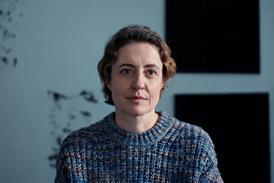
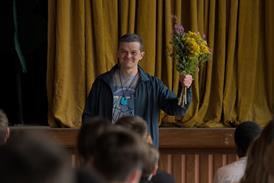
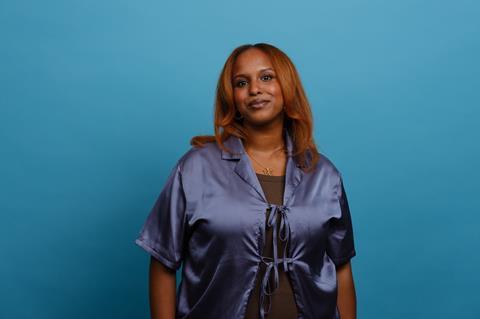
Writer-directors Raisah Ahmed and Warda Mohamed both started their careers working as runners on film sets during Ramadan. They both hid the fact that they were fasting.
“I didn’t want to make myself seem like a problem,” says Ahmed.
“I had to stay at my usual level because, as a runner – and for every role on set – you’re expected to hit the same level every single day, and you’re not allowed to falter, and if you do, it’s quickly noticed,” notes Mohamed. “I needed the job, I wanted to do well, I didn’t want to be told off.”
Both experiences took place when Ramadan fell during the summer months, in which daylight hours are longer and thus the fast is longer. In Ramadan, Muslims refrain from eating or drinking between sunrise and sunset. Ramadan moves earlier by about 10 days a year because it follows the Islamic lunar calendar. This year, it began on February 18.
Even though not all Muslims mark the month of Ramadan in the same way, many also observe daily prayers. Five daily prayers are a year-round practice that take place at specified points throughout the day, with additional evening prayers during Ramadan.
For Ahmed and Mohamed, hiding the fact that they were observing Ramadan meant missing the chance to break their fast and needing to find covert ways to do prayers.
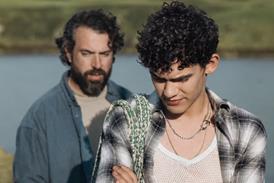
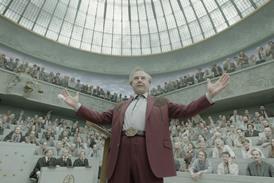
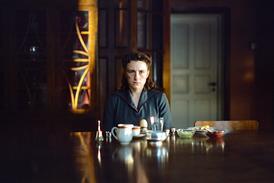
Filmmaker Naqqash Khalid was fasting during prep and the first two weeks of shooting his feature directorial debut, In Camera. “I found it quite humbling. I found a little community – Amir El-Masry’s scenes were early on [in the shoot], and he was fasting. There was a handful of people on the crew fasting. Early on, we would get dinner together and break our fast.”
Khalid admits, however, “If I were in a crew role like a sound person or a runner, or any crew person that wasn’t in a position of power, then it might be quite a big thing to ask for [adjustments around Ramadan]. Filmmaking is a weird, time-pressured environment. Film sets can be fragile.”
“I’ve always made it work”
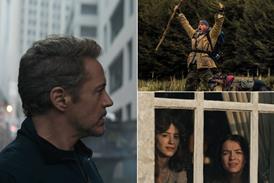
Before directing her short film Muna, Mohamed held on-set assisting jobs on Sarah Gavron’s Rocks, Edgar Wright’s Last Night In Soho and Roger Michell’s The Duke. She is now developing her feature debut, Moon, with Working Title Films, in which the story takes place during Ramadan and Kosar Ali, one of the breakout talents from Rocks, is set to star.
Mohamed says her voice has grown louder as her career has developed. “[At the beginning of my career], I was someone who got on with the job and suffered in silence,” she says. “But I learnt the hard way that doesn’t work, and the only person you’re hurting is yourself.”
Muna did not shoot during Ramadan, but Mohamed was aware she had a cast and crew that included several Muslim people. She carved out time for five daily prayer times on the call sheet. “I’m not saying every single call sheet on every film set needs to have prayer times all year round, but I’m saying at least during Ramadan, it’s something that would be appreciated,” Mohamed reflects. “It’s such a simple gesture to make.”
She adds that she has never turned down a job because it would have meant working during Ramadan. “I’ve always just made it work because of the lack of opportunities out there for someone like me.”
Ramadan is taking place this year during the busy festival season at the start of the year. While travel can mean an exemption from fasting in Islam, many Muslims still want to observe. “It gets so complicated,” says Ahmed.
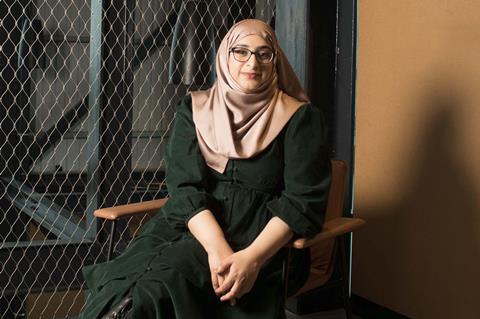
Ahmed is now developing a Second World War film with Film4 and Screen Scotland and adapting Martin Sixsmith’s book Ayesha’s Gift for TV with Freedom Scripted.
When she is fasting, she has learned to always give people a heads-up before taking an in-person meeting, to avoid any discomfort when she declines a drink. “It’s always better to have meetings in person, but you feel the awkwardness,” she says. “In their head, they are feeling bad.”
Open communication is key. “If [Muslim crew] are breaking their fast during the shoot, think, ‘How do we make sure these members of crew [are able to] break their fast [at the right time]?’” Mohamed advises decision-makers. “Communicate with the caterers to have their food still be heated, so they don’t have to go around asking if there is any food left. That is so embarrassing.
“A lot of people preach about being inclusive,” she adds. “This is how you make that claim that you are and do it meaningfully. We shouldn’t be begging for scraps of food when we break our fast.”
Setting aside a space on-set for Muslims to be able to take 10 or 15 minutes to pray is also important. Pinewood Studios is one facility to have created a multi-faith room at its Buckinghamshire site.
“A space like that can also double as a quiet space for someone who might be neurodivergent or might have other reasons that they might need two seconds of just quiet sometimes,” suggests Ahmed, who underlines the message of respect and empowerment a small, designated space can send.
“Someone might question, ‘Do people feel like I’m some kind of religious freak because I’m asking for space to pray?’ It is still considered quite uncool to be open about the fact that you have a faith. For us, prayer is a bare minimum. But I can imagine for people not of the faith, praying five times a day can seem a bit intense.”
The cigarette decoy
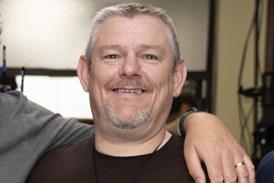
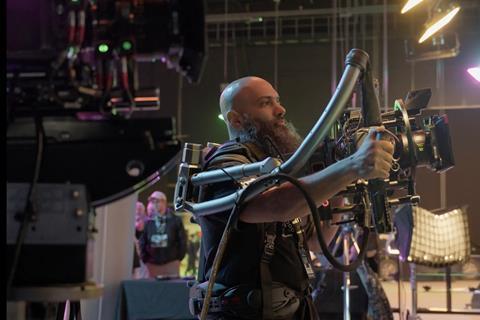
“There’s a fear from crew that if they ask to pray, [the reaction will be], ‘You’re not being paid to come there to pray’ or [they] wouldn’t understand why you want to do that,” says Rizwan Wadan, a camera operator whose Helix camera stabilisation system was used in Star Wars: Rogue One and The Favourite, and the founder of the Futures In Film training initiative.
“It’s like you’re being difficult. Sometimes, for us, the way around that is to say, ‘I just need a cigarette break.’ The amount of time it takes to smoke, you can pray.”
Wadan recalls having to pray in a camera truck, not an ideal solution. “The first AC [assistant camera] might not know, the second AC doesn’t know, you’re praying in a camera truck, they walk in and you’re blanking them, they don’t know what you’re doing. It’s a weird, awkward moment.”
Eid al-Fitr is the celebration that comes at the end of the month of Ramadan. The date is not fixed and is based on an official physical sighting of the crescent moon in Saudi Arabia, which usually happens the day before festivities begin. Many Muslims will wish to take time off work for this date, which can be difficult to guarantee at the last moment with production schedules.
“In a dream world, crew members would have that as a day off, but unfortunately, I don’t know if that’s actually possible,” reflects Mohamed. “So, it’s about making sure that they have time in the morning to pray their Eid prayer, which is compulsory and bookends Ramadan.”
Wider impact
UK Muslim film and TV workers represented around 2.5% of the film and TV sector in England and Wales in 2021, according to the most recent census.
Faith-based inclusivity is a concern for many in an industry that represents a range of faiths and beliefs.
Religion is a protected characteristic in the UK under the Equality Act 2010, which means an individual cannot be discriminated against due to religious belief. However, Islamophobia disguised as ‘banter’ remains an issue, say many who spoke with Screen.
“I’ve been brought onto sets where there’s been a clear disconnect,” says Sajid Varda, founder and CEO of charity UK Muslim Film. “Some crews come from an older generation, highly skilled and tight-knit, but sometimes without a filter. There can be a Little Britain mindset, where any joke is seen as fair game, without fully appreciating the impact it may have on others.”
To improve inclusion on set for people from all religions, Rizwan Wadan is in talks with the Production Guild of Great Britain, the British Society of Cinematographers and Pinewood Studios, to form a cross-religion faith initiative.
The impetus partly came from Wadan’s experience on a high-budget TV show about a decade ago in which he was asked to film a party scene involving adult film stars simulating graphic sex scenes, with extensive nudity on-set, that left him “emotionally and psychologically destroyed”.
He believed the content of the scene conflicted with the teachings of his faith, but initially felt unable to speak up and explain the situation.
“I was starting to feel a horrible sinking feeling in my gut,” he recalls. “I was thinking to myself, ‘What if I say no? Am I going to be hired again?’”
A second-unit director from a similar background intervened on the morning of the shoot, empowering Wadan to say no. The set-up was reconfigured to enable Wadan to step away. But Wadan says this led to delays and what he thought was disgruntlement from colleagues. Wadan says he was not asked back to work on the rest of the production.
“People of faith, we have a commitment to the values of our scripture. Of course, we have a responsibility to our departments, and to shooting the script,” says Wadan. “At that moment, both of these worlds and realities collided. I had to make a decision and refused to shoot the scene. Everyone on set and in production heard about that… I felt like I was that difficult Muslim on set who created problems rather than a crew member solving them, as I was supposed to.”
The impact on Wadan has been long-lasting. He says he became more cautious about the type of jobs he would take, avoiding short-term work where he may not have oversight of the script.
One of the missions of his faith initiative is to encourage inter-faith job sharing, allowing people to take time out because of discomfort with specific content that is being filmed, or to observe religious practices such as the weekly Shabbat for people who follow Orthodox Judaism, which runs from Friday evening through Saturday. Work and the use of electricity are prohibited, which could clash with shoot schedules.
“If a production was taking care of our spiritual needs, we would be there for them a lot more,” suggests Wadan. “We’d push ourselves further. We’d give them the extra hours.”
Responsibility for ensuring sets are inclusive from a faith perspective generally lies with the producer and also the director.
“When it comes to on-set support for the camera department, awareness [is needed] from members of the British Society of Cinematographers, the Association of Camera Operators, the GBCT, the Bectu Grip [branch], and the department heads responsible for hiring crew,” says Wadan.
“Reasonable adjustments”
“Time is money on set,” Mohamed understands, and believes commissioners need to set the guardrails. “If the commissioners go, ‘This is compulsory, this is how we’re doing it, we have a code of conduct on this,’ even if the producers don’t want to [set guardrails], they have to.”
The Film and TV Charity, in collaboration with Sajid Varda’s community partner and charity UK Muslim Film, has compiled a guide to help those working in the film, TV and stage industries to support Muslim colleagues in this period. It has also been syndicated for the US.
“It makes it easier for Muslim creatives in the industry to approach the subject without necessarily having to approach human resources themselves,” says Varda of the guide.
“There are organisations developing their own in-house guides so they can tailor them to their specific teams and culture, which is completely understandable and positive,” he adds. “We’re often asked to review and support those versions.”
Varda encourages non-Muslims to ask questions about Ramadan and Islam. “As a Muslim community, we welcome open discussion and genuine questions about our faith. Having those conversations doesn’t make us feel awkward; in fact, it helps build understanding and connection.”
As several UK-based organisations make strides in supporting their Muslim workers, Varda has been involved in organising iftars – the meal eaten at sunset to break the fast – at the offices of companies including Channel 4, Glasgow Film Festival, the Film and TV Charity, Netflix and CAA.
“In terms of working in Ramadan, it’s about making the wider industry aware, and productions and companies, that we’re not asking for anything unreasonable and causing disruption to the set, or day-to-day,” explains Nina Karwalska, co-founder of Screen Sisters, an inter-faith group focusing on training and opportunities for women from religious backgrounds. “These are reasonable adjustments that can be made quite easily.”
The hope is that meaningful inclusivity will follow as more people from groups that have historically been underrepresented progress in the industry.
“It’s a positive thing,” says Khalid, who is now developing his second feature with BBC Film. “This is what happens when it’s not the same kind of person making a film over and over again.”



No comments yet