















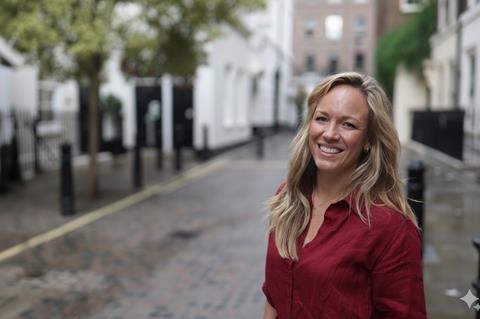
Tilly Norwood creator Eline van der Velden has urged the public service broadcasters (PSBs) to increase their investment in AI despite the negative connotations around the technology – suggesting that working with AI is akin to admitting to having an STD.
Van der Velden’s AI actor Tilly Norwood rose to global prominence last year, prompting Hollywood actors and key industry figures to push back at the fast-growing software and its potential impact on the creative sector.
But the London-based Dutch Particle 6 chief executive told the opening session of the Edinburgh TV Festival that she had signed “hundreds of NDAs” with companies around the world as firms ranging from US studios to local indies look to adopt AI into their processes.
“There aren’t many boardrooms we haven’t been invited into,” she said, adding that she knew “how much companies are working with AI behind the scenes.”
The problem, she joked, is that “saying you’re working with AI is like saying you have an STD, no one’s wanting to admit that.”
Van der Velden urged UK-based PSBs to shrug off the stigma and invest in training staff in AI ensure the country remains a creative force.
“There is a huge arms race going on here. Britain has been a creative powerhouse because we can create as we want to,” she continued, adding that the tech should be seen as “a whole new medium” and not be employed as a cost cutting exercise.
Joshua Barnett, chief exec at Sister Group’s recent acquisition After Party Studios, said his company had used AI on the creative deck for The Ultimate Football Challenge hosted by Jürgen Klopp, while James Duncan, co-founder at ShxtsNGigs, said he was not worried about AI-created content usurping his YouTube audience.
The tech offers an additive to human creation, he suggested, adding that its best use at present is for “things we can’t physically do” and AI-generated videos of “humans doing four backflips off a mountain” wouldn’t be popular.
A version of this story first appeared on Screen’s sister site, Broadcast





No comments yet