






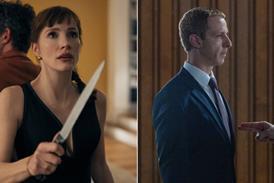
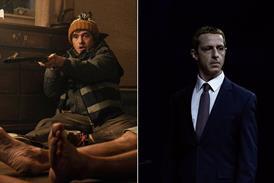




Controversy sparked by South Korean drama The Assassin(s) will see fewer risks taken by local filmmakers in future, according to industry executives.
Sales agents at the recent Asian Contents & Film Market (ACFM) in Busan said that production companies and financiers will be more hesitant to develop stories perceived as “left-wing” in future due to the protests and furore generated by the film.
The Assassin(s) revisits the 1974 assassination attempt on then Korean president Park Chung-hee, which led to the death of first lady Yuk Young-soo. An official investigation concluded that Mun Se-gwang, a Korean resident of Japan, acted alone under instructions linked to North Korea. However, the film – and its plural title – suggests intelligence officials or the president himself might have been involved in her death.
It has led to condemnation by Korea’s conservative opposition People Power Party, which revere Park as a national hero, and protests by a conservative activist group outside the home of lead actor Yoo Hae-jin.
One seller, who asked not to be named, noted that this “embarrassing” backlash could lead to more cautious decision-making next year, reducing the number of narrative risks that production companies are willing to take.
Korean culture minister Chae Hwi-young has since condemned the protests, asking police to protect the film’s cast and crew, and both the Producers Guild of Korea (PGK) and Directors Guild of Korea (DGK) released statements of support.
The director and stars of the film were due to make appearances at Busan International Film Festival earlier this month but withdrew as a result of the controversy. Hive Media Corp, which released the film on September 23, issued a statement to say the team would not attend BIFF “to ensure the security of our cast, crew, audiences, and theatre staff”.
Director Hur was due to attend BIFF’s opening ceremony alongside actors Yoo and Lee Min-ho, while Hur and actor Park Hae-il was set to introduce the film at the festival. Lee was also scheduled to take part in a session looking back on his career to date but this was also pulled.
Last week, BIFF’s Competition jury members addressed the dispute during a press conference.
Acclaimed Chinese filmmaker and jury president Zhang Yimou, who had not yet seen the film, said “I believe art is art. There are cases where it isn’t necessarily based on truth and facts. In the film industry, we often say, ‘Be rooted in life, but transcend it.’”. Korean director and fellow juror July Jung added: “My heart feels so cold as a filmmaker,” in response to the backlash.
The Assassin(s) premiered at Toronto, where it was named runner-up for the People’s Choice Award.
It has taken more than $21m from over 3 million admissions to date, making it South Korea’s seventh biggest film of the year so far.
The film is next set to open Singapore International Film Festival (SGIFF) on October 21, with Hur due to attend alongside cast members Shim Eun-kyung and Park Sung-hoon.
Korea’s People Power Party (PPP) called on the festival to pull the film but SGIFF released a statement that said the film “was not made to establish historical conclusions, distort facts, or serve any political purpose. SGIFF presents the film in that context, as a creative work.”




No comments yet