


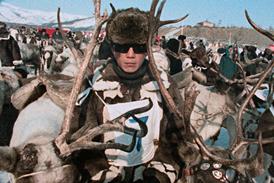

Xisi Sofia Ye Chen turns the camera on her own family for her documentary debut
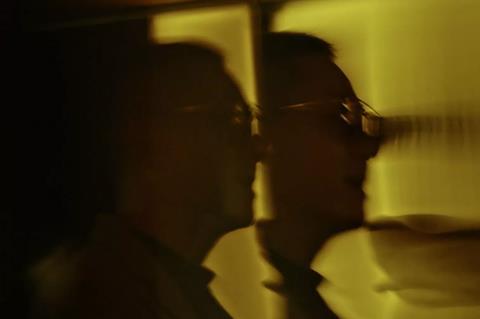
Dir/scr: Xisi Sofia Ye Chen. Spain/France. 2026. 93mins
A delicately wrought, intimate portrait of its director’s endlessly fascinating older brother, From Dawn To Dawn is much more besides. Partly a study of the trials of the immigrant Chinese community in Barcelona, partly a meditation on second-generation displacement, loneliness and identity, Xisi Sofia Ye Chen’s complex, engrossing debut, which won Visions du Reel’s international competition, could easily have felt fragmented and diffuse given the range of its interests. But it holds together by virtue of the director’s distinctive, discreetly observant style, underpinned by her desire to properly understand the brother she has never really known.
A meditation on second generation displacement, loneliness and identity
The film opens at a mist-wrapped Buddhist monastery in the Fangshan district of Beijing, where Ye Chen’s older brother, A Wen, has briefly returned to his birthplace from Spain to focus on the eternal, spiritual side of life, tilling the land and meditating; the setting could, the director’s whispered voiceover tells us, be the sixth century B.C. In the first of many artfully-edited scenes in which characters do little more than converse, A Wen shaves a monk’s head: “shaven heads,” the monk chuckles, “are for monks or conmen.” A Wen phones home to Barcelona, listening to his daughter’s repeated “Daddy” as he sits in his lonely hotel room.
As it turns out, A Wen has a bit of both the monk and the conman about him. Ye Chen’s voiceover flows between past and present, combining with often evocative images as it slowly reveals the siblings’ lives in Spain, after they followed their parents there in the early 2000s. First they were street sellers in Barcelona. A few years later, A Wen becomes the underworld gangster he always wanted to be, inspired by Chinese films to don sunglasses. Ye Chen loved having such a cool big brother, and recalls watching those movies being reflected in the glasses. More dangerously, A Wen also runs basement gambling dens, running up a €50,000 debt and spending time in jail before settling down as a restaurant owner.
Ye Chen is happy to let the camera roll, allowing her subjects to tell their stories in carefully edited, unguarded ramblings. We learn not only about A Wen, whose description of his depression is both down-to-earth and poetic, but also about other members of his extended Spanish family and gangster brothers – including Laosan, who took a bullet meant for A Wen and hasn’t been able to walk since. (Lao San remains jovial despite it all.) There’s also the first-generation mother weeping years after the fact at her treatment of her children; like many others she had to leave them behind in China when she left to travel three months overland in search of a new life in Spain.
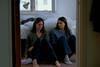
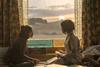
Pablo Paloma’s visuals run a gamut of styles, from beautifully composed vignettes of rural China to gritty, fly-on-the-wall records of nights of endless chat and cigarette smoke, to the chaos of the karaoke club to which A Wen’s gang always returns. But it’s the ever-calm thoughtfulness of Ye Chen’s voiceover that is the film’s stylistic signature, a strikingly poetic and tender counterpoint to the physical and emotional violence running through these chaotic lives.
Themes of silence and emptiness are there throughout, but there’s also optimism as Ye Chen describes her brother’s continuous efforts to reinvent himself: as the monk says, “to be reborn, you have to forget everything”. From Dawn To Dawn adds up to a compelling homage to the myriad hidden human histories playing out on the outskirts of Europe’s cities.
Production companies: Lacima Producciones, Lacima Entertainment, The South Project, La Fabrica Nocturna Cinema
International sales: Parallax Films info@parallaxchina.com
Producers: Ricard Sales, Pedro Palacios, Luis Ferron, Marta Lacima, Leonor Abreu, Ran Shao, Camila Montaldo, Marina Perales Marhuenda, Xavier Rocher
Cinematography: Pablo Paloma
Production design: Roman Cadafalch
Editing: Juliana Montanes