








George MacKay, Fiona Shaw, Frank Dillane and Herbert Nordrum also star in Georgia Oakley’s follow-up to ’Blue Jean’
Dir: Georgia Oakley. UK/US. 2026. 131mins
Published in 1811, Jane Austen’s debut novel sets out the themes which would concern her throughout her work: the bonds between sisters, the tension between love and honour, and the precarious status of women in Regency society. UK filmmaker Georgia Oakley’s retelling of this story of a well-to-do family fallen on hard times hones in on these elements and gives them a modern spark while staying true to the heart of Austen’s creation.
Has a modern spark while staying true to the heart of Austen’s creation
This Working Title production is the second major adaptation of Austen’s novel, following Ang Lee’s handsome version starring Emma Thompson and Kate Winslet which has taken $135m worldwide since its original release in 1995. Working Title and Focus Features previously adapted Austen’s Pride & Prejudice in 2004, which grossed $132m and went on to receive four Oscar nominations, and collaborated on the 2020 release of Emma ($29m). Oakley’s Bafta-winning 2022 debut Blue Jean received arthouse acclaim, and Sense And Sensibility, which began its international roll-out from September 23, should have wider appeal, not least for the legions of Austen fans at home and abroad. Its starry cast – led by former Screen Stars of Tomorrow Daisy Edgar-Jones, Esme Creed-Mills and George MacKay, and also including Fiona Shaw and Frank Dillane – will help it travel.
Following the death of their father, sisters Elinor (Edgar-Jones), Marianne (Creed-Miles) and Margaret Dashwood (Shelter star Bodhi Rae Breathnach) find themselves without the means to stay in their beloved family home. Despite the lacklustre assistance offered by their half-brother John (Tom Brooke) – the legal inheritor of the estate – the meddling of John’s wife Fanny (a deliciously vicious Stacy Martin) means that the siblings, along with their mother (Catriona Balfe), are forced to move to a cottage in rural Devon.
While society has left the older girls with no financial options other than to find a wealthy husband, each is forging their own romantic path. Elinor has fallen for Fanny’s kind brother Edward (MacKay); a match fraught with hurdles, both obvious and not. And while the free-spirited Marianne has caught the eye of the older, taciturn Colonel Brandon (Herbert Nordrum), she is besotted with Devonshire creative Willoughby (Dillane) – who may not be all he appears.
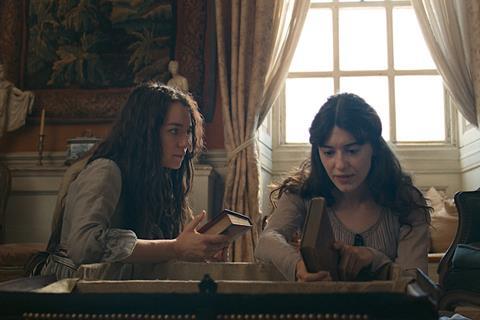
This is a decidedly more grounded, introspective affair than Lee’s candy-coloured take on the material, and Oakley takes a more personal, intimate approach reminiscent of her previous feature. This is not the lush, buttoned-up, period drama of tradition; the Dashwood sisters are often seen with their hair down and dishevelled, their garments loose and comfortable. There is the sense that we are really getting under the skin of these women, to the gritty, recognisable flesh-and-blood emotions that have kept Austen relevant for over two centuries.
That’s not to say the film doesn’t look gorgeous; Francesca Di Mottola’s balanced, textured production design and Grace Snell’s muted, earthy costuming evoke the period aesthetic while allowing space for the naturalistic performances. Cinematographer Arnaud Potier drinks in the verdant English countryside and rugged Devon coastline, spaces in which the characters can truly breathe – Marianne in particular, who we follow romping up hills and through woodlands, her skirts hitched, forever in search of adventure. In contrast, the low candlelight and meticulous manners of London society dinners feel, rightly, staged and claustrophobic.
The screenplay, by newcomer Diana Reid, does not have the pointed wit of Emma Thompson’s 1995 script – or, some might say, of Austen’s prose – but instead makes astute observations about sisterhood, money (and the lack of it) and the perils of dating that will surely chime with Gen Z viewers. Strong performances across the board help get the message across. MacKay, Nordrum (The Worst Person In The World, Growth Of The Soil) and, particularly, The Walking Dead star Dillane (building here on standout big screen performances in the likes of Harvest and Urchin) all excellent as the very different types of men around whom our heroines are forced to navigate.
Yet this is Austen, and so the women are very firmly at the fore – with Fiona Shaw coming dangerously close to stealing the show as bawdy distant cousin Mrs Jennings. But the film belongs, of course, to Elinor and Marianne, sense and sensibility themselves, and the characters prove to be in perfect balance with the film’s themes, and with each other. Edgar-Jones has perhaps the more challenging job in a more restrained role, simultaneously forthright and vulnerable as oldest sibling Elinor. Creed-Miles (who so impressed as Delirium in TV’s The Sandman and in Amazon’s Hanna) rises above her character’s cliched ’woman in nature’ tropes to make Marianne a joyfully messy whirligig of energy and passion. Crucially, both display a genuine chemistry and easy sisterly familiarity that provides the narrative with its most endearing love story.
Production company: Working Title, Focus Features, November Pictures
International distribution: Universal / US distribution: Focus Features
Producers: Tim Bevan, Eric Fellner, India Flint, Jo Wallett
Screenplay: Diana Reid
Cinematography: Arnaud Potier
Production design: Francesca Di Mottola’s
Editing: Izabella Curry
Music: Roger Goula
Main cast: Daisy Edgar-Jones, Esme Creed-Mills, George McKay, Frank Dillane, Herbert Nordrum, Fiona Shaw, Catriona Balfe, Bodhi Rae Breathnach, Tom Brooke, Stacy Martin