












Matthias Schoenaerts and Jason Momoa co-star in Craig Gillespie’s lacklustre summer actioner
Dir: Craig Gillespie. US. 2026. 108mins
For some superheroes, there is an initial period of adjustment as they become accustomed to the enormity of their powers. The same holds true for those superhero films that struggle to understand fully what makes their mighty character so special. This proves to be the case with Supergirl, which has plenty of heart and some thoughtful ideas. But in its attempt to introduce audiences to Superman’s smart-aleck cousin, this likeable but underwhelming sci-fi adventure only sporadically presents its protagonist in her best light. That said, Milly Alcock certainly has the chops and gravity for the role, and hopefully subsequent pictures will make better use of her stirring spirit.
Underwhelming sci-fi adventure only sporadically presents its protagonist in her best light
Warner Bros unveils Supergirl in the UK and US on June 26, the film serving as the second instalment in the studio’s latest reboot of its famed DC heroes. Last year’s Superman collected $619m globally, and the betting is that this picture will not fare as well commercially – particularly as it features a less popular character. Co-stars Matthias Schoenaerts and Jason Momoa will help bolster Supergirl’s profile, although the latter actor is no longer playing Aquaman.
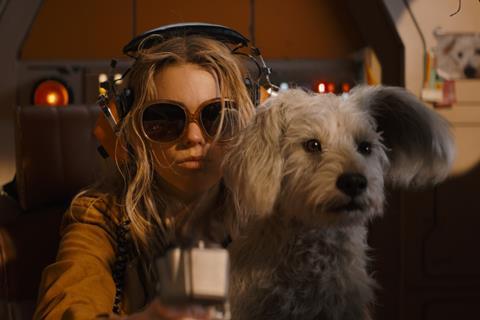
After the events of Superman, Kara (Alcock) lives on a distant planet with her loyal dog Krypto, wary of returning to Earth and accepting the responsibility of being the crimefighting Supergirl. But after Krypto is poisoned by the evil scavenger Krem (Schoenaerts), she must track down this villain to obtain the antidote — otherwise Krypto will die within 72 hours. She is joined in her mission by Ruthye (Eve Ridley), a vengeance-seeking, sword-wielding young girl whose family was killed by Krem.
Supergirl first appeared on the big screen in 1984’s Supergirl, which starred Helen Slater. Since then, the character has frequently popped up on television, including a live-action series that ran for six seasons starting in 2015 and featuring Melissa Benoist, and was included in the 2023 film The Flash — this time played by Sasha Calle. Alcock’s portrayal, which began with the 2025 Superman, is a new take that emphasises the burgeoning superhero’s irreverent attitude. Tellingly, the new Supergirl opens with Krypto urinating on a newspaper heralding Superman’s brave acts — a calculated bit of impudence meant to highlight this film’s snarky sense of humour.
That snide tone gets tiresome as Alcock fails to make Kara’s hip posturing and all-night partying charming. Ana Nogueira’s screenplay contains a lot of sarcastic oneliners but not many great quips, and director Craig Gillespie, whose films I, Tonya and Cruella celebrated complicated female characters, has trouble distinguishing Kara from all the other smartass superheroes who came before.
Quickly, though, it becomes apparent that Kara’s seemingly snotty disposition is a defence mechanism to shield herself from the grief she’s harbouring. While Supergirl’s story can often be formulaic spectacle, it opens the door to touching flashbacks in which Kara processes the death of her loving parents (David Krumholtz, Emily Beecham) on Krypton. Unlike the sunnier, well-adjusted Superman (David Corenswet), Kara feels alone in the universe. Her only reminder of home is Krypto, although the dog is mostly used as a ticking-clock plot device to give her quest additional urgency. Despite some heavy-handed execution, Supergirl can be affecting when Kara and Ruthye bond over their shared sadness for the people they’ve lost
Alcock is far more winning once Kara drops her sardonic streak and begins accepting her role as a protector of the vulnerable. Gillespie’s action sequences are rarely inspired — the best setpiece involves Kara tumbling through space, worryingly close to death — but they provide the Upright and House Of The Dragon star ample opportunities to show off a compelling physicality. One of Supergirl’s themes concerns the importance of women embracing their power, and Alcock is never more arresting than when she’s clobbering bad guys or soaring through the sky. Claudia Sarne’s score, with its hints of techno and rock, amplifies Kara’s exuberance at shedding her fear and sorrow, becoming the hero she was destined to be
This new iteration of Warner Bros’ DC films is being supervised by James Gunn, who wrote and directed 2025’s Superman. Not surprisingly, Supergirl shares some of that previous picture’s endearingly dorky vibe — not to mention the carefree pleasures of Gunn’s Guardians Of The Galaxy trilogy. Gillespie can occasionally tap into Gunn’s mixture of comic-book enthusiasm and oddball humour, but too often the results are stilted, such as with Momoa’s bounty-hunter character Lobo, whose outlandish demeanour fails to fully integrate into Supergirl’s overstuffed design.
As for the picture’s proudly feminist message, it is a welcome wrinkle amid the still largely male canon of superhero films. But the achievement would be far more commendable if Supergirl were as confident as Kara, once she finally hits her stride.
Production companies: Troll Court Entertainment, The Safran Company
Worldwide distribution: Warner Bros
Producers: Peter Safran, James Gunn
Screenplay: Ana Nogueira
Cinematography: Rob Hardy
Production design: Neil Lamont
Editing: Tatiana S Riegel, Fred Raskin
Music: Claudia Sarne
Main cast: Milly Alcock, Matthias Schoenaerts, Eve Ridley, David Krumholtz, Emily Beecham, David Corenswet, Jason Momoa