Palestinian director Rayakan Mayasi’s first feature premieres in Cannes Un Certain Regard

Yesterday The Eye Didn't Sleep

Source: Cannes Film Festival

‘Yesterday The Eye Didn’t Sleep’

Dir: Rakan Mayasi. Belgium/Lebanon/Palestine/Qatar/Saudi Arabia. 2026. 100mins

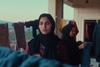
Rakan Mayasi’s lyrical debut ignites – quite literally – with a striking shot of a truck consumed by flames in the Bekaa Valley, eastern Lebanon, near the Syrian border. During the subsequent search for the arsonist, a man is accidentally run over, adding fuel to an existing feud between rival Bedouin communities. The film’s main narrative focus is the resulting peace offering, brokered by male community elders. Two young women, Jawaher (Jawaher Al Mawlah) and Rim (Rim Al Mawlah), are required to leave their families and go to live with – and possibly marry – the dead man’s extended family members. One of the women accepts her fate stoically; the other protests to no avail. 

 A mood piece that examines culturally specific ideas of honour, patriarchy and kinship obligations

Don’t expect a gender-politics polemic: Yesterday The Eye Didn’t Sleep, which bows in Cannes Un Certain Regard, is a mood piece that examines, with an almost anthropological eye, culturally specific ideas of honour, patriarchy and kinship obligations, presenting them through a restrained lens. That should help it find an audience; it has secured French distribution through L’Atelier with arthouse deals in other territories likely to follow. Whatever its onward journey, it cements Mayasi as a voice to be nurtured.

There is also an autobiographical element at work in the debut feature of German-born, Brussels-based Palestinian director Mayasi, whose shorts have screened at festivals including Locarno and TIFF. His own grandmother was forced into marriage at 14, and this background informs Yesterday…’s poetic study of compliance. Building on themes explored in his 2020 short Trumpets In The Sky, and returning to the same Bekaa Valley setting and visual language, Mayasi broadens his scope to encompass two women’s differing responses to their lack of agency. The use of non-professional actors and the absence of a conventional script underscore the film’s hybrid identity as part documentary, part autofiction: the people, places and attitudes are drawn from lived reality, even if the narrative itself is fictional.

The film’s standout aspect is Mayasi and cinematographer Pôl Seif’s images: landscape shots of the Bekaa Valley and surrounding mountains dwarf the protagonists, reinforcing the sense of powerlessness experienced by the central characters. The men determining their fate might have control over the women’s lives, but next to the permanence of the monumental landscape, the life of any human being feels fleeting.

An extended wedding dance sequence emerges as the film’s centrepiece, unfolding at night in slow motion against traditional music. Slowed down, bodies and faces in motion offer themselves up to scrutiny: we bear witness to the fact that most of the people involved are genuinely celebrating, but awareness of the coercive dynamics surrounding the bride lends the scene a sinister undercurrent. It’s something of a cinematic cliche to use slow motion during an action sequence, but to use it during a dance suggests an underlying panic, adrenalin and absolute inability to prevent what is happening in this situation.

Forced marriages usually don’t always involve the overt use of violence, but a violation of a person’s agency is nevertheless taking place. Mayasi isn’t interested in easy one-sidedness, however, and the decision to preserve the genuinely amiable intentions of much of the community stands as a bold and resonant choice. A near-identical scene appears in Trumpets in the Sky, and it’s a wise decision to return to the idea.

Mayasi trained with Abbas Kiarostami in South Korea at the Asian Film Academy, an influence perhaps visible in the film’s openness to ambiguity, though echoes of Ermanno Olmi’s The Tree of Wooden Clogs are also apparent in its patient neorealist textures. Yesterday The Eye Didn’t Sleep clocks in at nearly half the runtime of Olmi’s expansive masterpiece, but likewise asks the audience’s trust: immerse yourself in this world, be patient, and surrender to experience rather than narrative propulsion. 

Production company: Atata

International sales: Salaud Morisset, paul@salaudmorisset.com

Producer: Jennifer Ritter, Rakan Mayasi

Screenplay: Rakan Mayasi, Wahid Ajmi (co-screenwriter)

Cinematography: Pôl Seif

Editor: Louis De Schrijver

Music: Abed Kobeissy, Ted Regklis

Sound design: Lama Sawaya

Cast: Rim Al Mawlah, Jawaher Al Mawlah, Yasser Al Mawlah