










Mnemonica, the cloud-based content hub for the film and high-end television industry, is attending Berlin’s European Film Market with a call to arms for producers and institutions to protect and preserve digital audiovisual works.
Co-founded a decade ago by digital enthusiast, former filmmaker and producer Piero Costantini, the Rome-based company’s B2B operation offers film and television creators, distributors and post-production houses a cloud-based subscription platform to reduce operational costs and streamline a film’s journey to screen and beyond.
At the heart of Mnemonica is a three-in-one architecture that integrates a trio of key functions into a single product: secure content streaming, bi-directional transfer of files of any size, and long-term archiving of digital masters that can be accessed at any time, covering all phases of a project’s life.
Clarity of purpose
The platform’s unique selling point lies in the way its technology is designed and put at the service of the people who make films. Each function simplifies workflows, provides continuity and improves operational clarity for those who work every day with images, sounds, ideas and deadlines.
Features are easily accessible from any desktop or mobile device, and include review and approval conversations, encoding, watermarking, distribution automation, agile audience management and content usage monitoring.
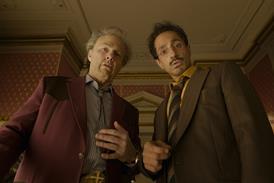
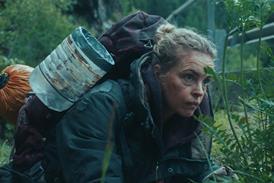
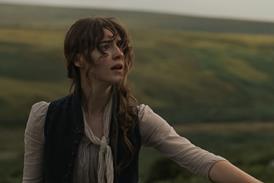
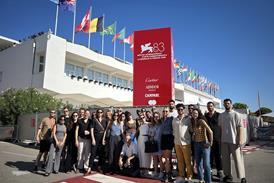
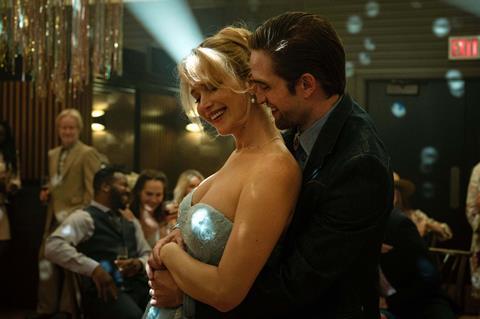
Mnemonica has already supported around a thousand productions, many of which have been distributed internationally on Netflix, Amazon’s Prime Video, HBO, Sky and Paramount+. They also include films such as Lynne Ramsay’s Die My Love, and TV series Those About To Die from Peacock and Joe Wright’s Mussolini: The Son Of The Century for Sky Studios. Since 2022, it has also been the platform for collecting and evaluating submissions to Venice Film Festival.

However, Mnemonica was established initially to combat the threat of films created digitally and exchanged via unsafe devices or stored on hard-drives being leaked — or even lost for ever.
For the past 10 years, Costantini and his team have set about improving the system and enforcing security to ensure long-term accessibility and use for IP owners, producers and filmmakers.
“It’s a horror story for our time,” Mnemonica CEO Costantini says of the evolution of film from celluloid to digital. “A film and all that work, on a hard-disk drive, slowly rotting in a basement. After a certain amount of time, you can be almost certain that the media will no longer be readable. Assuming that anyone is left who knows what was on it.”
That is why the company is at the EFM to present a freshly drawn manifesto to safeguard Italian and European digital content, coupled with plans to roll out the new Mnemonica Archive service across France, Germany, Spain and the UK.
Following the end of an early adopters programme in December 2025, several Italian companies have subscribed including Cinecittà, Vision Distribution, La Cineteca di Bologna, as well as Paris-based Coproduction Office.
“It is a living archive where films are preserved and can also be worked on and distributed from,” explains Costantini. “Although it was originally conceived for producers and native content owners, more distributors are coming on board because it is of vital importance to their business to have a secure and connected harbour for their catalogue.”
Distributors can send copies of their films directly to cinemas and specific projectors on hand-picked dates and times.
Capacity is not an obstacle for the service, even though today’s films often run to multi-terabyte-sized files: Mnemonica uses Amazon Web Services to provide on-demand storage and traffic, both in predefined plans and with pay-as-you-go pricing.
The plea from Mnemonica is two-fold: for institutions to legislate to defend digital patrimony and protect the memory of European cinema and the economic future of its creators; and for producers to recognise professional preservation is not a cost, but the best insurance on the value of works. The overriding ambition, says Costantini, is to make sure no more precious work falls into oblivion because of file incompatibility, digital degradation or hardware complacency.
Mnemonica’s manifesto will be launched during the panel discussion it is co-hosting with the European Film Market/DocSalon & Archive Market at the Berlinale.
Future heritage: securing the future of digital cinema archives will take place 17:30–18:30 on Monday, February 16 at the Documentation Centre in Berlin.
Contact: Stefano Diana
Find out more: mnemonica.com