









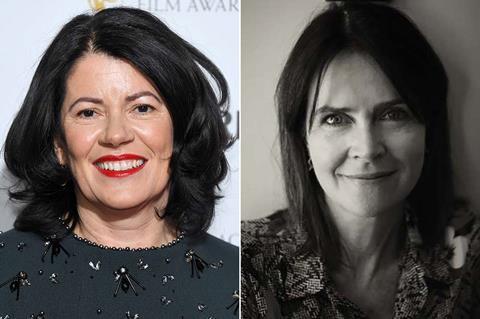
Hamnet began its journey to the screen when Hera Pictures’ Liza Marshall optioned Maggie O’Farrell’s 2020 novel of the same name, then bringing in Neal Street Productions’ Pippa Harris — a former colleague — to develop the feature together. The film was set up at Focus Features, which released in North America, with Universal Pictures handling internationally.
Chloé Zhao directs, co-writing with O’Farrell, and the producer team is rounded out by Zhao’s partner at Book of Shadows Nicolas Gonda, Amblin’s Steven Spielberg and Neal Street’s Sam Mendes. At press time, Hamnet’s worldwide box office stood at $63.4m, including a powerful $21.2m (£15.8m) in the UK and Ireland — surpassing fellow awards contenders One Battle After Another and Marty Supreme in the territory. Hamnet, which is nominated for eight Oscars and 11 Baftas, is on course to overtake Sinners ($22.3m/£16.4m) in the UK and Ireland, becoming this season’s highest-grossing Bafta best film nominee in the territory.
Marshall launched Hera Pictures in 2017 after heading Scott Free Productions UK and working at Channel 4 as head of drama. Her recent credits include 2023 film The End We Start From, starring Jodie Comer, and ITV’s 2025 ratings hit I Fought The Law, starring Sheridan Smith. Hera is in pre-production on The Return Of Stanley Atwell, written and directed by Brian Welsh, and starring Nicholas Galitzine and Marisa Abela.
Harris launched Neal Street with Mendes and Caro Newling in 2003. The banner’s feature credits include Mendes’s 1917, Away We Go, Empire Of Light, Revolutionary Road and Jarhead. TV hits include Call The Midwife, Penny Dreadful and Britannia. Coming up is an adaptation of The Magic Faraway Tree, and Mendes’s ambitious, Sony-backed four-film big-screen event about The Beatles.
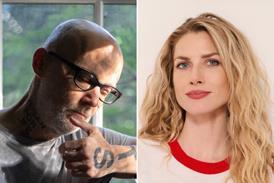
Screen International brought together Marshall and Harris to discuss the journey to the screen of Hamnet — which explores the grief of William Shakespeare (Paul Mescal) and his wife Agnes (Jessie Buckley) following the death of their son Hamnet (Jacobi Jupe) — as well as the current landscape for UK independent film and TV production.
Screen: Liza, this started with you optioning the book.
Liza Marshall: It was sent to me by Maggie’s agent in October 2019 [before publication], and I completely fell in love with it. So I got on a Zoom with Maggie, and she let me buy the rights. I liked that it has Agnes at the centre of the narrative — that Maggie rescued her from the shadows of history — and the way it imagines where Shakespeare would have got some of his inspiration. The story is unbearably sad, but the way Shakespeare transforms that into the play [Hamlet], and that there is hope at the end of the book — I just felt that narrative would work.
Pippa, how did you both team up?
Pippa Harris: We’ve known each other for years. We met in our twenties at Carlton, part of ITV, and worked together closely for a couple of years.
Marshall: It was on [1990s soap opera] London Bridge. I was script editor, you were executive producer.
Harris: I read the book and the agent said Liza had the rights, so I thought it would be worth [getting in touch]. You’d already had a few people like me contact you. Somebody had said, “We’ll set this up for TV,” and I think you and Maggie were tempted. Then we started talking about a film…
Marshall: …and imagining it on a bigger scale.
How did Amblin and Steven Spielberg get involved?
Harris: Sam and I did 1917 with Amblin. When we first got together with Liza, they were still funding films. Their model has changed now — they’ve gone back to their roots [as producers]. But at the time, we thought, “Great, that’s a one-stop shop.” And of course, Steven’s an incredible collaborator.
Marshall: Chloé was the first person we thought of to direct. We both loved The Rider, particularly. And there’s something about the way she photographs nature. Also, someone who’s not as steeped in Shakespeare as we are as British people — to get that different perspective.
Harris: We started talking to Chloé through her people. Then, by chance, I was in Telluride in 2022 at the same time as Chloé, and met her there.
Marshall: The strike and various things delayed it. We got a draft [script from Zhao and O’Farrell]. It then went pretty quickly, because Paul had to have an out date to do press for Gladiator.
Harris: Also, Steven was able to take it to Focus. If anyone can get a greenlight, it’s Steven Spielberg. He was able to have those top-level conversations, so that process was very smooth compared to other films we’ve worked on.
What is the budget for the film?
Harris: Roughly $30m (£22m).
Was it fully financed by Focus?
Harris: Yes. It was great. There is an immense relief when you get someone like Focus [on board].
Five of you produced the film. How would you describe the division of responsibilities?
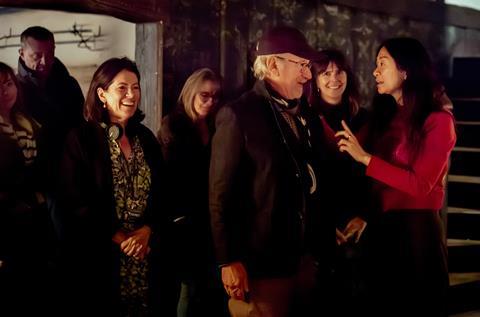
Marshall: Pippa, Nic and I were boots on the ground in terms of being there through pre-production, the recces and on set. We shared it so there was always somebody there for Chloé, keeping an eye on it all.
Harris: Sam and Steven were there as sounding boards. In pre-production, Chloé relied on Steven quite a bit, particularly in the casting of the kids. She had tapes of the children, and obviously if Steven says, “That’s a great piece of casting,” you think, “Oh, probably okay then.”
Marshall: He gave us brilliant pointers about how to do improvisational scenes with the kids, and not to get them to learn the lines. Because then it becomes a bit more like a school play performance. [You want them to] react in the moment.
Harris: In post, Sam, Liza and Maggie and I saw the first cut together. Because Sam’s another director, he comes at it slightly differently to Maggie, Liza and me. He was able to talk to Chloé, in her own language, about its very specific moments and to give very specific notes that she found really helpful. Afterwards, she said Steven was similarly helpful.
Marshall: Everybody was doing quite distinct but intermeshed things. And obviously Nic and Chloé have their company together, and they’re incredibly close. Nic’s just such a lovely man. We didn’t really know him before this collaboration, but he became an essential part of the team.
Harris: Liza brought on board a brilliant EP called Laurie Borg, who she had worked with before. He was instrumental as well, just in terms of the day in, day out. Are we hitting the schedule? How many people are coming for lunch, all that stuff.
Marshall: His calm energy was perfect with Chloé, because it created that space where she could experiment and try things out.
And it is an emotional story to navigate on set too.
Marshall: At the end of each week Chloé put on a disco tune to get the cast and the crew to dance. Particularly for the children, it means their memory is of the dancing, not pretending to die. After Hamnet’s death, Jacobi asked for a bonus dance track, and chose ‘Stayin’ Alive’. He came up from the sheet [his death shroud] and they were all dancing around. That helped change the atmosphere.
Harris: Chloé also brought her own layer of mysticism to the process, and has talked a lot about [using] dream workshops. That wasn’t something I’d ever come across before. Initially, when you’re looking at every penny of the budget, you’re thinking, “Really, we’re paying for the dream coach?” Then as it went along, you realise how integral Kim [Gillingham], the dream coach, was to the process.
Why do you think Hamnet has blown up at the box office?
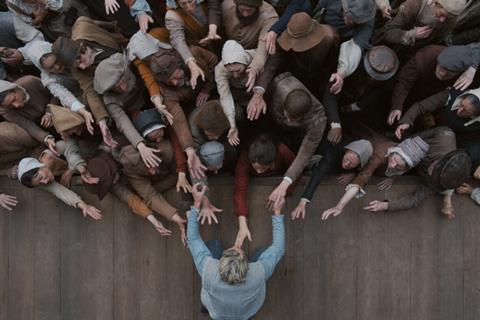
Marshall: I think it’s connecting because we’re living in such bleak times. Everybody is going to sit in a darkened room with strangers, and then come out and feel like it’s a cathartic process that they’ve been through. There are these videos on TikTok, before Hamnet and after Hamnet — people have got their make-up on, and then they’ve got all the make-up coming down their face.
Harris: Although it’s a very sad film at times, people come out of it feeling that it’s somehow been life-affirming. Particularly when so many other films’ pivotal moments are all about violence and people being shot.
Does Hamnet tell us anything about the state of the UK film industry at the moment?
Harris: The film industry is in a strange place because it feels, on the one hand, as though funding for massive films — like Sinners or even our own Beatles project — is relatively attainable. If you’re making smaller-budgeted films that the UK has excelled at, like The Ballad Of Wallis Island and Pillion, they’re not easy to make, but there are funders for those films. What’s become increasingly difficult is mid-range — anything that sits at £10m-£40m [$14m-$54m]. The American studios have retrenched a bit, so Searchlight, Focus and Sony Classics are maybe not doing quite so many.
Liza and I made our careers in television, and we still do TV as production entities. It’s the television that keeps you going — it’s virtually impossible to run a UK company simply making films.
Is the indie film tax credit helping?
Harris: That is slightly lower, but it’s definitely helping. And there is a will in government to find ways of supporting film, and looking at whether the apprenticeship levy can be used more effectively for film and television — it’s difficult to use that at the moment, because it’s not geared towards the freelance market. And so many people working in film are freelancers.
What other government interventions would you like to see?
Harris: For film, the thing that the government should do is simply to keep the tax credit as it is — the stability of the UK film tax credit has been transformational. It’s been 25 years now, and it has transformed the industry. The government has been looking at possibly changing the high-end TV tax credit and giving a boost to productions like Adolescence, or slightly lower-budget productions, and that would be helpful — because after all, witness the two of us. TV is the training ground for writers, directors, everything.
Marshall: UK talent comes through television generally, not always.
How about financing films with a female director, like Hamnet? Is that getting easier?
Harris: If you look at the top films in 2025, just 8% have been directed by women [according to the USC’s Annenberg Inclusion Initiative]. So there is still a massive problem. There’s an element of studio heads — who are mainly men — being nervous about trusting women with bigger-budget films, even though there are ample examples of women who’ve directed hugely successful, profitable movies.
I’ve never had conversations where people have said, “You can’t have a woman direct this film.” It doesn’t work like that. It’s more insidious in that when you’re looking at [director] shortlists, you suddenly think, “Well, there don’t seem to be many, or any, women on this shortlist.”
Liza, you launched The Return Of Stanley Atwell at Cannes last year, with pre-sales.
Marshall: Protagonist Pictures made some good sales there, and then we’ve partnered with John Gore Studios, and they’re great. So we’ve got a budget. It’s never enough money, trying to make a film. It’s always rocky.
Pippa, why is The Beatles not coming out until 2028?
Harris: The plan is that, potentially, they’ll all be available in cinemas at the same time. So if you want to binge, watching all four of them, you’ll be able to do that. But we won’t finish filming until the end of this year.






No comments yet