








For a territory of roughly 2.2 million people, the Basque Country punches far above its weight in nonfiction filmmaking. The region produces around 20 documentary features a year, supported by an ecosystem of roughly 60 companies working wholly or partly in non-fiction.
A delegation of Basque producers operating in fiction and documentaries — comprising Maluta Films, Gariza Films and Lazona Cinema — are attending this year’s Berlinale Co‑Production Market.
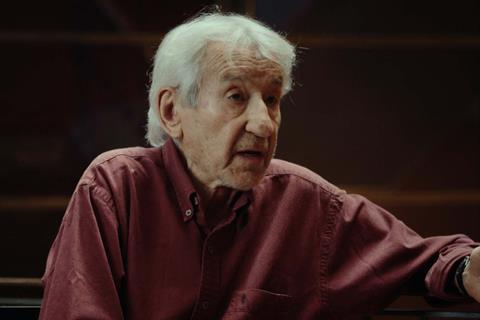
A cornerstone of this dynamic sector is Zinebi, Bilbao’s International Festival of Documentary and Short Films. It is the only FIAPF-accredited A-list documentary festival in Spain, and a long-running launchpad for local talent. Another is Basque Audiovisual, the umbrella brand promoting Basque productions and companies worldwide, boosting global visibility for the sector.
Strong contenders
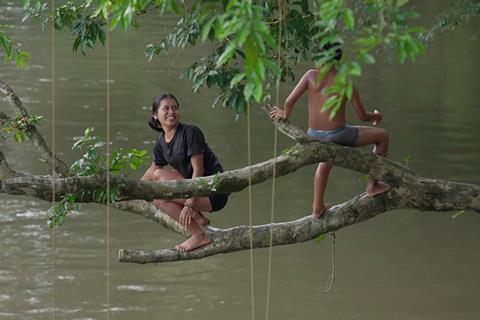
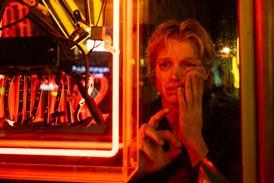
Two local standouts are competing at this year’s Goya awards, underscoring the sector’s strength. Eloy De La Iglesia: Film Addict is a feature produced by Altube Filmeak and directed by double Goya winner Gaizka Urresti. Wao Zone is a short directed by Nagore Eceiza and produced by El Santo Films and Izar Films that looks at long‑term oil extraction in the Amazon, one of the world’s most biodiverse regions.
The momentum continues into early March at Thessaloniki, where several Basque projects have been selected for the Agora industry arm of Thessaloniki Documentary Festival, running March 5-15.
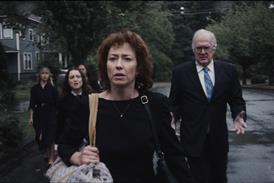
One of the Thessaloniki titles is Marco Leopardi’s Voices From The Woods, produced by Marta Gomez at Al Borde Films, co‑produced with Italy’s Incipit Film and Poland’s ZK Studio, and sold by Paper Moon. It follows Mariagiulia Colace, once an actress, now a designer who found refuge in nature after a painful period and plans an illustrated book about humanity’s loss of connection with nature.
“We were moved by how observational filmmaking and visual poetry co-exist around the protagonist,” says Gomez. “This storytelling transforms grief into a collective, open experience, stripping it of darkness and taboos.”
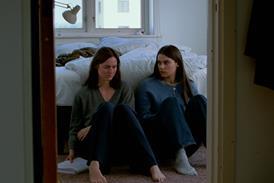
Another project is Iratxe Fresneda’s All The Roads Are Open, which follows the real 1933 journey of photojournalists Annemarie Schwarzenbach and Marianne Breslauer across a Europe in flux. Produced by Bide Guztiak AIE and Gentzane Martinez’s Marmoka Films, it portrays the act of rebellion of two women navigating a continent on the brink of totalitarianism, documenting life with their cameras.
“Their story is not just a historical account, but a reflection of our struggles today,” explains Fresneda. “Their journey defied the darkness of the era through their sisterhood.”
Additionally, Natxo Leuza’s Before You, My Shadow will be showcased in Thessaloniki by El Santo’s Eceiza. The project explores the lives and dreams of workers who dismantle ships in Gadani, Pakistan.
Maia Iribarne’s Altxaliliak (‘butterflies’ in the Basque language) is being produced by Zuri Goikoetxea’s Doxa Producciones. The film is set in a small northern Basque village, “where any queer representation in public space has long been nonexistent”, says Goikoetxea.
She ties the vitality of Basque documentary to its borderland context: “Identities, languages and traditions intertwine, shaped by conflict and activism that fuel a need to observe and narrate.”
A further Basque title in Thessaloniki, under the Basque Audiovisual label, is Harri Biguna (literally, ‘soft stone’), a series produced by Atekaleun and directed by Tamara Garcia Iglesias, centred on Basque art. Iglesias notes that “nonfiction, while rooted in fact, can introduce versions of reality that fiction cannot”. The series highlights stories long overlooked on the margins of Basque art, reinforcing the region’s documentary identity.
Basque nonfiction is also present in Thessaloniki’s main competition strand. Oier Plaza Gartzia’s Popel, a co‑production between Basque, French and Czech partners, follows two intersecting investigations into memory and exile. One thread investigates a Catalan republican deported to Nazi camps, the other a Basque militiaman captured by the Gestapo. Both converge in Prague to uncover the preservation of ashes of around 2,000 victims of Nazism.
Sold by Impronta Films, Popel is in the running for the audience award, showing continued interest in historical memory and European trauma from Basque creators.
Contact: Ione Feijóo Uranga, head of communication, marketing & international development
Find out more: zineuskadi.eu / basqueaudiovisual.eus