











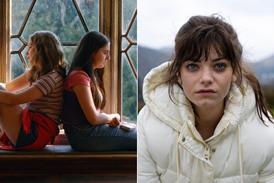

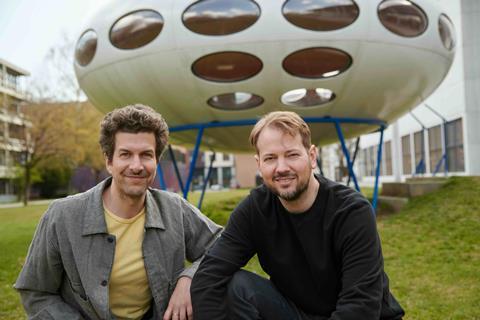
German production company Walker+Worm Film comes to this year’s Berlinale with two highly anticipated films in official selection - Sandra Hüller-starrer Rose by Markus Schleinzer in main competition, and Anna Roller’s modern love story Allegro Pastell in Panorama – as well as a busy development slate.
The company has come a long way since it was launched back in 2008 by Tobias Walker and Philipp Worm while they were studying at the HFF Munich film school, where they made their first short together as a Walker + Worm film.
They also teamed up for their first feature – prison drama Picco by Philip Koch, which premiered in Cannes Directors Fortnight in 2010. “That was really the beginning of our career,” recalls Walker.
Since then, the company has steadily built its reputation as leading independent producer in the German-speaking world.
The seven-strong outfit has bases in both Munich - the business hub of the German film industry that is home to companies like Constantin and Leonine - and Berlin, where key talent and indie outfits are based. “It makes sense for us to have offices in both cities,” says Worm.
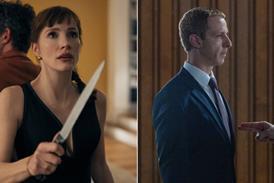
Among the company’s recent credits are Philipp Stölzl’s The Royal Game, and two films that premiered at the last two editions of the Berlinale : Frauke Finsterwalder’s Panorama drama Sisi & I and Frédéric Hambalek’s competition title What Marielle Knows.
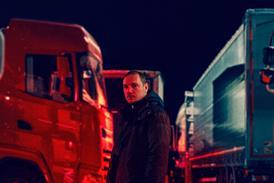
It is currently in post with Finsterwalder’s next film, road trip tale Eurotrash starring Barbara Sukowa and Alexander Fehling, based on the best-selling book by Christian Kracht.
Looking ahead, Walker+Worm’s upcoming slate includes four new titles. It is raising finance for a Nicolas Wackerbarth “witty and sharp” comedy about inheritance Münchner Freiheit starring Corinna Harfouch (Dying) and Henry Hübchen (The Lives of Others) that shows how quickly progressive ideals crumble when personal prosperity is on the line. Broadcaster ZDF and distributor Piffl Medien are attached.
It is also working on Schloss Husum, written and directed by Sonja Kröner whose debut feature The Garden premiered internationally in Toronto. It follows nine-year-old Fanny who, rather than submitting to the pressure of her aristocratic family and the church, moves into the trees and refuses to come down ever again.
Walker+Worm is also readying Hambalek’s next project, The Four Horsemen, billed as a film about how violence enters our civilization. Hambalek is currently finishing the script and financing will start in Cannes.
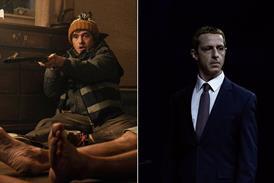
It is also in development on arthouse drama Fauna by Picco director Philip Koch, who created Bricks - one of Netflix’s biggest German hits last year. Fauna tells the story of a family slowly transforming as each member begins to act like an animal.
Creative focus
The company has a reputation as hands-on and creative producers. “We always have a strong relationship with the talents. One of us is always on set. We are very close in the script and editing process,” says Worm. “We really focus on the films we love to make.”
Walker+Worm makes films across a wide range of budgets, from debut movies for €1m to ones in the €9-10m range, considered a high budget in Germany. Sisi & I and The Royal Game both had €9m budgets, as does Rose.
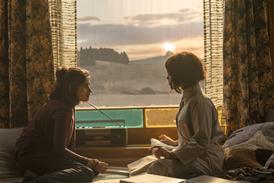
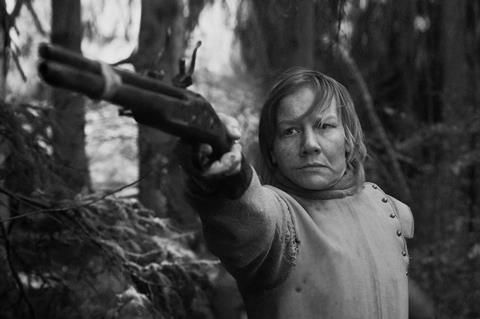
Set in the aftermath of the Thirty Years’ War in 17th-century Germany, Rose stars Hüller as an enigmatic soldier who returns to a secluded German village and purports to be the heir of a long-abandoned farmstead, all the while pretending to be a man.
Walker+Worm had known its Austrian director Markus Schleinzer through his work as an actor – he had starred in Sisi & I (playing Emperor Franz Joseph). They were asked by Schleinzer to join with Austrian production company Schubert and Germany’s ROW Pictures to help make the film. At that point, about 80% of the financing for Rose was in place; Walker + Worm’s key role was on the creative production side.
“There were many challenges,” recalls Worm. “It’s historical. It’s black and white. We shot the film in two different seasons, summer and winter. We built the whole village. We created all the costumes. None of the historical costumes or sets had existed before.”
Walker adds that that approach has given the film a distinctive look. “Even if it is in black and white, it has a very modern feeling for a historical movie.”
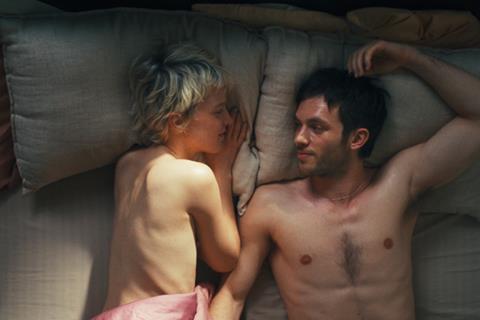
Allegro Pastell, meanwhile, was “born in the company,” says Worm. A love story about a long-distance relationship between a novelist and web designer, it is based on Leif Randt’s best-selling novel. It is Roller’s second feature after Dead Girls Dancing, which premiered at the Tribeca and Munich festivals in 2023, and sold to Mubi.
“We read the novel, and totally fell in love with it – and spent a lot of time convincing the writer to let us make a movie out of it. He also became the scriptwriter for the movie,” says Walker. “And we found Anna – after the success of Dead Girls Dancing, she was ready to direct her next movie. It’s a very young and fresh team, mixed with some experienced people like editor Andreas Wodraschke”
Much of the film is set in Berlin, ‘in unexpected ways” says Walker. Notably, it was one of the first films to be invited to play at the festival, he adds. “It is the ideal platform to show it in the city where it was born.”
Walker+Worm primarily produces in the German language but, says Worm, it is looking to work more internationally. He cites Hambalek’s next project as “one we would really like to work together on with a French company. We had many offers for his last film from France, so this could be very suitable.” (Hambalek’s What Marielle Knows sold worldwide in 28 countries after its Berlin competition premiere).
Both Walker and Worm are positive about the state of the creative side of German film production, while noting that the past few years have been difficult for crew in particular as streamers have cut back spending. They point to a strong contingent of German films at this year’s Berlinale. “Even if times are challenging, from the creative and artistic side there are really good German voices out there.”



No comments yet