






The director’s Cannes Critics Week title features an impressive performance from newcomer Pinea Matoshi
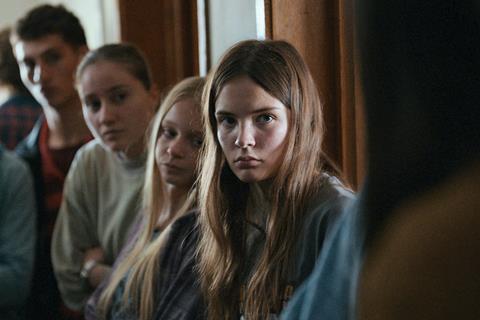
Dir. Blerta Basholli. Kosovo/Switzerland/France. 2026. 101mins
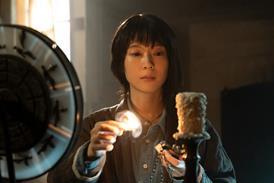
Early adolescence is a struggle at the best of times. But for 13-year-old Dua (Pinea Matoshi), growing up in ethnically-divided Prishtina, Kosovo, in the late 1990s, there’s an added layer of stress. Navigating the high school social minefield becomes more complicated once you factor in the invisible barriers between ethnic Albanians like Dua, and their Serbian neighbours. The first kiss at a teenage disco is eventful enough, without the possibility that the Serbian military police might raid the event. The impressive second feature from Blerta Basholli brings an intimate, personal perspective to the turmoil of growing up in a time of conflict.
Dua further cements Basholli’s reputation as a talent to watch
Basholli burst onto the scene with her acclaimed debut Hive, which won the Grand Jury Prize, the Audience Award and the Directing award at Sundance Film Festival in 2021, before racking up a sizable haul of further awards. Dua may struggle to match that considerable awards success, but further cements the director’s reputation as a talent to watch and should enjoy a healthy festival journey following its world premiere in Cannes Critics’ Week.
The film is largely based on Basholli’s own experiences and those of family and friends, with quiet, expressive Dua serving as her alter ego. It’s a magnetic, vulnerable performance from acting newcomer Matoshi, who is the window through which we view the rising tensions in the country and whose face is the focus when moments of drama occur out of the frame.
The film opens with the kind of scene that could play out in any girls’ bathroom in any disco in any country in the world. Teenagers fine-tune their make-up and fiddle with their hair; they gossip about which of the surly, tongue-tied boys they prefer. Back on the dancefloor, they pair off one by one, with Dua too shy to make eye contact with the boy who finally plucks up the courage to ask her to dance. But this is a brief moment of normality in a perpetually disrupted childhood: the police arrive mob-handed and the kids stream from the venue, dodging flailing batons and verbal abuse.
It’s the first of numerous scenes in which Basholli deftly explores the shifting dynamics in large groups of people. Dua is rarely alone; to be alone is to be vulnerable. She’s the youngest of four children squeezed into a small apartment where their mother (Hive star Yllka Gashi) works from home, toiling over a sewing machine. And the number of bodies in the flat is frequently swelled further, by extended family gathering for food or by student friends of Dua’s brother sheltering from a tear gas attack by the police.
Cinematography from Lucie Baudinaud is agile and curious, the choice of long takes and sinuous hand-held camera adds both a sense of restlessness and an edge of nervy, watchful paranoia. But despite the constant movement, careful framing means that our eyes are constantly drawn to Dua’s watchful expression, even if she is on the periphery of the action. In other shots, Dua’s face is foregrounded: there’s a chilling scene late in the film in which the implicit violence in the air starts to manifest itself physically. Dua has begged to join her father on a car trip (sacked from his job, we assume, because of his ethnicity, he buys and sells petrol for a small profit). But they are pulled over by the Serbian military police and her father is made to open the boot of the car. A severe beating follows. Dua is paralysed, unable to turn around and bear witness. But she sees, all too clearly, the trickle of blood snaking down his neck when he gets back into the car.
The fundamentals of childhood have been interrupted for kids like Dua. The new normal, with schools shuttered, is an impromptu class taught in the cramped apartment of an overstretched and unpaid teacher. It’s here that Dua meets Maki (Vlera Bilalli), a refugee from war-torn rural Kosovo, who inspires Dua with her courage and introduces her to judo. Gradually, the fear in Dua, and in others such as her beloved brother Vegim (Andi Bajgora), gives way and is replaced by anger. But as Dua’s parents rightly realise, fear is what keeps you safe and life in Prishtina could turn out to be a death sentence for their children.
Production company: Ikonë Studio, Alva Film
International sales: The Party Film Sales sales@thepartysales.com
Producers: Valon Bajgora, Britta Rindelaub, Thomas Reichlin, Amaury Ovise, Yll Uka, Agon Uka, Jean-Christophe Reymond
Screenplay: Blerta Basholli, Nicole Borgeat
Cinematography: Lucie Baudinaud
Editing: Enis Saraçi
Production design: Sasho Blazhevski
Music: Audrey Ismaël
Main cast: Pinea Matoshi, Vlera Bilalli, Kaona Matoshi, Yllka Gashi, Kushtrim Hoxha, Andi Bajgora

No comments yet