






Shifts in independent financing and advertising models are encouraging more collaboration between brands and filmmakers
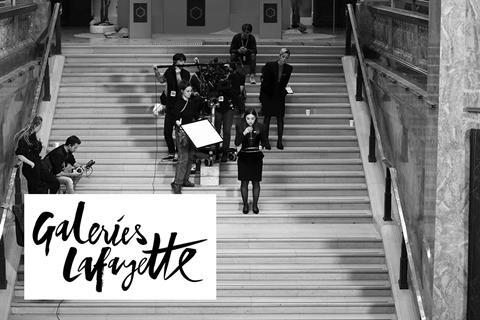
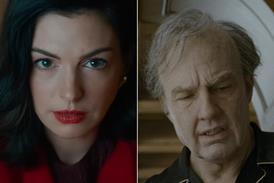
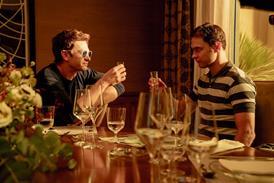
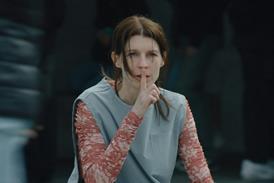
In November 2023, filmmakers Natalie Musteata and Alexandre Singh took over Galeries Lafayette’s flagship Paris store for seven nights. They were shooting their ambitious film Two People Exchanging Saliva, the shared winner (with The Singers) of this year’s live-action short Oscar category.
The New York-based filmmakers’ story about a near-future society where physical intimacy is outlawed does not sound like an obvious fit with one of the world’s most famous department stores, but the pair had heard about the upmarket chain’s By Night programme, which invited collaborations with visual artists, musicians or other performers to come to the store after hours, and thought they might be open to this unusual project. As it turned out, they were.
“We were thrilled with the collaboration; they are generous patrons of the arts and believe in artistic freedom… We were given carte blanche,” says Musteata, who co-writes and co-directs with Singh.
Both parties viewed the project as an independent film led by the artists, and not something to be described as “branded entertainment”. As Musteata observes, “Our film is so audacious in its concept – a world in which people pay for things with slaps to the face – that it seemed absurd to us that it might be confused as branded content. Aside from the end credits, the Galeries Lafayette logo is purposely excised from the film.”
While they received a small pot of development funding from the retailer, Musteata and Singh raised most of the production budget elsewhere, and also brought in Chanel as a creative partner thanks to lead actress Zar Amir’s connection to the French fashion brand. They hope to collaborate with both companies again, perhaps on a feature version of Two People Exchanging Saliva, now in development.
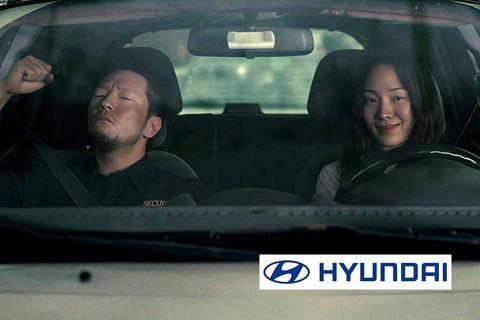
It is just one illustration of how filmmakers are working with brands in more creative ways than simple product placement. Further examples include fashion house YSL partially financing Jacques Audiard’s Emilia Pérez, or Hyundai making a reported $1m investment in Stephanie Ahn’s 2026 Sundance award winner Bedford Park, piggybacking on the casting of actor Son Sukku, an ambassador for the Korean car brand.
Conscious coupling
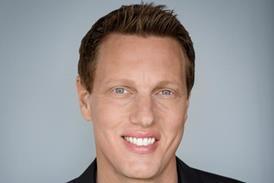
Jae Goodman became an expert in connecting brands to entertainment companies when he led CAA’s marketing division from 2006-18; now, his company Superconnector Studios works with the likes of Nike and Anheuser-Busch.
In early 2025, the company, which he co-founded with John Kaplan, partnered with luxury retail giant LVMH to launch production outfit 22 Montaigne, which has already connected drinks company Hennessy to Black-ish creator Kenya Barris for a TV project. Goodman expects to announce further content deals soon with the likes of Tiffany and travel brand Belmond.
Filmmakers who view brands only as a cash machine are making a mistake, insists Goodman. “Brands bring opportunity that goes beyond cash. They can bring consumer resonance and consumer connectivity. For example, the open rates on a Sephora email because of their loyalty programme are incredibly high. We can help open a movie by sending an email to every Sephora loyalty member. And for Tiffany, Vuitton, Dior or Moët, you’re talking about hundreds of years of cultural resonance, the heritage, the archives and today’s dedicated social media followings.”
Goodman helped launch Nike’s busy Waffle Iron Entertainment, which kicks off a scripted deal at Apple TV with Gavin O’Connor-directed feature Running, about a homeless athletics prodigy.
Brands opting to work more directly with original content goes hand in hand with the decline in traditional advertising models, especially TV advertising, driven by shifts in consumer behaviour. It could be seen as more exciting to use those ad budgets to back a TV series or film.
“There is a depth and richness to TV and film storytelling, which is difficult for brands to replicate in other parts of their marketing,” says Sinead Dean, London-based VP of WME Entertainment Marketing and Advisory. “The opportunity to immerse a potential customer in a brand’s story, world or value system via a TV or film storyline or character, creates an emotional connection between the brand and potential consumer that is hard to achieve elsewhere.”
Elsa Huisman, a media and entertainment lawyer who works with several French fashion brands through her Paris-based 111 Avocats, says she is finally seeing European filmmakers take a more willing approach to working with brands – something the Americans have been doing for longer. Film financing is fragile everywhere, so “even French producers are looking at other sources of financing, whether that’s turning to brands or other equity financiers”, notes Huisman.
Dean, who has worked with clients including McDonald’s, is seeing brands not just crafting creative marketing and promotional ideas, but willing to partially finance productions. “As brands become more knowledgeable about how they can use TV and film to further their position, co-funding or fully funding projects is becoming a viable and robust marketing model,” she says.
While some brands are now backing production, they usually do not wholly finance projects – more typically co-financing development or working on in-kind deals that help with production elements such as costumes, locations, or marketing and promotion.
Fashion conscious

Taking a different approach, Fondazione Prada, the non-profit arm of the fashion brand, has established an annual $1.8m (€1.5m) fund to back 10-12 independent films per year, led by former Directors’ Fortnight general delegate Paolo Moretti. He stresses the fund is entirely cultural in outlook and attaches no expectations of visibility – or editorial interference. Its first 14 selections, announced in February, included projects from Apichatpong Weerasethakul, Levan Akin, Hlynur Palmason and Tatiana Huezo, with fashion magnate Miuccia Prada herself sitting in on the final selection discussions.

Moretti adds that the Prada fund “is conceived as a long-term commitment” and, more than just financial support, he wants it to be helpful for a project’s market visibility. “Independent cinema is facing increasing structural fragility,” he says. “In that context, it felt natural to elaborate a new form of interaction with the film world.”
New York-based industry veteran Brian Newman launched consultancy Sub-Genre in 2013 and now works with brands including Oatly, WeTransfer, Hilton and REI. Sub-Genre works on strategy, finding potential partners as well as helping on distribution – either as a boutique sales agency or service deal distributor – for content made with brands.
Newman agrees that Europe is catching up with the US trend of creators engaging with brands to replace other shrinking sources of finance; he also points out that Hollywood production companies have started to create brand divisions in the tougher financing climate, even agreeing to share IP ownership in some situations.
While some brands are willing to work in features, short-form content is the preference for many: “You can control that more in a marketplace that’s not buying a lot of features,” observes Newman.
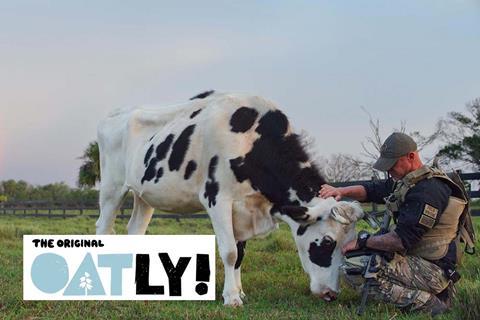
Non-fiction has been an attractive space for brands. “It’s easier for documentaries to signal values alignment,” suggests Newman. He is working on Oatly-backed doc series The Price Of Milk, which premiered last year at Tribeca Film Festival and launches on multiple platforms in June. The series looks at small farmers fighting big dairy, a topic the plant-based drink maker “clearly has a vested interest in”. Directors Nicholas Bruckman and Yoni Brook had full creative control and final cut.
Newman sees platforms and streamers – including Roku, Samsung, Prime Video, Netflix and Hulu – not only selling slots to advertisers but working with brands more directly on content. “People are paying to play, you’re going to see more content show up in your queue that’s essentially an advertisement, there because of an algorithm,” he predicts, claiming the situation is not necessarily bad for consumers: “As long as it shows up in a genuine way and is done well, it’s better than just putting a bunch of bottles in the scene.”
Creative path
There are still few precedents and established best practice in this field, so an expert intermediary like Newman, Goodman, Huisman or Dean can be crucial; brands might not have a dedicated entertainment department and producers will not necessarily know how to structure these kinds of deals. But it is a growing arena that will only get bigger. Expert advice includes to involve brands at early stages of development; see past just finance for true partnerships; and for brands looking at this space to create dedicated departments, as YSL did with Saint Laurent Productions in 2023.
“Advertising and entertainment are already collaborative businesses, they just typically haven’t collaborated to create real entertainment,” says Goodman. “Our advice is come to the table with an open mind. The creatives in entertainment need to trust that the brand is a storyteller; they’re not trying to ruin your auteur entertainment. The same is true for the brand executives – if you come with a defensive posture, it’s never going to work. Meet a lot of potential partners and find somebody you like and trust, because you’re about to go on a multi-year journey.”






No comments yet