

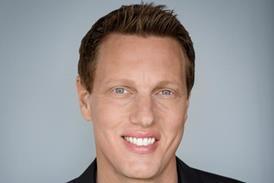






With an Oscar on his mantelpiece, Arthur Harari makes his Cannes Competition debut as a director with thriller The Unknown.
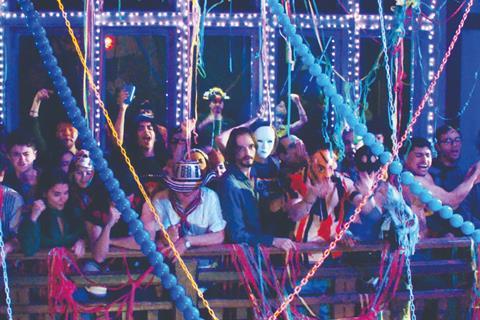
Actor and filmmaker Arthur Harari heads to Cannes with his third feature as a director, after 2016 debut Dark Diamond and 2021 Un Certain Regard opener Onoda: 10,000 Nights In the Jungle (and with a best original screenplay Oscar under his belt, shared with Justine Triet for the 2023 Palme d’Or winner Anatomy Of A Fall).
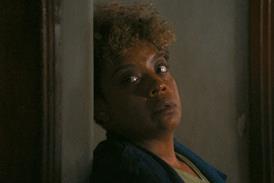
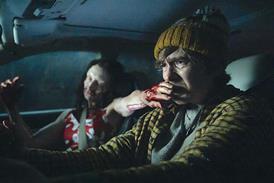
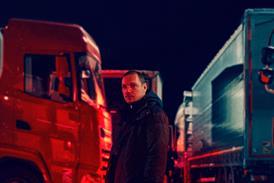
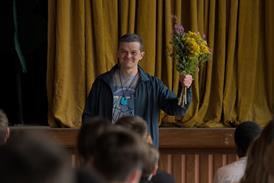
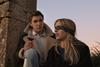
Based on 2024 graphic novel Le Cas David Zimmerman, which Harari wrote with his brother Lucas, The Unknown stars Niels Schneider as a photographer who wakes up in the body of a woman (Léa Seydoux) after the two spend the night together. It is produced by Paris-based Bathysphere and co-produced by Pathé, which handles sales and French distribution.
Was it challenging to adapt the graphic novel to the screen?
It was complicated. The story was my brother’s idea. I was obsessed with it for years, but had to find my unique spin on it. I’d never seen a realistic body swap movie before. It’s happening to these characters — that’s the true nightmare.
The body swap genre is typically associated with sci-fi or horror. What was your elevator pitch for this different approach?
The short version is that it’s about a man who is fascinated by a woman and becomes this woman. The experience of the film is exploring the dissolution of identity. It’s about someone quite literally chasing after himself. He wants to become who he was, but he can’t. I want the film to be extremely concrete, for everyone in the cinema to say, “Okay, I understand what these characters are going through.” I want the audience to feel it’s happening to their own bodies.
Your approach is concrete but also conceptual, leaving room for interpretation. What is your take on the evolution of the characters? And — no spoilers — the ending?
The ending is different to the book in that it’s more abstract. The question becomes, “What is the identity of who we see on screen?” Even I don’t know. It’s similar to Anatomy Of A Fall, when everyone asked: “Did she do it?” I like that the audience can see what’s happening, but I can’t give an answer.
Niels Schneider, who also starred in your debut film Dark Diamond, is unrecognisable in his role. What did his physical transformation involve?
He lost a lot of weight for the role. And we changed his hair. There wasn’t much need for make-up. He is an actor who can transform himself. Even when I see him now and he is back to the real Niels, it’s unsettling. It’s like he’s another person.
Your trio of films as a director are all very different in terms of scale and narratives. What makes a film ‘Hararian’?
They all pose questions about identity. The characters are confronted with their relationship to reality. To make a film, I need a story that comes to me and feels obligatory that I tell it and in a way that it hasn’t been told before.
Does it feel different heading to Cannes for the first time with your own film in Competition?
It’s all very new. In the past I was protected because when we present a film, it’s often like being naked. Onoda was in Un Certain Regard so I felt less exposed. This is the first time I feel like I’m being thrown right into the fire. But it’s out of my hands now. Whatever happens, I can’t do anything about it. It’s a very particular film that offers an experience to the audience. It’s not an intellectual film, it’s an experience. It’s perhaps destabilising, but certainly unique.
What do you hope audiences leave with?
The best films I’ve seen have connected me to something I couldn’t explain, but they all ask the questions: “What does it mean to be alive? What does it mean to be me? What does it mean to inhabit a body and exist in the world? Is it possible to escape what defines us?”
All children have doubts. We look at our parents and wonder, “Maybe they’re not my parents, maybe they’ve been replaced.” My own daughter said to me recently, “You’re not my real dad, you’re a fake dad, you don’t smell like my dad.” We all look at reality and say, “Maybe this is not reality.” Just being here, existing, it’s so weird.

No comments yet