
















Brett Goldstein followed Ted Lasso with hit therapist comedy‑drama Shrinking. Screen talks to its co-creator and star about the show’s emotional journey, the casting of Harrison Ford and balancing pathos, laughs and a large ensemble.
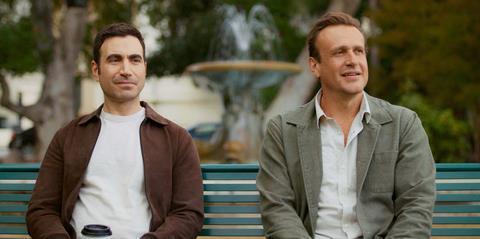
The end of the third and latest season of Apple TV’s comedy-drama Shrinking was a long time coming for its creators. “The final scene was in the original pitch,” explains showrunner and co-star Brett Goldstein. “We knew what we were heading towards. We knew what emotional journeys the characters had to go on to get to that ending. Then everything else, you’re filling in as you go. It’s exciting.”
Shrinking was born from an unconscious meeting of minds that would delight its therapist characters. During production on Apple TV’s smash hit Ted Lasso, in which Goldstein starred, he sat down with producer Bill Lawrence (Scrubs) to talk about a new idea for a show about a widowed therapist failing to deal with his own issues.
“We loved working with each other on Ted Lasso,” recalls Goldstein. “I told him I had this thing about a therapist whose wife had died. He said, ‘Oh my god, I’ve been working on something very similar.’ We shared our things, and his was much lighter and my version was much darker. We were like, ‘If you put these together, this is probably the best version.’”
Goldstein’s interpretation had the wife of therapist Jimmy Laird (played eventually by Jason Segel) murdered by one of his patients, adding a hefty portion of guilt to the grief. In Shrinking, she died at the hands of a drunk driver, who was ultimately introduced in season two, played by Goldstein.
“In hindsight, we did it the right way. In season one, we built this world where you cared about these characters and you felt safe. Then, in season two, we could bring in a much more challenging idea of here’s the man who killed his wife. Can you forgive that? The other version was so dark. It’s hard enough to say this is a comedy about grief, but saying, ‘This is a comedy about grief and murder,’ is too much.”
Lawrence and Goldstein sought out Segel to star and co-create. “We’re both huge Jason fans,” explains Goldstein. “We needed an actor you loved no matter what, because we wanted to start him in a dark place, where his daughter is in the house and he’s up at three in the morning doing drugs with sex workers in the pool. We have a long way to go with this character, so we needed an actor you will root for.”
The team pitched a three-season plan to studio partner Warner Bros Television and streamer Apple. In that first season, Jimmy begins to process his own grief and inertia by going outside normal therapeutic guidelines and pushing his patients in unconventional – maybe even unethical – ways.
Season two sees him continue to innovate while also dealing with the reappearance of the man responsible for his loss. Then season three sees the first glimmers of hope that he can move forward, and a corresponding panic that threatens to send him spiralling again.
Professional opinion
“I am very pro-therapy,” says Goldstein. “It’s interesting, because we get, I’d say, 10% of therapists going, ‘Love the show, but terrible therapy.’ Then 90% go, ‘Love the show.’ That’s it. I think on some level Jimmy’s work is wish fulfilment. We’re not unaware that what Jimmy’s doing is potentially not great. That’s why [his patient] Grace pushes her husband off a cliff at the end of season one.”
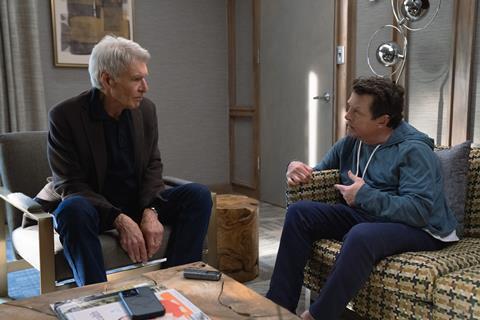
Jimmy’s methods are balanced by the character of Dr Paul Rhoades, who acts as a traditional counterpoint to Jimmy’s experimentation. The creators wanted “a Harrison Ford type” to play Paul. Ford, to their shock, read and loved the script and asked for a meeting. Goldstein, the only one in London where Ford was shooting Indiana Jones And The Dial Of Destiny, was sent to seal the deal.
“Everyone in America is calling me saying, ‘Don’t fuck this up,’” laughs Goldstein. “‘This is all on you.’” Happily, Ford wanted to do it and had even dressed for the occasion in clothes he thought Rhoades would wear. “He’s been amazing,” says Goldstein. “Four years in, and every time I see him, I don’t believe it.”
With Segel and Ford in place, the rest of the cast assembled smoothly, including Michael Urie as Jimmy’s lawyer best friend Brian, Jessica Williams as the practice’s gifted third therapist Gaby, and Christa Miller as Jimmy’s caring/meddling neighbour Liz. The secret weapon to developing the characters, says Goldstein, is “falling in love with the actors, because you want them to show off”.
A one-scene cameo in season three for Michael J Fox grew into a small recurring role because it worked so well. “He was extraordinary and became a much bigger character than we’d originally planned.”
While the strength of that ensemble is Goldstein’s biggest challenge on the show, it is also his greatest joy. “There are so many good characters, and we want to give everyone a full-season arc and an episodic arc, a funny bit and an emotional bit. The knitting together of everyone’s stories is why it takes so long to write. You’ve got this mosaic on the wall, like a serial killer [investigation], one of those maps with the strings.”
Instinctive writing
In contrast, the show’s delicate tonal balance of comedy and tragedy comes easily. “It’s just instinctive to how Bill and [executive producer] Neil [Goldman] and me and all the writers see the world,” says Goldstein. “The world is funny and embarrassing and awful and tragic and sweet and lovely, all at the same time.”
That said, keen-eyed fans know to be wary when Goldstein is credited as principal writer on an episode. Across Shrinking and Ted Lasso, he is often responsible for the most emotionally wrenching ones. “I always do the sad ones. When we do the outlines, they’re like, ‘Here’s a depressing one. Brett’ll do that.’”
The show’s first two seasons were nominated for nine Primetime Emmys, including outstanding comedy series, lead actor for Segel (twice), supporting actress for Williams (twice), and supporting actor for both Urie and Ford last year.
With Apple TV keen to renew for a fourth season, the creators had to craft a new story, with Lawrence reporting that a short time jump would give the characters a reason to reunite after Jimmy’s daughter Alice (Lukita Maxwell) and Paul (who has Parkinson’s disease) moved to the east coast at the end of season three: one for college and the other for retirement.
“Me and Bill went out for dinner, we talked about it, and we have an ending,” is all Goldstein will confirm about the new three-season arc they have mapped out. “‘What was this show? What was it about in the beginning? So, what is the perfect ending?’ I think we have that,” he says. “Now we have to fill in the blanks.”






No comments yet