





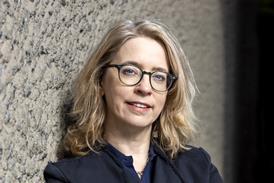





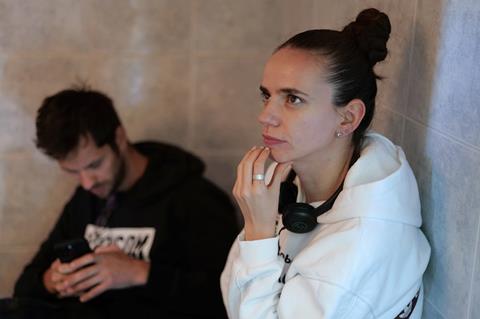
Rising Macedonian director Kosara Mitić is at the Sarajevo Film Festival for the regional premiere of her debut feature 17, screening in the main competition after world-premiering at Berlinale’s Perspectives.
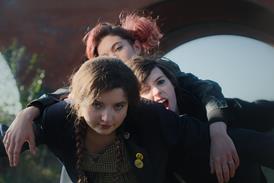
Co-written by Mitić and one of the region’s most prolific screenwriters, Ognjen Sviličić, the story follows a schoolgirl, played by Eva Kostić, who is hiding her pregnancy as the class goes on an excursion to Greece. The pregnancy is the result of rape by two classmates,
Mitić talks to Screen about the cast of young non-professionals on whose experiences she drew to create the film.
Why did you decide to tell this story?
I was interested in what happens when violence becomes something that a young girl is expected to carry alone. I wanted to bring the audience as close as possible to Sara’s state of mind, to experience what she cannot articulate. This is not a story about a secret teenage pregnancy. It is about the emotional violence of silence and invisibility.
For me, the film is not only about what happened to her, but about the struggle to reclaim a sense of ownership over her body, her choices and ultimately, her own story.
How did you work with the young, mostly non-professional cast?
I felt that I had to become part of their world. I spent so much time with them that we almost lived together in the same emotional space. I was there for every moment, listening, observing, talking, crying, laughing, and sometimes simply being with them. That closeness allowed me to understand them beyond the characters. The trust we built became the foundation of the performances and, for me, one of the most emotional parts of making 17.
What was the biggest challenge in the making of the film?
It was directing a very emotionally demanding film in only 20 days. I had to be extremely precise with the script, the actors and the visual language, but I also didn’t want the pressure to take away the freedom of the actors and what might come out of it. Finding that balance between control and intuition was the biggest challenge.
The film is a co-production between North Macedonia’s Black Cat Production, Serbia’s Art&Popcorn and Slovenia’s December. How did this affect the creative process?
The co-production came together quite naturally, through people who believed in the film from an early stage. Serbia and Slovenia joined the project while the script was still developing, so the relationships were built around the film itself, not only around financing. Co-production is partly a necessity in our region, but I never wanted it to become a creative compromise. On the contrary, having partners from three countries brought different perspectives while keeping the film’s identity very clear.
Which workshops and co-production markets did you attend with the project?
I took 17 to MIDPOINT Feature Launch in 2017, but I couldn’t find a producer because, at the time, nobody really believed in the film. I waited almost five years before I finally got funding for the film. MIDPOINT was important because it gave me the opportunity to discuss the script with people outside my immediate environment and to understand the film more clearly.
I first presented the film to the international industry last year at CineLink’s Work in Progress and got feedback from people who could see its potential beyond the region. CineLink opened doors to new professional relationships, helped us understand how to position the film internationally and gave the project visibility at a crucial stage.
Looking back, both experiences taught me to listen carefully, but also to know when to protect my own voice and stay faithful to the film I wanted to make.
Has the film been shown in North Macedonia and other territories?
The film has not yet had a full theatrical release in North Macedonia. Since its Berlinale premiere, it has travelled to festivals extensively and at almost every festival it won an award. The response from audiences and juries has been very strong. The film is represented internationally by Totem Films, which has sold it to Italy and Indonesia.
What are you working on now?
The script for my second feature film together with Ognjen Sviličić. It will be a much rawer and more furious film, dealing with violence, rage, and the consequences that follow. I want to go deeper into the darker and more visceral side of human behaviour, without trying to soften or explain it too much.






No comments yet