










As Cairo International Film Festival (CIFF) celebrates its 50th anniversary, its 47th edition marks a new phase in the festival’s development, with an expanded programme.
From introducing children to cinema through Cairo Kids to supporting emerging talent through New Wave, the festival is seeking to broaden its reach while strengthening its position as a meeting point for Egyptian, Arab and international cinema.
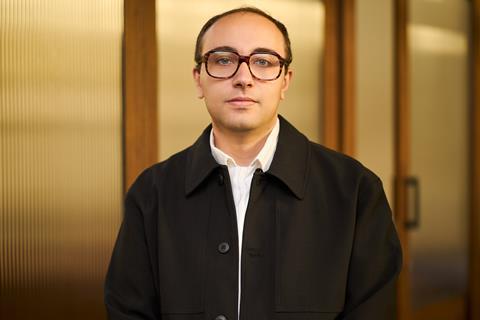
Now in his second edition as CIFF artistic director, Mohamed Tarek spoke to Screen about this year’s highlights, the diversity of Arab cinema and his ambitions for the festival’s future.
What have been the highlights of the festival’s first week?
The most rewarding aspect has been seeing audiences engage with the programme. Opening with I Play Rocky, a film about the determination behind the making of a cinematic classic released in 1976, was particularly fitting as we celebrate the festival’s 50th anniversary.
I have also been pleased with the response to Egyptian and Arab films, restored classics, and the launch of Cairo Kids and From Book to Screen, alongside the second editions of New Wave and Cairo’s XR. Ultimately, the highlight is seeing the festival bring together different generations, cinematic traditions and audiences.
What motivated the decision to expand this year’s programme?
Last years’ experience showed us that Cairo audiences are more adventurous than we sometimes imagine, with strong interest in short films, restored classics and cinema from countries rarely represented in commercial distribution. This encouraged us to broaden the festival’s offering.
This year, we are presenting 145 films from 64 countries, while expanding screening venues, and programmes for younger audiences. We want the festival to reflect the richness of cinema as an art form, while remaining accessible and relevant to the diverse communities that make up Cairo’s audience.
How is the festival seeking to engage younger audiences?
We have introduced Cairo Kids, a programme developed by film critic and programmer Rasha Hosny, featuring animation and live-action films for different age groups.
We have also expanded New Wave, which received more than 850 applications before selecting 100 young participants, including 70 from outside Cairo, representing 23 Egyptian governorates. The programme offers screenings, workshops, masterclasses and direct encounters with Egyptian and international film professionals.
Investing in younger generations is essential to cinema’s future, they might become filmmakers, critics and programmers or lifelong film enthusiasts.
How do you hope expanding screening venues across Cairo will change audience access?
We want the festival to become more closely connected to the city. Alongside the Cairo Opera House, Zamalek Cinema, Ewart Hall and VOX Cinemas, we have added Zawya and Tahrir Cinema.
Each venue has its own audience and relationship with Cairo. This expansion allows us to reach people who may not traditionally attend the festival and gives us greater flexibility in matching films with audiences. In the longer term, we hope to explore opportunities to reach other Egyptian governorates.
Why were short-film screenings moved to the Cairo Opera House’s Main Hall?
The decision responded directly to growing audience demand. Short-film screenings have consistently attracted large audiences, while the Small Theater and El Hanager Theater could no longer accommodate everyone.
Even after moving to the Main Hall, screenings continue to be fully booked. This confirms the strong appetite for short films and the importance of giving them the space and visibility they deserve.
What does this year’s selection tell us about Arab cinema?
This year, we have 13 Egyptian films across our sections, alongside contributions from Palestine, Saudi Arabia, Morocco, Lebanon and other Arab countries.
Contemporary Arab cinema is experiencing an interesting period, with increasingly diverse voices, subjects and cinematic approaches. Filmmakers are exploring political and social realities, family relationships, memory, identity and displacement, while experimenting with documentary, genre cinema and different narrative forms. This diversity challenges the idea that Arab cinema should be defined by a limited range of subjects or aesthetics.
Despite this creative potential, financing, production and distribution remain major challenges. Through Cairo Industry Days and our professional initiatives, we hope to create opportunities that help filmmakers develop their projects and build sustainable careers.
How does Cairo distinguish itself on the international film scene?
Cairo’s strength lies in the relationship between its history, its audience and its position within the region’s cinematic culture. Cairo has an extraordinary film history, a major film industry and an audience with a genuine passion for cinema.
The festival also occupies a distinctive position connecting Egyptian, Arab, African and international cinema. We want filmmakers to feel that Cairo is a place where their work will be seen, discussed and appreciated, and where meaningful professional and cultural connections can develop.
Our ambition is to build on Cairo’s historical importance while developing a contemporary artistic identity that reflects the city’s diversity and openness to the world.
How does the festival’s 50-year legacy shape its future?
Our history should be a source of inspiration and responsibility. Preserving and presenting Egyptian cinematic classics is essential to introducing younger generations to the artistic traditions from which contemporary cinema has emerged.
At the same time, initiatives such as Cairo Kids, New Wave and Cairo’s XR reflect our commitment to new audiences, emerging talent and evolving forms of storytelling. We want to create a dialogue between the filmmakers who shaped our cinematic culture and those who will shape its future.
What are your ambitions for the festival’s next chapter?
One of my main ambitions is to strengthen the festival’s role as a year-round cultural and professional platform, developing initiatives such as Cairo Industry Days, Cairo Film Connection and New Wave.
I also hope to expand our reach to other Egyptian governorates and strengthen the relationship between festival programming and distribution, allowing more films discovered in Cairo to reach audiences beyond the festival.
I want its influence to extend well beyond its 10 days in November, while preserving its identity as a space for cinematic discovery and artistic exchange.





No comments yet