















When the geopolitical outlook looks rather bleak, people need entertainment, is the optimistic mantra of the UK sales sector heading into Cannes.
But not everyone agrees, with some believing the indie market is the most challenged it has been for 30 years.
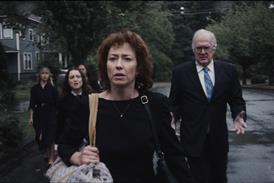
“The film industry has always been very robust, even in times of hardship,” says Mister Smith Entertainment CEO David Garrett, who is launching Craig Johnson’s US psychological thriller I Am Not Your Mother in the market.

“People love entertainment. Duress, financially, doesn’t stop you consuming,” adds Architect co-founder Calum Gray, who is bringing Kriv Stenders’ Australian crime thriller Eyes Along The Valley to market. “Although it might stop the frequency with which you consume at the more premium level.”
With cinema firmly in the premium bracket, sellers are anticipating a market adjustment.
“Maybe the market will just be more cognisant and attuned to films that uplift, because I think whatever’s happening politically impacts how we all feel, and then that impacts how we want to feel,” suggests Mark Gooder, co-president of Cornerstone Films.
”We enjoy being scared more, and we want to be uplifted and see kindness.”
Gooder is confident his slate delivers on these fronts. It includes Aoife McArdle’s thriller Foxfinder starring Tessa Thompson and Ebon Moss-Bachrach, and Peter Hoar’s feature debut A Waiter In Paris with Leo Woodall and Clémence Poésy.
“Our lineup is probably one of the strongest we’ve ever had. It’s clear and defined, it’s got cast,” he enthuses.
HanWay Films CEO Gabrielle Stewart is similarly excited about her company’s female-driven lineup. “Not by design, but by accident, we have announced three films from three exciting young female directors, and that’s filling me with joy,” says Stewart of Antonia Campbell-Hughes’ Quest For Love, Kitty Green’s The Spacesuit and Charlotte Colbert’s Becoming Capa.
“All three are super distinctive,” adds Stewart.
Following the box office successes of The Housemaid, Wuthering Heights and Hamnet, the market should take greater note of the bankability of projects that skew towards female audiences, says Gray. “They’re female-targeted movies. That audience has been underserved, since [the] Corona [pandemic].”
Challenges
The film business is hugely dependent on international travel, and the impact of rising fuel prices in the wake of the US-Iran war is a concern across the whole chain, from production to market attendance.
“If you want to make changes coming back [from Cannes], the airfare prices, from what I’ve seen from Nice to London, seemed insane,” observes Gooder.
“We’ve raised the possibility that some buyers may decide not to travel to Los Angeles [American Film Market] or Toronto, because it’s just so expensive, or Sundance,” adds Stewart. “Because of Covid, we all managed online, but it’s not as good as in person. We’re definitely thinking about the impact on Europeans or Asians, travelling to North America.”
Selling into the key North American market continues to be a headache. There were some rumblings of optimism the North American market might be opening up again, with a range of new players such as Row K, 1-2 Special and Black Bear popping up. But Row K has already run into difficulty.
“There are just lots of players who think they can come in and behave more like content aggregators,” adds one anonymous UK seller. “None of them has a pay-1 deal, so they’re all in exactly the same boat. They’re not offering minimum guarantee deals because they can’t.”
One exec describes the present challenges as much more than a headache.
“These are the worst economic conditions for the independent marketplace I’ve seen in 30 years,” says one veteran UK distributor, who chose to remain anonymous. “Successful films do happen, but they are becoming rarer, and for the many that don’t work well, distributors lose a lot of money. The only thing that might turn it around is if the streamers start competing with each other again for independent movies for pay-1, as they are constantly in flux and changing strategy.”
Adding to concerns is the impact of the Warner Bros Discovery-Paramount merger.
“It feels like everything is fucked,” the anonymous seller sighs. “None of this is going to be good for business, for the consumer. Everything is merging into bigger and bigger, more disastrously powerful entities, all for the detriment of the independent business. It’s going to bring less creative diversity.”

“It’s been very disruptive to the LA community,” agrees HanWay’s Stewart. “The jobs market is hard in film. You can see that impact.”
But she does see some reasons to be positive.
“From the indie perspective, you get the sense [Warner Bros-Paramount’s merged business] is going to need films to release. They talk about a certain volume of films. They aren’t going to be able to make all of those big franchises. They are going to have to acquire. We have to look at that as the opportunity.”
Buyer behaviour
The international market for UK films remains particularly tough.
“Everybody is wondering what the future of the indie marketplace is,” says the anonymous UK distributor. “Some are even saying, if this carries on for a few more years, the market could shrink completely. That would be terrible for British films, obviously, because we need a portion of our films to work internationally, and they’re not currently travelling.”
For UK sellers with international slates, territories where buyers seem to be spending more actively include Spain and Germany, with hopes that this will continue in Cannes.
Key Middle Eastern buyers are expected to attend the Cannes market, despite unrest in the region. Russia remains tricky to sell into, owing to the stiffening of censorship laws.
And the UK-Ireland market comes with no guarantees for local films. “The UK is getting quite specific about what it buys,” says Gooder.
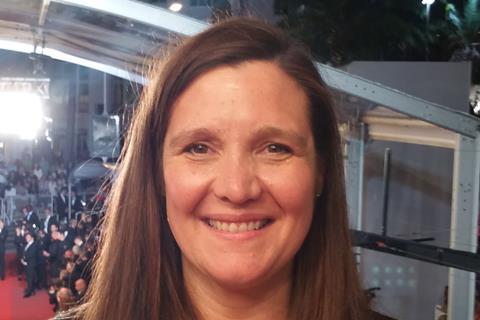
Eve Gabereau, who heads up UK-Ireland buyer Vue Lumiere, says that, as well as picking up UK films, she is on the lookout for “international films with a hook” and “mostly from the way we’re working, finished films”.
Last year, Vue Lumiere picked up three films at Cannes from the festival lineup, with not all deals done on the Croisette. She hopes to pick up a similar number this year. “It’s definitely not a volume exercise. A couple of films would be great.”
She admits, “There are still a lot of crazy asking prices.”
To adjust, she says, “You drill down and present a case of what you would do for the film, and what you think it realistically can do in the market, and try to build in some de-risking measures, and spend accordingly so that there’s a good campaign behind it. Not everything’s up front.”
Similarly, Vertigo Releasing says it is not looking for volume. “Two or three films out of the festival itself, and maybe a couple of market films,” says Taylor Haldane, acquisitions and sales manager.
Vertigo is also focusing on finished films and would like to see more “solid comedy and sci-fi” coming out of the indie space.
Sellers are adapting their strategies, with less of a focus on pre-sales. “We’ve now realised that certain projects don’t lend themselves to be set up through pre-sales, so we’re working hard to set up films without pre-sales and introduce them to the market for the first time, with footage,” adds Stewart.
A careful price point, while thinking ’audience first’, are key to helping sellers survive amid challenging market conditions.
“Fundamentally, if you’re packaging good quality material that is audience-facing at a rational budget level, then you have a good shot,” says Gray.






No comments yet