














Spanish producers are thriving thanks to generous support that is opening doors for diverse voices and international partners.
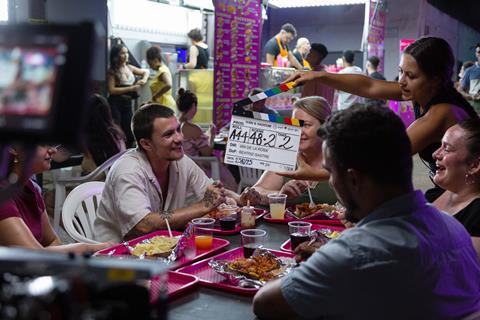
Spain’s generous financing toolkit is the envy of many producers around the world, encompassing state and regional subsidies, tax rebates, local pre-sales and access to Europe’s various support schemes.
Government investment over the past five years has broadened the horizons of the country’s filmmakers, fuelling a diversity in the types of stories told on screen and in the people with the resources to tell them. It has also sharpened the country’s appeal to international partners and to private financiers who increasingly view Spanish film production as a safe investment.
“There has been a substantial renewal of talent and a growth that has opened storytelling to more voices,” says Maria Soler, a producer at Madrid-based Morena Films, of the support. “There are more filmmakers and more production companies. Debut films have become easier to make.”
Soler is attending the European Film Market (EFM) with Eduardo Casanova’s The Black Goat (El Gran Cabrón), which is selected for the Co-Production Market.
The growth has not happened by chance. In 2021 the Spanish government and regional authorities made a choice to broaden their support to the audiovisual sector, boosted by Covid recovery funds from the EU.
Pecado Films’ Jose Alba, co-producer of Berlinale Panorama title Iván & Hadoum, says Spanish producers are well supported to build their companies and develop slates. “We can secure the budget of a film through public funding, tax rebate and [local] pre-sales.”
Producers at EFM who spoke to Screen International said gap, or debt, financing for film is not common practice in Spain. “We never greenlight a project without securing the financing, and that is with the producers’ fee included,” says Sandra Tapia from Arcadia Motion Pictures. “Part of [the fee] is saved to ensure the basics of our [company] infrastructure.”
Fund management
ICAA, Spain’s national film body, manages the fund that provides annual grants to support feature production (€92m/$111m in 2025) through two different schemes. The first is through general grants for projects that meet economic viability and quality criteria, with bigger budgets and known filmmakers and production companies behind them. The second is selective grants, targeted at projects with cultural or social value, smaller budgets and made by newer talent.
Regional film boards are also a key source of development and production financing. The rest of the budget relies on tax incentives and pre-sales to Spanish distribution companies, national and regional terrestrial broadcasters, private broadcasters (such as Atresmedia and Mediaset) and streaming platforms both international and local (such as Movistar Plus+ and Filmin).
European support can be accessed via Eurimages and Creative Europe Media, as well as Ibermedia for Latin American co-productions.
“It’s a corridor with many doors. It doesn’t mean you have to knock on all of them. It depends on the project, who is behind it and the market trends,” says Tapia, whose extensive producing career has included Pablo Berger’s Blancanieves, Oscar-nominated animation Robot Dreams, and Rodrigo Sorogoyen’s Mother and The Beasts. She is in Berlin with series Ravalear: Not For Sale, premiering in Berlinale Special Series.
Hybrid slates & multi-tasking
Most Spanish production companies operate with a limited number of permanent employees, from a big company such as Madrid’s Morena Films with 25 staff, to medium-sized, Barcelona-based Arcadia Motion Pictures, which has 11, to smaller ones like Andalusia’s Pecado Films, which employs eight.
“You never put all your eggs in one basket,” says Arcadia’s Tapia. “We have a hybrid model devoting our work to independent production but also doing some originals for streamers, where the cost and benefits are all for the platform but allow you to secure a producing fee.”
The alternative for new companies can be to multi-task. “Starting a company is certainly not easy, but everybody finds the best way to manage the growing pains,” says Silvia Fuentes from Galicia’s Sétima. “I started as an executive producer in 2018 while still working on the production team of films for other companies [such as 2023 San Sebastian Golden Shell winner The Rye Horn] in order to secure income while getting funds for our company.”
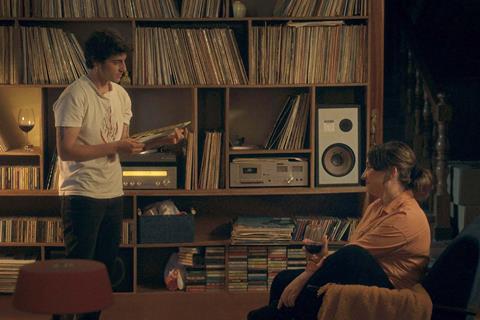
Sétima’s first feature, the documentary Filmé Pájaros Volando, was in 2024. Its second, The Dashed Lines directed by Anxos Fazans (Fuentes’ business partner at Sétima), premiered at Tallinn Black Nights Film Festival in 2025.
“Historically Spain was an industry with certain elitist tendencies,” suggests Fuentes. “People needed to have backup to make a living from businesses that were often struggling for continuity. Access was therefore not great for people with working-class backgrounds — in production and also for creative talent. But the landscape has changed. Like me, most of the colleagues of my generation are working class.
“As a young company, you are also pushed to co-produce to broaden the options to funding schemes, and to share both the opportunities and the homework,” adds Fuentes.
She is attending EFM with Porto Alegre, which has been selected for the Talent Project Market. The second feature by Alvaro Gago, after his 2023 Panorama debut Matria, is looking for international partners. Produced by Mireia Graell from Ringo Media in Catalonia and Sétima, it has already secured development support from the Catalan and Galician governments.
However, the declining theatrical audience for independent films is affecting local producers as much as in any territory. “It’s not easy to get a minimum guarantee for theatrical distribution in Spain,” says Tapia.
“In general, distributors advance an amount which is rarely over 50% of the p&a [costs],” says Pecado Films’ Alba. “You cannot rely on the box office, and international sales [presales] have decreased. Some films have the potential to generate them but not all. The pandemic was a turning point.
“We have also noticed the investment in independent cinema from streamers has lost momentum,” he adds. “But it’s an evolving landscape, both in Spain and internationally.”
Growing incentive
Additionally, many producers would like to see a rise in the national tax incentive for Spanish productions, which stands at 30% of eligible spend. The independent production landscape in Spain is shaped according to where the project is launched and where it will be shot. Special fiscal themes in the Canary Islands (up to 54%), Navarre (up to 40%) and the Basque Country (up to 70%) can be combined with the national incentive.
The possibility of a right-wing political shift in Spain in the 2027 general elections and the rise of the far right in the polls is also noted by the sector. “A year ago, I went to Göteborg and Swedish colleagues were [explaining] the damaging impact the right-wing government was having on independent production,” says Tapia.
However, Soler believes there is more trepidation among producers about the potential Netflix-Warner deal than a change in government in Spain. “Mainly because that would likely trigger a slow-down in the streamers’ flow into local productions in the short term,” she says.
Spanish producers also believe opportunities such as international collaborations could be improved. “Especially in minority co-production schemes that would open incredible opportunities with Latin America and Europe,” says Alba, who points to Belgian producers as good examples of minority partners. Films on which Spanish and Belgian producers have partnered include Julia de Paz Solvas’ The Good Daughter, winner of the grand prix at Tallinn last year, and Iván & Hadoum.
“Belgium has done it really well and that’s why we’re all working with them,” says Alba.






No comments yet