








Barry Keoghan and Rebecca Ferguson also star in feature set in 1940, six years after the events of the show’s sixth season
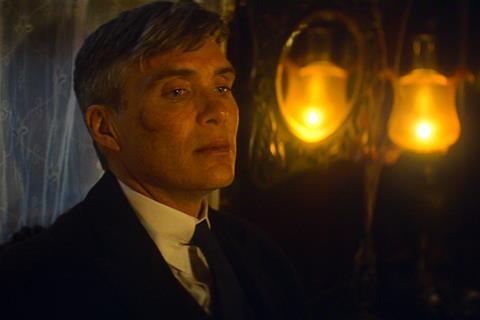
Dir: Tom Harper. UK/France/US. 2026. 112mins
Birmingham, 1940. The Second World War is raging, and the city is a target for German bombers. Tommy Shelby (Cillian Murphy), the leader of the revered Peaky Blinders crime gang and former MP for Small Heath, has retired to the country to sit out the war in solitude, consumed by the conflict inside his own head. With his wayward son assuming his mantle and becoming embroiled in a Nazi plan that could cost England victory, Tommy returns to his old stomping grounds to defend both his county and his name. Propulsive and entertaining, Peaky Blinders: The Immortal Man has plenty to keep fans happy and a wider audience engaged.
Plenty to keep fans happy and a wider audience engaged
Releasing in UK and US cinemas on March 6 ahead of its global streaming debut on Netflix on March 23, Peaky Blinders: The Immortal Man has an existing audience of fans who have been baying for more since the show came to an end in 2022. (It ran on the BBC, who produce here, for six seasons from 2013, and won several awards including a Bafta in 2018.) Cannily, screenwriter (and show creator) Stephen Knight and director Tom Harper (who helmed the final three episodes of season one as well as features including Wild Rose and The Aeronauts) have constructed this film in such a way that it is accessible to newcomers, although it does reward long-term viewers who will particularly appreciate the full circle nature of Tommy’s narrative arc.
Immortal Man is set around six years after the events of season six, which saw Tommy making connections in post-Prohibition America and facing down the rise of facism in England, while attempting to cope following the death of matriarch Aunt Polly (the late Helen McCrory) and the loss of his beloved daughter Ruby to tuberculosis. We last saw him having cheated death (again), setting his former life ablaze and, on a note of hope, riding off on an all-white steed.
Now, though, he is a shell of his former self. Tommy has always been a tortured soul, forever plagued by the horrors of his time in World War I, and now he is also facing the ghosts of Ruby and his brother Arthur (Paul Anderson), who has died in circumstances that will become clear. Murphy always struck a meticulous balance between Tommy’s cut-throat ambition and his shell-shocked vulnerability, and here mines the deep-rooted melancholy of a man who appreciates how much he has lost. (A sequence in which Tommy returns to the Garrison Pub, a Shelby stronghold, and finds himself a stranger proves poignant.)
Tommy is writing a book about his experiences, called ‘The Immortal Man’, a conceit that allows for plenty of exposition for the uninitiated. The real meat of the story comes when Tommy is forced to go back to Birmingham to reign in his illegitimate son Duke (Barry Keoghan, replacing Conrad Khan who played the character in season six). In his determination to prove himself, Duke has become embroiled in activities that go against the Shelby family’s commitment to kith and kin: robbing the freshly-bombed Birmingham Small Army Factory of weapons intended for the front; teaming up with opportunist John Beckett (a smarmy Tim Roth) to facilitate a Nazi plot to flood England with counterfeit money, crash the economy and win the war.
Peaky Blinders has always thrust the Shelby family into historical events – over the course of six seasons they crossed paths with Winston Churchill, the IRA, Jazz-age London mobsters, Russian autocrats and English fascists. But, unlike each six-hour series, there’s not a great deal of nuance and dramatic layering here; the Nazi plot is a simple device to get Tommy back in action. His counter-attack is characterised by bombastic set-pieces, choppy streamer-style editing from Mark Eckersely and a dynamic, typically anachronistic score from Antony Genn and Martin Slattery, augmented by tracks from the likes of Massive Attack. The show’s theme, Nick Cave’s Red Right Hand, is deployed at a moment which harks back to the show’s very beginnings, and highlights just how far Tommy has come.
That’s also a theme echoed in Tommy’s relationship with the cocksure Duke. Wandering accent aside, it’s an explosive performance from Keoghan who channels the vim and ego Murphy brought to the role in the early seasons. Tommy calls Duke “my dark shadow” and he is exactly that, recalling the Blinders’ early haphazard, disorganised years before Tommy turned them into a respected outfit. Scenes between Murphy and Keoghan are fleeting but well balanced, Knight doing well to stay away from any overt sentimentality that would underserve these well-established characters.
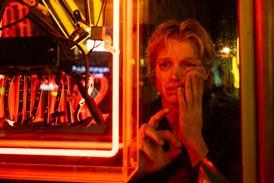
Fans will delight in the return of several familiar faces, including Sophie Rundle’s strong-willed Ada Shelby, Stephen Graham’s Hayden Stagg and Ned Dennehy’s Charlie Strong. Rebecca Feguson is an enigmatic presence as Kaulo, the Irish Romany Gypsy with ties to Tommy’s past and his future. To reveal exactly what that holds would be a spoiler but, with a new 1950s-set series coming to Netflix, it’s safe to assume the Shelby family have plenty more stories to tell.
Production companies: BBC Film, Netflix
Worldwide distribution: Netflix
Producers: Guy Heeley, Patrick Holland, Steven Knight, Caryn Mandabach, Cillian Murphy
Screenplay: Steven Knight
Cinematography: George Steel, Ben Wilson
Production design: Jacqueline Abrahams
Editing: Mark Eckersely
Music: Antony Genn, Martin Slattery
Main cast: Cillian Murphy, Barry Keoghan, Rebecca Ferguson, Stephen Graham, Tim Roth, Sophie Rundle