






The Marrakech International Film Festival, which opens on November 20, is cementing its place on the awards circuit while expanding its role as a launchpad for filmmakers from Morocco, Africa and the Arab world.
Running through November 28, the 23rd edition presents 76 films from 39 countries, including 10 world premieres.
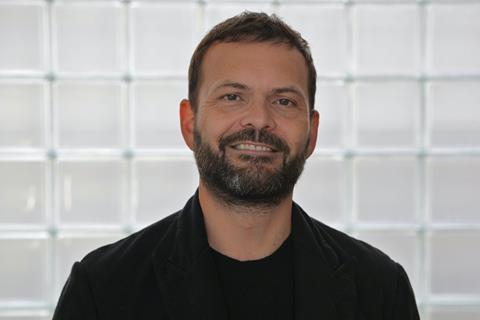
For artistic director Rémi Bonhomme, overseeing his fifth edition, Marrakech is a festival of contrasts, where politically charged films sit alongside crowd-pleasing entertainment and Hollywood heavyweights rub shoulders with emerging auteurs.
“It’s a major international event, but one that never feels overwhelming, where everything is carefully tailored,” he says.
Marrakech has moved forward a week this year, partly to avoid a clash with the Gotham Awards and reinforce its place on the awards calendar.
“We’ve worked over the past three years to establish Marrakech as an important stage for Oscar campaigns,” says Bonhomme.
“Studios, American distributors and talent increasingly appreciate coming here because there are so many influential Academy voters attending.” He points to Academy CEO Bill Kramer’s attendance last year as a sign of that growing profile.
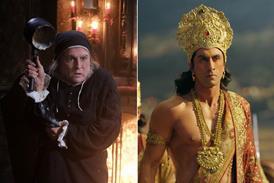
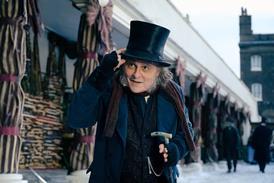
The festival opens with Jesse Eisenberg’s The Debut, starring Julianne Moore, and has become a sought-after stop for some of the year’s biggest auteurs.
“James Gray told his team from the outset that he was eager to bring Paper Tiger to Marrakech,” explains Bonhomme. “Luca Guadagnino was equally keen to unveil Artificial here. It’s a film that has had a very limited festival run.”
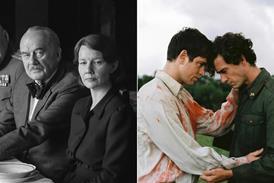
Further awards-season titles include Cristian Mungiu’s Cannes Palme d’Or winner Fjord and May el-Toukhy’s Venice Golden Lion winner Woman Unknown.
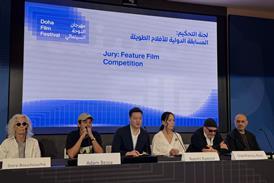
The date shift creates an overlap with the Doha Film Festival, although Bonhomme says Marrakech made its decision before Doha’s launch and the festivals coordinated to enable guests to attend both.
New voices
Presided over by Marion Cotillard, the competition features 14 first and second features vying for the Étoile d’Or, including three world premieres: Yassine Marco Marroccu’s Alkebulan, Rani and Salem Massalha’s Cairo Shadows and Farzad Samsami’s Waves Of Silence.
“I’m not chasing world premieres for the sake of it,” says Bonhomme. “The idea is to have a limited number and give them real exposure to the international press and industry.”
Gala premieres include Fellipe Barbosa’s Leila Et La Nuit, starring Roschdy Zem and Marina Foïs, and Omar Hilal’s His Weakest Creatures, pairing Egyptian stars Ahmed Helmy and Hend Sabry.
“We want Arab and African films to be able to premiere on their own continent while receiving the same level of international attention,” he says.
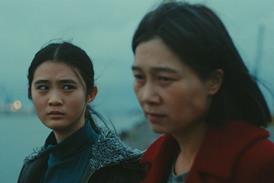
Three competition films won debut-feature honours at Cannes, Berlin and Venice: Marie-Clémentine Dusabejambo’s Ben’imana, Abdallah Al-Khatib’s Chronicles From The Siege and Auguste Bernard Kouemo Yanghu’s House Of The Wind.
“That three different juries awarded their best first-film prizes to Arab and African filmmakers in the same year says something about the extraordinary talent emerging from the region,” says Bonhomme.
He also sees a generational shift. “For a long time, first and second features were often coming-of-age stories. Now we’re seeing more adult narratives, social and historical stories. This generation is asking the previous generations to account for the world they’ve inherited.”
Moroccan films include Laïla Marrakchi’s Strawberries, the country’s Oscar submission, and Tala Hadid’s documentary Bardi.
Nurturing talent
Marrakech will honour Jeff Goldblum, John Turturro and Moroccan actor-musician Younès Mégri, while its Conversations programme features Gray, Guadagnino, Mungiu, Xavier Dolan, Rian Johnson and Monica Bellucci.
Beyond the star power, Bonhomme has expanded the Atlas industry programmes he initiated in 2018, now overseen by Hédi Zardi. Brazilian director Kleber Mendonça Filho serves as patron of this year’s Atlas Workshops. A record six competition titles have received support from the initiative.
”We’ve created something that accompanies a film throughout its entire life, from development and production to distribution and the people who will eventually write about it,” says Bonhomme.
As Marrakech’s international profile grows, fostering meaningful connections remains its priority.
“I like the idea of creating a unique space where the world of cinema has time to meet those who will shape its future,” Bonhomme says. “Time is precious, both in the world we live in and in our industry. It’s what makes these encounters possible, and that’s the spirit at the heart of Marrakech.”





No comments yet