










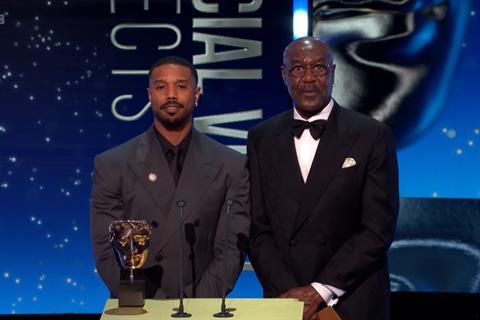
Live events producers have suggested only a major communication breakdown could have led to the “impossible” blunder of the N-word being broadcast during the BBC’s coverage of Sunday night’s Bafta Film awards.
Veterans of similar scale productions have told Broadcast the “inexcusable” mistake has left Bafta, the BBC and co-producer Penny Lane Entertainment with serious questions to answer.
Foremost is why an incident that shocked people sitting in the auditorium was not communicated to those it in the edit truck.
One indie boss – speaking to Broadcast off the record – said senior Bafta and BBC execs would be expected to go from the floor to the edit suite to oversee the final cut after the show.
That would mean that if something was missed in the truck, there would have been people to have picked it up afterwards.
“It’s surprising but not impossible that people in the truck didn’t hear it, especially given the visible reaction from the presenters on stage. It would seem impossible, however, that those in the room didn’t go immediately to flag it afterwards,” they said.
“The first words out of their mouth should have been: ‘stating the bleeding obvious, you have got rid of that racial slur in the audio, haven’t you?’ Everyone in the room was talking about it.”
They suggested people may have assumed others had already flagged it, or that the incident had been caught. In any case, they said an EVS producer, whose job is to look out for technical errors and key editorial beats, should have caught it.
“[EVS producers] are looking at where to make cuts as a start point for the edit. It is their job to look out for stuff like that.”
Another live events expert also proposed the incident should have been flagged in real time by those in the auditorium.
There is a “two-way conversation” taking place throughout the show between the truck and auditorium as directors, exec producers and producers give editorial instructions to stage managers and front-of-house producers on the floor.
It is not uncommon for the truck to be texting or WhatsApping senior BBC execs in the audience about potential problems at the same time, they said, so they could alert crew to immediately sort them.
“During the final edit there is a huge amount of pressure on everyone, but chaos is not an excuse. The fact that it happened and was still in the programme 15 hours later is inexcusable.
“Given the current climate, and following the Bob Vylan incident at Glastonbury, everyone should have been on red alert.”
A senior exec at another broadcaster said that this context illustrated the extent of the BBC’s failings.
“Given the difficulties the BBC has had over the past year, it is insane that the worst-case scenarios weren’t thought through effectively and sensitively for everyone involved,” they said. “There should have been greater assessment before the event and a really simple, clear process during filming.”
They added they were surprised the slur had been missed initially because “the quality of the OB trucks is such that you should be able to hear and see everything…That seems like a weak line.”
Sources said they did not believe it was conceivable the BBC had made an editorial decision to air the slur, and the BBC’s apology made it clear this was not the case.
Contributors to this article also noted that this incident is fundamentally different to July’s Glastonbury controversy, when an antisemitic chant by punk band Bob Vylan aired.
“At Glastonbury, a producer made a bad call that the broadcast was ok – I don’t think this is the same. This is a process error, not a bad call.”
A third live events boss noted that once social media and word of mouth made it clear the offending slur had been used, there should have been a flurry of activity from the broadcaster.
“It would have been sensible to review the incident again and to dip audio or edit it out, or to get it off iPlayer quicker,” they said.
There is a consensus view that industry-standard processes should have prevented the BBC from airing such a highly offensive term and that more protocols are not the answer. One source summed up the feeling: “[The approach to producing] live TV does not need to be revisited – it just needs people to do the obvious.”






No comments yet