












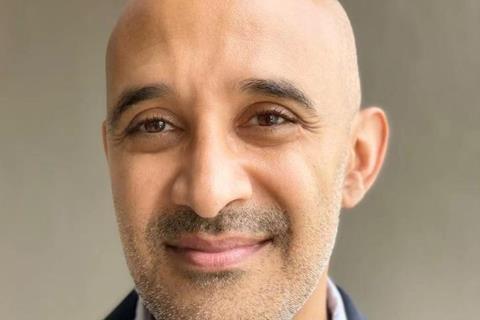
Marcus Ryder, CEO of the Film and TV Charity, has said the BBC’s failure to remove a racial slur from its Bafta Film Awards broadcast was because “intent and representation was prioritised over impact”.
Ryder is the former head of external consultancies at the Sir Lenny Henry Centre for Media Diversity, a former senior BBC executive and current chair of the Royal Academy of Dramatic Art (RADA).
In a comment piece, first posted on LinkedIn, Ryder speculates on the BBC’s editorial thought process in the aftermath of the incident, which saw Tourette’s campaigner John Davidson involuntarily shout out a racial slur whilst Michael B Jordan and Delroy Lindo were presenting an award on stage.
Ryder said: “Another layer may have been at play: balancing representation of disability against the harm caused by a racial slur. It should never be a competition. But the Black people I have spoken to about this say they were not surprised that the BBC appeared to land on disability representation outweighing protection from racial harm.”
Since Sunday’s ceremony, the BBC and Bafta have issued statements apologising for airing the racist language and for their handling of the incident.
Read the full comment piece below.
Anatomy of an apology: What the BBC can learn from the Baftas
On Sunday night, during the British Academy Film Awards, the BBC broadcast a racial slur that had been shouted from the audience.
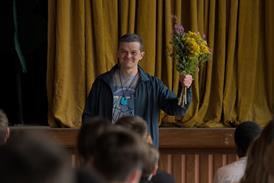
The outburst came from Tourette’s campaigner John Davidson, whose involuntary verbal tics are documented in the film I Swear. Presenters Delroy Lindo and Michael B. Jordan were on stage at the time.
The BBC has since apologised. It acknowledged the language was offensive, confirmed it was not edited out prior to broadcast, and removed the programme from iPlayer before re-uploading an edited version.
I applaud the apology. I also believe it is only the starting point.
Apology Is Step One. Understanding Is Step Two.
An apology addresses the impact. But learning requires examining the process.
The BBC has, in the past, faced criticism for not editing out the N-word when it has occurred in broadcast content. Editorial practices have been reviewed before to prevent similar incidents. And yet here we are again.
So the important question is not simply “Why did this happen?”
It is: How did the editorial decision get made?
Because if we do not understand the reasoning, we cannot ensure we do not repeat the mistake.
Intent vs Impact
Having worked at the BBC for 24 years, I know how tough editorial calls can be. I have made decisions I got right - and some I got wrong. The problem at the BBC is that your mistakes are very public.
If I had to speculate - and it is speculation - I suspect the editorial reasoning may have gone something like this:
- The slur was involuntary.
- It was connected to Tourette syndrome.
- Editing it out might be seen as misrepresenting disability.
- The intent was not racist.
- Therefore, leaving it in could be justified in the name of authenticity and representation.
If that was the thinking, I understand it.
I disagree with the decision, but I understand it - and who’s to say in the heat of the moment and under the same pressures, what decision I might have made.
For me, the editing decision suggests something troubling: that intent and representation was prioritised over impact.
We can acknowledge that Tourette’s tics are involuntary - as charities like Tourettes Action and Tourette Scotland rightly point out - while also recognising that racial harm is real regardless of intent.
Intent matters. But in this instance impact matters more.
Representation vs Racial Harm - A False Competition
Another layer may have been at play: balancing representation of disability against the harm caused by a racial slur.
It should never be a competition.
But the Black people I have spoken to about this say they were not surprised that the BBC appeared to land on disability representation outweighing protection from racial harm.
That perception - whether fair or not - matters deeply.
Public trust is shaped not just by what decisions are made, but by patterns over time. For example the BBC received more than 18,600 complaints about the use of a racial slur in a TV news report in 2020 which it later apologised for.
This Is Not About BBC-Bashing
Let me be clear: this is not about attacking the BBC.
The BBC is a remarkable institution filled with talented, thoughtful journalists and editors who care deeply about their work. I spent nearly a quarter of a century there. I know the pressure of making editorial decisions in real time, balancing law, ethics, representation, harm, and public interest.
Mistakes happen.
The problem is not that mistakes happen - and compared to previous racial mistakes the BBC has been swift in correcting this one - in many ways they should be commended.
The problem is when we fail to interrogate how they happened.
Transparency Builds Trust
If the BBC’s editorial reasoning was as I suspect - weighing representation against harm, authenticity against offence - then say so.
Explain it.
Own it.
Interrogate it.
Because transparency builds trust far more effectively than a carefully worded apology alone.
The BBC has apologised for not editing out the racial slur. That is right. It was the correct first step.
The next step should be reviewing - and publicly explaining - the editorial processes that led to the decision.
Not to assign blame. But to strengthen judgement.
Mistakes Are How We Learn
I often tell my nine-year-old son: mistakes are how we learn.
The BBC now has an opportunity to model exactly that.
An apology says: we got this wrong. A review says: here’s how we’ll avoid getting it wrong again.
For a public service broadcaster funded by the public, that second step matters just as much as the first.




No comments yet