









Female filmmakers called for equal distribution of regional European film funds between female and male filmmakers, as well as crews to have a 50:50 gender split at the Sarajevo Film Festival last week,
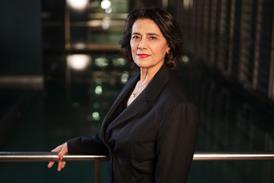
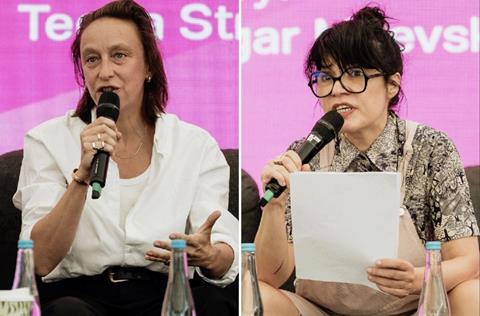
The Sister Sister initiative was launched at the festival, spearheaded by North Macedonian filmmaker Teona Strugar Mitevska, and a manifesto to be published in due course.
“We will ask for 50:50 in distribution of funds by the regional funds,” said Mitevska. “This might sound … extreme, but for example, in Sweden and the Nordic countries, and in many parts of Europe, this is a normal practice. And of course, 25 years ago, this was impossible… Also, 50:50 in the crew distribution. This is very important because I’m sorry, [women represented in] makeup and costume is not enough.”
Mitevska was participating in a discussion at Sarajevo’s CineLink Industry Days titled ‘Are we radical enough? Reclaiming and redefining women’s authorship in European cinema’.
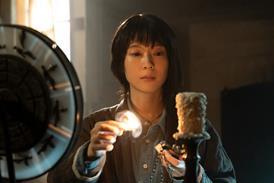
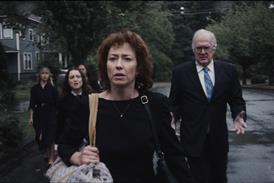
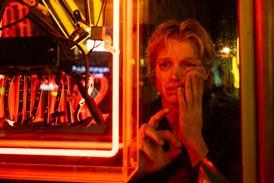
She was joined by Portrait Of A Lady On Fire filmmaker Céline Sciamma, Kosovan diredtor Blerta Basholli, whose second feature Dua played at Cannes in Critics’ Week this year, and Serbia’s Jelena Maksimović whose directorial debut Until The Day Ends will premiere in Venice’s Horizons next month.
With an audience of around 40, only five were male.
“Submissive” filmmaking
“I come from a very privileged landscape of cinema, which is France,” acknowledged Sciamma. “It produces so much money. From there, it also finances cinema everywhere in Europe and in the world. It’s also part of this system that is very much cultural imperialism, and so it was easier for me to become a filmmaker through that system.”
However, she added, “My experience within the system was also very tiring. You still feel like a terrorist within this system,” she said, that is “obsessed with certain protocols, certain narrative protocols, certain production protocols, which means that we are kind of submissive.
“Cinema is the only artistic language where you actually have to ask permission to do your ideas, which means you know it’s very particular that you have to ask permission to bankers, to people with money, to actually make your ideas, which can make you very submissive to the canon. To make it, you have to navigate what is expected of you as a female filmmaker.”
She said that across her five features, her first three were “dancing with what is expected”. She considers 2019 Cannes premiere Portrait Of A Lady On Fire and 2021 Berlin premiere Petite Maman as “the most radical, and the closest to what I wanted to express”.
She took a step back in 2021 and has spent time working on experimental films and studying. “I gained a lot of power… but in this context, I felt that giving up this power was what I had to do.”
Sciamma wants the industry to question “the social function of cinema. The industry is threatened; we are always in charge of saving this industry, rather than actually deeply questioning the function of cinema.
“Cinema is a very young language. it’s only 120 years old. It’s the youngest of the arts. To me, it’s really immature. Doesn’t know itself apart from capitalism, and so even its social function has not been questioned.
“Think about the social function of music. Music plays when you buy something, there’s music at funerals, there’s music in schools… What is the place of a filmmaker in society? What if, if you had public funds, you also had to teach in schools?
“What are we doing? Are we always fighting just to make a film and then put it on the screen, and then hopefully you will have a release, and hopefully you will go to a festival? That social function of cinema is very, very narrow, and so that’s why I’m very hopeful for this [new] language. If this industry falls, that might be good news for how cinema can actually participate in society.”
Crew challenges
Mitevska noted her films now have between 65 and 70% female crew. “It is possible.”
Basholli added, for her projects, Hive and Dua, she struggled to find female collaborators in her home country. “We don’t have crew. We have technicians, but we don’t have enough crew in Kosovo because there’s not enough production. Making it male or female is usually not a discussion. A lot of times, you just make it happen.”
For Dua, she looked to France to find a female director of photography, Lucie Baudinaud. While crew might be a challenge, Basholli did note, “There are a lot of female filmmakers [in Kosovo].
“When I was studying at the university in Pristina, only the films of my male professors were getting funded. There were three of them each year that were getting the funds, and I studied thinking I’m never going to be able to make a feature film of my own, and even less so as a woman. But then, luckily, the management of the [Kosovo Cinematography] Centre changed.”
Maksimović added she worked as an editor for 20 years before helming her first feature. However this depth of experience didn’t help her when it came to raising financing. “It didn’t help me that I was an editor. It didn’t help me that everybody knows me in the region.”
Earlier this year, Serbia’s state film funding body Film Centre Serbia (FCS) said a pause on new funding rounds is due to a focus on completing outstanding projects, while Serbia’s filmmaking bodies issued a joint statement suggesting this move was “a coordinated campaign of state-sponsored censorship”.
“We are not scared,” said Maksimović. ”We are all on the street fighting together with students and citizens. I think that that’s what’s most important at the moment.”






No comments yet