












EXCLUSIVE: Leading Israeli filmmakers have strongly defended Berlinale director Tricia Tuttle in a letter addressed to German culture minister Wolfram Weimer.
The letter – the second to circulate following reports of Tuttle’s possible departure from her role – states: “We are deeply concerned and alarmed by reports that a board meeting has been convened under your leadership to discuss the possible removal of the festival’s director, Tricia Tuttle, following controversy surrounding expressions of solidarity during this year’s closing ceremony.”
Scroll down for the full letter
“We have not always been in agreement with Tricia Tuttle in the past for what we saw as concessions to political pressure shaping cultural discourse in Germany,” continues the letter. “But despite some differences in opinion, we have appreciated her integrity and her honest attempts to maintain a dialogue in a public climate that makes this very difficult indeed.
“Her possible removal now underlines that very point. Ousting Tuttle would be a dramatic mistake, and she has our full support. Cultural institutions cannot survive if political intimidation becomes the standard by which leadership is judged.”
The letter concludes, “Do not touch the Berlinale.”
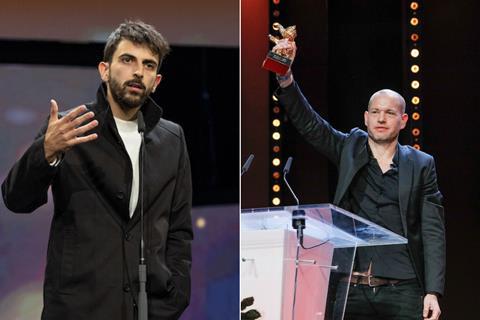
Signatories include Yuval Abraham, who co-directed 2024 Berlin Panorama audience award winner No Other Land; Nadav Lapid, who won the festival’s Golden Bear in 2019 for Synonyms; and filmmaker Tom Shoval, whose A Letter To David played at last year’s festival and is the filmmaker’s message to David Cunio, held hostage in Gaza by Hamas for over two years after October 7, 2023.
The letter is also signed by Udi Aloni, whose films have played at the festival on multiple occasions, including in 2016 with Junction 48; Oren Moverman, whose The Dinner played in Competition at Berlin in 2017; and Michal Aviad, whose Invisible played in Berlin’s Panorama section in 2011.
It follows another letter circulated earlier today expressing “deep concern” at Tuttle’s potential departure, and signed by over 600 names from across the international industry including Tilda Swinton, Kleber Mendonça Filho, Nancy Spielberg and Karim Ainouz, whose Rosebush Pruning played at the 2026 festival.
Shoval has also shared a post on his personal Instagram account, in which he notes that Tuttle invited A Letter To David, in a new version including Cunio’s release, back to Berlin this year for a screening in partnership with the festival.
View this post on Instagram
The letters are in response to reports that Tuttle may be about to depart after less than two years in the role. Weimer has called an extraordinary meeting of the board of the Kulturveranstaltungen des Bundes in Berlin GmbH (KBB), which manages the festival. Screen understands the meeting will take place at 08.00 CET tomorrow (February 26).
Germany’s federal government commissioner for culture and media confirmed earlier on Wednesday that “the meeting will include a discussion on the future direction of the Berlinale”.
German tabloid Bild reported on Wednesday that the meeting will focus on possible personnel changes.
Letter from Israeli filmmakers
To Wolfram Weimer, Federal Commissioner for Culture and the Media
We are Jewish filmmakers who grew up in Israel and whose works have been presented at the Berlin International Film Festival over many years, some of us receiving its highest honours. For many of us, the Berlinale has been more than a festival; it has represented post-war Europe’s commitment to artistic freedom and anti-fascist responsibility.
We are deeply concerned and alarmed by reports that a board meeting has been convened under your leadership to discuss the possible removal of the festival’s director, Tricia Tuttle, following controversy surrounding expressions of solidarity during this year’s closing ceremony.
We have not always been in agreement with Tricia Tuttle in the past for what we saw as concessions to political pressure shaping cultural discourse in Germany. But despite some differences in opinion, we have appreciated her integrity and her honest attempts to maintain a dialogue in a public climate that makes this very difficult indeed. Her possible removal now underlines that very point. Ousting Tuttle would be a dramatic mistake, and she has our full support. Cultural institutions cannot survive if political intimidation becomes the standard by which leadership is judged.
As the Talmud teaches:
“Once permission is granted to the destroyer, it no longer distinguishes between the righteous and the wicked.” (Babylonian Talmud, Pesachim 112b)
The central political lesson drawn from the Holocaust was not remembrance alone, but the creation of an international democratic order grounded in international law — meant to prevent governments from ever again using fear, nationalism, or historical trauma to silence dissent.
As descendants of families murdered in Europe, we are therefore deeply troubled to see Jewish memory invoked in ways that risk restricting artistic freedom and democratic pluralism.
If political authority intervenes in the leadership of the Berlinale because filmmakers stood beside our Palestinian brothers and sisters and refused to silence them, a dangerous threshold will have been crossed.
The Berlinale has historically stood against repression — opposing authoritarian violence in Iran and condemning Russia’s aggression against Ukraine, and rightly so. It must not now become a place where the voices of our Palestinian brothers and sisters are treated as illegitimate speech and used to curb artistic freedom.
Decades ago, the late Shulamit Aloni, Israel’s Minister of Education and Culture during the Rabin era, warned against the cynical misuse of accusations of antisemitism as a political tool to silence criticism and advance exclusion.
The memory of families murdered by the Nazis — including our own — must never be used to justify political interference in culture.
We say this not as outsiders, but as partners in the cultural and democratic project that the Berlinale has represented for decades.
We call upon you to refrain from intervening in the artistic independence of the Berlinale and to reaffirm the autonomy of cultural institutions in a democratic society.
We call upon our colleagues in the film industry — Jewish and non-Jewish alike — to stand with us in demanding and defending a safe space for Palestinian and other oppressed voices in Germany, free from political intimidation and cultural silencing.
Do not touch the Berlinale
Yuval Abraham, Udi Aloni, Nadav Lapid, Tom Shoval, Oren Moverman, Michal Aviad




No comments yet