















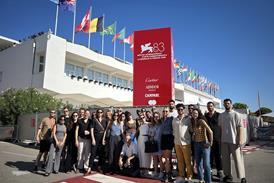


The Italian film industry is in Cannes in an uneasy mood.
The country has a presence through minority co-productions and its industry professionals at the Marché du Film, but no majority Italian film in the 2026 official selection — a symbolic absence for a cinema long associated with Nanni Moretti, Marco Bellocchio and Paolo Sorrentino.
The gap comes amid controversy around Italy’s public funding system, in particular concerns about the direction and reliability of public film funding in Italy under Italy’s right-wing government.
Three members of the Ministry of Culture’s 15-strong selective funding commission resigned in April following the rejection of Simone Manetti’s documentary Giulio Regeni – All The Evil In The World, about the Cambridge PhD researcher from Italy who was murdered in Egypt in 2016.
The film won Italy’s 2026 Nastro della Legalità, a special award from Italy’s film journalists recognising cinema linked to justice and civil rights, but was deemed not worthy of public backing.
The first to step down were critic Paolo Mereghetti and story editor Massimo Galimberti. Galimberti cited a “difference of views on the criteria for evaluating works”, while Mereghetti underscored his “distance from certain choices” and resigned “as a matter of coherence”. They were followed by Ginella Vocca, head of Rome’s MedFilm Festival, who said she had “firmly opposed” its rejection.
Culture minister Alessandro Giuli told parliament the decision was “not a political question”. But others disagree. One of the film’s producers, Domenico Procacci of Fandango, told La Repubblica: “To reject a project like this cannot be seen as an artistic choice. It is solely a political choice.”
Many note that the government championed new “national interest” criteria for the films it backs. 2025 selective funding calls were worth €82m across writing, development and production, with €29.7m reserved for films of “particular artistic quality” or linked to Italian cultural identity.
The funding results, published in April, came nine months after the first application window closed.
Uncertainty

Producer Carlo Cresto-Dina of Tempesta Film said the latest decisions have “rightly triggered strong negative reactions”, but argued that the deeper problem is uncertainty.
“For years now, Italian producers have been working without any certainty, not knowing when calls will be published, when tax credit windows will open, or when decisions will be communicated,” he said.
He also pointed to automatic contributions – a separate reward-based scheme calculated on the results of previous works and intended to be reinvested in new projects – which he said have not been paid since 2021.
“The Italian audiovisual industry employs 130,000 people, almost twice as many, for example, as Stellantis,” Cresto-Dina added. “We’re talking about 130,000 families, with bills and mortgages, not red-carpet glitter.”
The Italian government said on May 4 that a new decree would unlock €155m for the 2022-2025 years for outstanding automatic contributions.
Much of this rewards-based funding, however, will go to commercial projects, rather than arthouse films likely to make the Cannes line-up. Among projects to receive funding are comedies such as Pier Francesco Pingitore’s Tony Pappalardo Investigations (awarded €800,000), Andrea Muzzi’s Il Tempo Delle Mele Cotte (awarded €400,000) and Luca Miniero’s popstar biopic Solo Se Canti Tu (€1.8m).
The unrest has spilled into public debate, with actor Alessandro Gassmann backing calls from Siamo ai titoli di coda, a movement of film workers and technicians, for a boycott of this month’s David di Donatello awards, which did not materialise in the end.
Cumulative effect
Michele Casula, partner at Milan-based audiovisual research firm Ergo Research, said individual controversies may not immediately damage Italy’s reputation abroad, but the cumulative effect could be felt through Italian producers’ ability to present themselves as reliable co-production partners.
“The paradox is that the scarcity of public resources makes co-productions increasingly necessary – and that, in itself, is positive,” Casula said. “But Italy risks arriving at the table with less predictable instruments: incentives, local funds, criteria and payment schedules must be legible and stable. In an international co-production, administrative uncertainty weighs almost as much as scarcity of resources.”
Producer Stefano Centini of Volos Films, Italy’s Producer on the Move for 2026, agreed that timing and reliability are central. “The biggest problem for the industry is not the choices of the commissions, which, however questionable, can always be criticised, but the lack of reliability around response times and the publication of calls,” he said.
The debate has revived the old tension between cultural value and commercial potential. Centini said the opposition is misleading. “Cinema is an industry of prototypes, and on paper it is difficult to assess the commercial potential or cultural value of works before they are made,” he noted. “State funding should absorb industrial risk and support works that propose new artistic and/or production models, because a healthy sector needs commercial solidity and cultural vitality.”
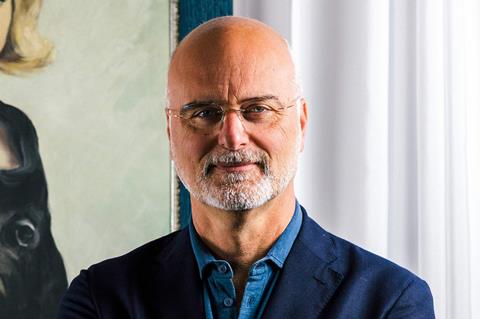
Gianluca Curti, CEO of Minerva Pictures, takes a more cautious view. “Over the past 35 years, I have seen many commissions come and go,” he said. “Some were better, others worse, but I have never seen perfection. Some choices could certainly have been made differently, but I do not feel I should cast stones at anyone.”
Curti argued commissions must remain autonomous. “A bit like with football referees, we need to learn to accept the error when it happens,” he said.
On the topic of Cannes, industry figures are divided. Casula cautioned against reading the absence as punitive. “It’s easy to focus on rejections; it’s harder to look at the pipeline: development, access to resources, payment schedules, production continuity. It’s not a problem of Palmes; it’s a problem of seeds and roots.”
Centini is more direct. “Not being in Cannes represents a loss of visibility, and therefore of revenue but also of cultural relevance, for the whole sector,” he said. “The only correct way to read this absence is to turn it into a push to make more international, more innovative films, and to diversify the sector.”
Curti remains optimistic. “The moment is problematic, but we’re getting through it,” he said.
For now, Cannes offers a stark backdrop: a major European cinema nation present around the edges, while at home the industry asks whether the system can still give producers the certainty, transparency and ambition they need.





No comments yet