










Thanasis Neofotistos’s story of a teenage boy living in a Greek mountain village premieres at SXSW London
Dir: Thanasis Neofotistos. Greece. 2026. 96mins
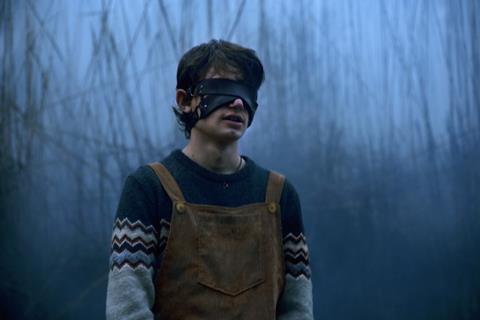
In a remote mountain village in Greece, teenager Petros (Giorgos Karidis) is forced to wear a mask over his eyes, ostensibly to protect them from acute photosensitivity. When he realises that his mother and grandmother may be hiding a terrible truth, Petros’s tentative steps towards independence threaten to destabilise not only his home, but his entire community. This visually striking debut from Thanasis Neofotistos tackles familiar themes of identity, tradition and prejudice, but does so with a dramatic lyricism that commands attention.
Sound design from Valia Tserou is a standout
Neofotistos has previously made shorts including 2018’s Patison Avenue, which premiered in Venice, and 2022’s Airhostess-737, which premiered in Locarno, and here proves that he can work on a larger canvas. Operating in a dreamlike liminal space, he crafts a modern fable influenced by classical Greek myth and tragedy – most notably Oedipus – but becomes something entirely its own. It should travel to further festivals following its SXSW London premiere, particularly LGBTQ+ coded events, and it could also play well with world cinema fans on an arthouse theatrical or streaming release.
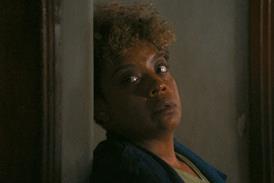
Petros’s grandmother Margarita (a commanding Sofia Filippidou) is the matriarch of this precipitous village; the picturesque but ominous twisting streets, ramshackle buildings, billowing window coverings and ever-present mist give the place an other-worldly feel. (The film shot in Arcadia, in central Greece). Margarita is on the brink of leading a mass evacuation – it’s unclear as to where – away from the massive wind turbine the villagers believe is bringing bad luck. We never see that turbine, only hear the monstrous swoosh of its blades; sound design from Valia Tserou is a standout, blending heightened ambient noises – the rustle of swamp reeds, the animalistic roar of thunder – with insidious low beats and rumbles, indicating a pressure cooker environment on the verge of combustion.
Understanding the inner life of protagonist Petros is key to this drama, particularly as we hardly ever see his eyes, and newcomer Karidis gives an impressive, restrained performance. This adolescent is locked up tight, living in a perpetually dark world – the palette is largely subdued and sombre, with occasional pops of colour in clothing, ceramics or blood. Unable to share his true self, Petros is forced to take his cues from those around him, including his loving, deeply overbearing mother Lemonia (Syrmo Keke). Like so many adolescents, he is straddling two worlds; still very childlike (he dresses in dungarees, has a naivety that comes from his closeted existence), he is nevertheless attempting to strike out on his own, to escape the increasingly toxic influence of his family.
That Petros clearly has (reciprocated) feelings for his best friend Aemon (Pablo Soto, charming) adds another emotional layer, and turns this fairy tale into a modern allegory of prejudice and ostracisation. While the latent homophobia of the traditional matriarchal community is never made explicit, Petros’s entire being seems to clash with their long-held values and beliefs; he is continually othered, labelled as different, someone to be carefully controlled. Later, when he is unmasked, and the truth about his remarkable blue eyes is seemingly revealed, he becomes a person to be feared, or even removed. Cinematography from Djordje Arambasic often frames Petros in close-up, alone or at the side of the frame – other than when he is with Aemon, the one person who really accepts him, where he is centred, equal.
The balanced screenplay from Neofotistos and Grigoris Skarakis remains ambiguous about the true nature of Petros’s eyes and, while the film plays in some respects like a folk horror, its focus is firmly on its protagonist’s journey to understanding, perhaps even some kind of self-acceptance. This coming-of-age narrative is well-worn; that Neofotistos (who himself grew up gay in a conservative family) has used that familiar blueprint to create a beguiling, impressionistic work certainly marks him out as a filmmaker to watch.
Production company: Argonauts SA
International sales: info@argonautsproductions.gr / US sales: Gersh, Jessica Lacy JLacy@gersh.com
Producer: Ioanna Bolomyti
Screenplay: Thanasis Neofotistos, Grigoris Skarakis
Cinematography: Djordje Arambasic
Production design: Dafni Kalogianni
Editing: Panagiotis Angelopoulos
Music: Igor Vasilev Novogradska
Main cast: Giorgos Karydis, Pablo Soto, Syrmo Keke, Sofia Filippidou