









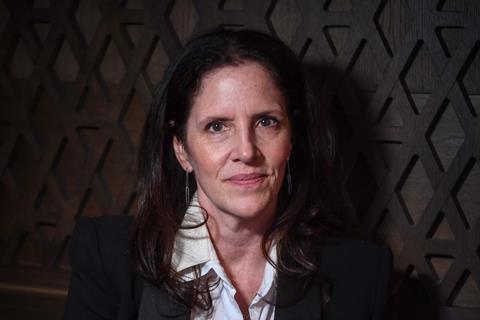
Cover-Up director Laura Poitras has praised the collegiate nature of the documentary sector, saying that spirit made it a key player in standing against the Paramount acquisition of Warner Bros Discovery.
“There’s recently been a letter calling to block the merger between Paramount and Warner Bros,” said Poitras, referring to an open letter published last week which stated “unequivocal opposition” to the deal. The letter has been signed by almost 4,000 industry figures to date, including JJ Abrams, Denis Villeneuve, Kristen Stewart and David Fincher.
“I know behind the scenes a lot of documentary filmmakers were involved in that,” said Poitras, who is a signatory to the letter alongside fellow documentarians, including Alex Gibney and Jerry Rothwell.
Poitras was speaking in a conversation session at Switzerland’s Visions du Reel documentary film festival, where she is a special guest. She discussed collaboration in documentary filmmaking, compared to investigative journalism, which has been a subject of several of her films.
“There’s a strong sense of documentary filmmakers being open to sharing the knowledge they have,” said Poitras. “Even a festival like this, where established filmmakers are mentoring younger or first-time filmmakers. That happens a lot, and there’s also a community political engagement that comes through.”
The filmmaker did not shy away from what she described as “a dire time in the documentary landscape” for both “funding and distribution”.
“But it’s also a time where documentary filmmakers are showing up for each other and doing risk-taking work, that is filling gaps where some of our institutions are failing us,” said Poitras.
Public funding
Significant cuts to public funding for documentaries in the US will restrict the strength of titles that are made, Poitras warned.
“My first two films were funded through public television, through ITVS/PBS, which is now being completely decimated,” said the filmmaker. “This is one of the organisations that has been key, being the first supporters of first-time filmmakers. To lose that is completely devastating, both for funding and distribution.”
Last summer, the US Congress voted to defund the Corporation for Public Broadcasting (CPB), which provided $9m annual federal funding to ITVS for independent documentary filmmaking. The CPB formally shut down in January, having operated for over 60 years.
Poitras’s second feature, 2006’s My Country, My Country, depicted life in Iraq while under US occupation in the second Gulf War. The film was made with US public funding and went on to be nominated for the best documentary film Oscar.
Asked if it would be possible to make such a film about the ongoing US war with Iran, Poitras said, “I would try, but it’s going to be hard. It’s going to be hard if you’re trying to go to a corporation.”
“It’s going to be hard for a filmmaker to go to Netflix or HBO and say ‘I want to make a film about the US government’s regime change strategies in Iran’.”
Poitras also described “the complete collapse of journalism” during the presidency of George W. Bush as “staggering”. She cited the lack of journalistic interrogation of topics, including the Guantanamo Bay prison and the second Gulf War, and underlined the necessity of calling out such issues as they happen. “Maybe we have a consensus now that Iraq was catastrophic, or Vietnam was catastrophic, and we will also think the war in Iran is catastrophic,” said Poitras. “But who’s saying it in real-time? When making any difference to change the course of events.”
Netflix partnership
Hosted by programmer Rebecca De Pas, the session featured clips from Poitras’s filmography, including Citizenfour, for which she won the 2015 best Oscar for best documentary film, and All The Beauty And The Bloodshed, about the career of artist Nan Goldin and her role in the fall of the Sackler family, which became only the second documentary ever to win the Golden Lion at Venice Film Festival in 2022.
Citizenfour concerned the work of US National Security Agency whistleblower Edward Snowden, who has lived in exile in Russia since 2013. Poitras said that European countries, including France, Germany and Switzerland, should have provided asylum to Snowden, but acknowledged the reason they did not was “a full-throated effort” from the US.
“Every European country was pressured by the United States not to give asylum,” said the filmmaker.
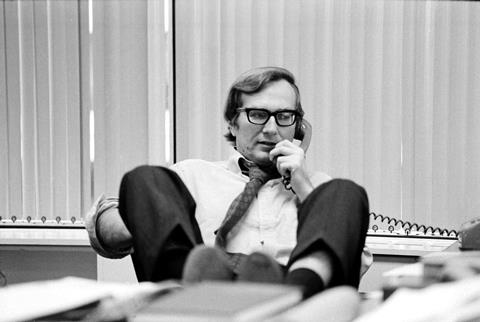
Poitras’s most recent film, Cover-Up, which she co-directed with Mark Obenhaus, depicts the career of Seymour Hersh, one of the foremost political journalists in the US. Netflix acquired worldwide rights on the film in September 2025, shortly after its premiere at Venice. Poitras said that despite previous reservations about working with the streamer, the partnership on this title had been suitable.
“It’s the first time I’ve worked with Netflix,” said the filmmaker. “I’ve had issues with some of their policies, as we haven’t worked together previously. But my personal experience on Cover-Up is that we made the film really independently, and that’s the film they acquired.”
“We were very worried that we would have distribution in territories [such as] Europe, but that we wouldn’t have major US distribution. We had been turned down, and we were looking for a distribution partner.”
During the discussion, Poitras was critical of US governments both past and present, due to what she described as “impunity” from their wrongdoings.
“This is one of the themes I tried to focus on in Cover-Up, looking at these cycles of power and impunity,” said Poitras. “You have an administration, you have exposure of wrongdoing. It’s followed by denials and cover-ups; and then, usually in the United States, impunity – nobody is held accountable.”
Visions du Reel got underway on Friday, April 17, and hosted a masterclass from Ukrainian filmmaker Sergei Loznitsa on Saturday 18. The festival runs until Sunday, April 26.




No comments yet