









A Jerusalem-set mystery turns one man’s private reckoning into a pointed portrait of Palestinian life in Israel
Dir: Muayad Alayan. Palestine/Netherlands/Saudi Arabia/Qatar 2026. 112mins
Jerusalem-set Palestinian drama Conversation With The Sea combines political cri de coeur with elements of melodrama and detective story to evoke the challenges of Palestinian life in Israel. The film benefits from the contrast between its highly charged themes and a commandingly muted lead in veteran Palestinian actor Kamel El Basha; his finely calibrated performance keeps the drama on an even keel when it threatens to verge on overstatement. Flaws notwithstanding, this thoughtful, elegantly executed Venice Spotlight offering from Palestinian writer-director Muayad Alayan (The Reports on Sarah and Saleem, A House in Jerusalem) has plenty to catch the eye of art-house outlets and festivals, especially those with human rights interests or Middle East focus.
Thoughtfully conceived and elegantly executed
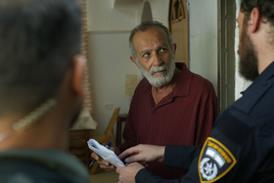
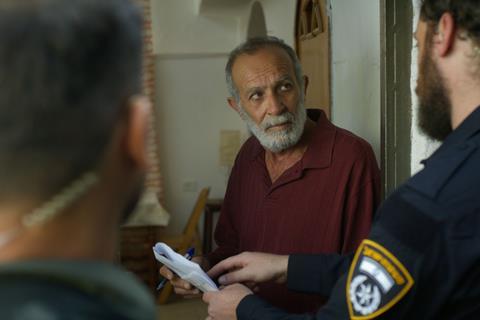
El Basha (winner of Venice’s Volpi Cup for Best Actor for Ziad Doueiri’s 2017 The Insult) plays Kamal Hamed, an elderly widowed baker living in Jerusalem, long estranged from his adult daughter Wafa (Bahira Ablassi) and grieving for his son Wael, who drowned some 20 years ago. Kamal has long accumulated crushing debts, but is resisting an offer from predatory speculator Marwan (Haitham Omari) to buy his family home. Kamal is a much-disliked pariah in the neighbourhood, with good reason to feel guilty – although the quiet, dignified demeanour that El Basha gives him signals that things may not be so black and white.
The complexity of Kamal’s bitter life experience emerges when he is notified that he owes a large amount for his son’s outstanding social security payments – there being no official certificate of Wael’s death. Helped by lawyer Fathi (a genial, relaxed Amer Hlehel), Kamal goes about setting the record straight and tracking down evidence of his son’s death. But he becomes convinced that the case is not quite as he was led to believe.
His quest involves finding an elusive Israeli woman, Einat, who was allegedly with Wael when he died. But the most compelling revelations unearthed during Kamal’s investigation involve his own past – including his absence at Wael’s funeral. This, and his time away in the US, are things he has never been forgiven for – although the idea that he has been outcast suggest that those around him, including old friend Siham (a forceful Ruba Blal), have been wilfully stubborn in refusing to listen to his case.
This feels very much like narrative contrivance, as does much of Kamal’s quest – the enigma around Wael not ultimately delivering the surprise we are led to expect. But the start of the film suggests that the narrative (though based, we’re told, on a true story) is, to a large degree, a metaphor for current conditions in Israel specifically, and the Middle East more generally. A prelude shows documentary footage of Palestinian demonstrators being brutally attacked by Israeli security forces; throughout, the director and his co-writer Rami Alayan emphasise that such treatment is an everyday reality for Palestinians in Israel.
This comes across in the depictions of hard-nosed Israeli officials and of several Israeli civilians that Kamal meets during his search. Two households greet him with bigoted suspicion while, in a third, he is given a cordial but condescending welcome by a dinner party of glib cosmopolitans who clearly understand nothing of Palestinian experience. However much the Alayans might argue that such figures are drawn from real-life observation, they still come across as caricatures, and it feels as if two contrasting figures, Einat herself and Marwan, have been designed specifically to provide a degree of balance.
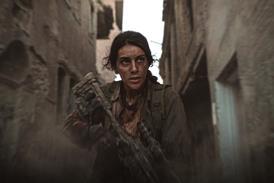
DoP Lorenzo Casadio Vannucci gives vivid energy to Jerusalem locations, including Al-Aqsa Mosque, with the realism seasoned by dreamlike elements: a mysterious shadow at night, the sounds of the sea that forever torment Kamal. Despite moments that verge on sentiment, Alayan largely handles the emotional tenor confidently - especially in the extended scene in which Kamal recounts his travails. With El Basha’s precisely modulated performance, this sets out the territory for Kamal’s personal reconciliation, even if the social realities around him must remain cruelly unresolved.
Production companies: PalCine Productions, Key Film
International sales: MAD World, Info@madworld.film
Producers: Rami Alayan Muayad Alayan
Screenplay: Muayad Alayan, Rami Alayan
Cinematography: Lorenzo Casadio Vannucci
Production design: Ala’ Abu Ghoush
Editor: Matteo Faccenda
Music: Fabienne von Eck
Main cast: Kamel El Basha, Amer Hlehel, Ruba Blal, Haitham Omari